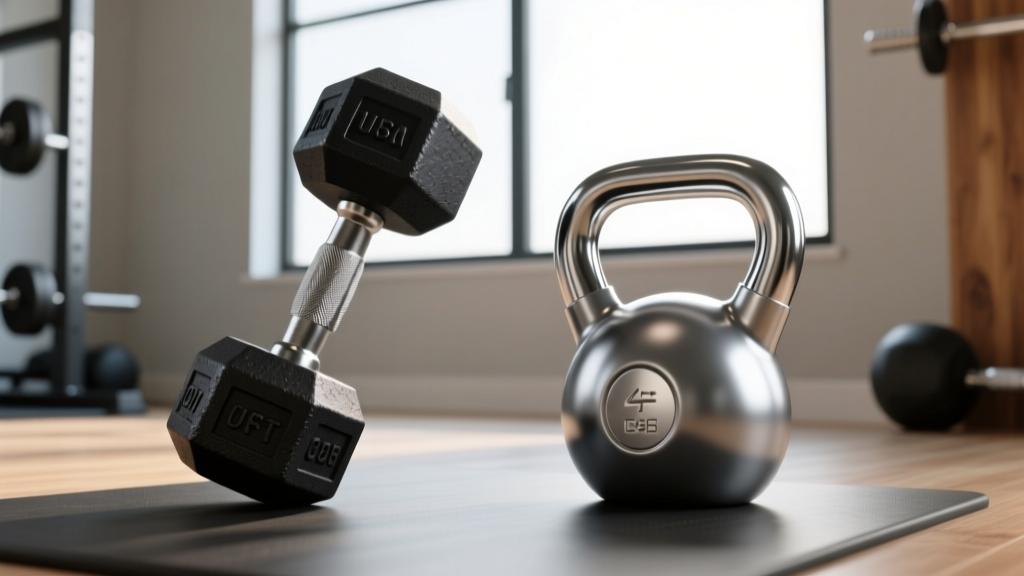
Oblique Dumbbell Exercise Swaps: Cast Iron vs Competition Kettlebells
Upgrade from the standard oblique dumbbell exercise. Our hands-on guide compares cast iron vs competition kettlebells for superior rotational core training.

The Problem with the Traditional Oblique Dumbbell Exercise
For decades, the standard oblique dumbbell exercise—such as the standing side bend or the seated dumbbell Russian twist—has been a staple in commercial gym core routines. While accessible, these movements often fall short in translating to real-world rotational power. According to biomechanical analyses cataloged by ExRx.net, holding a symmetrical dumbbell by the handle centers the load directly in your palm. This symmetry limits the anti-rotational demand placed on the deep stabilizers of the torso, specifically the quadratus lumborum and the transverse abdominis.
Furthermore, heavy standing dumbbell side bends place significant shear force on the lumbar spine. In 2026, sports science strongly favors offset-load training for core development. This is where the kettlebell completely changes the game, and why upgrading your home gym arsenal requires a deep dive into our kettlebell buying guide: cast iron vs competition models.
Biomechanics Insight: A study published in the NCBI on kettlebell swings and core activation demonstrates that the displaced center of mass in a kettlebell forces the obliques to work up to 30% harder to stabilize the spine compared to a symmetrical dumbbell of the exact same weight.Why Kettlebells Dominate Rotational Core Training
When you swap your oblique dumbbell exercise for kettlebell movements like the Halo, the Offset Windmill, or the Around-the-World, the bell's center of mass extends beyond your grip. This offset load creates a longer lever arm, demanding intense eccentric and concentric oblique engagement to control the momentum. However, not all kettlebells are built the same. The handle geometry, horn spacing, and base footprint drastically alter how the bell feels during high-rep rotational flows.
Cast Iron vs. Competition Kettlebells: The Core Showdown
Before dropping $100+ on a single piece of iron, you must understand the structural differences. Cast iron kettlebells are poured into molds, meaning their physical size and handle thickness scale up with the weight. Competition kettlebells, governed by international standards, maintain the exact same dimensions regardless of whether they weigh 8kg or 32kg.
| Feature | Cast Iron Kettlebell | Competition Kettlebell |
|---|---|---|
| Handle Diameter | Varies (32mm - 40mm+) | Strict 33mm Standard |
| Horn Spacing | Narrower, tighter grip | Wider, allows two-handed racking |
| Base Footprint | Small, rounded flat spot | Large, perfectly flat base |
| Avg Price (16kg) | $85 - $95 | $115 - $135 |
| Best For Oblique Work | Heavy, slow side bends | Dynamic flows, halos, twists |
Hands-On Review: Top Cast Iron Kettlebells for Home Gyms
1. Kettlebell Kings Powder Coat (16kg)
Price: $95 | Handle: ~35mm | Finish: Matte Powder Coat
The Kettlebell Kings Powder Coat line remains a top pick for 2026. The matte finish bites into chalk beautifully, which is critical when your hands get sweaty during high-rep oblique twists. The 16kg model features a roughly 35mm handle. While slightly thicker than a competition bell, it builds immense grip endurance. Failure Mode Warning: Avoid older enamel-coated models for rotational flows; the slick enamel causes slipping, and dropping the bell on a hard floor chips the coating, creating sharp micro-abrasions that will tear your calluses during Halos.
2. Rogue Fitness Cast Iron Kettlebell
Price: $89 | Handle: 35mm | Finish: E-Coat
Rogue's E-coat finish is incredibly durable and rust-resistant, making it ideal for garage gyms. The handle geometry is slightly more squared off at the horns, which provides a secure lock when holding the bell by the horns for Russian twists. However, the wider horn profile can dig into the forearms during cleans if you incorporate them into your core flow.
Hands-On Review: Top Competition Kettlebells for Dynamic Flows
1. Rogue Competition Kettlebell (16kg / 35 lbs)
Price: $125 | Handle: 33mm | Finish: Unpainted Steel / Color Band
If you are replacing the oblique dumbbell exercise with complex flows like the Turkish Get-Up or continuous Around-the-Worlds, the Rogue Competition bell is unmatched. The strict 33mm handle diameter means your grip will not fail before your obliques do, even when stepping up to the 24kg or 28kg sizes. The wide, flat base allows you to start and end your flows with the bell parked securely on the floor without it tipping over—a common annoyance with rounded cast iron bells.
2. Onnit Competition Kettlebell
Price: $130 | Handle: 33mm | Finish: Smooth Steel
Onnit's competition bells feature a slightly smoother handle finish right out of the box. For lifters with naturally dry hands, this is a blessing for rotational movements. However, if you sweat heavily, you will need to apply chalk to maintain a secure grip during offset windmills. The color-coded plastic bands on the base are prone to scratching if dragged across concrete, but the structural integrity of the steel horn is rock solid.
Grip Fatigue and Failure Modes During Woodchoppers
When performing kettlebell woodchoppers or diagonal chops to target the obliques, the bell experiences massive centrifugal force. Here is where the buying decision matters most:
- Cast Iron Horn Pinch: On heavier cast iron bells (24kg+), the horns are thicker and closer together. During a two-handed grip on the horns for a woodchopper, the knuckles can pinch and bruise.
- Competition Bell Slippage: Because competition bells have wide horns, holding them by the horns for a twist requires a wider grip. If your grip width is narrow, your thumbs may slip off the edge of the horn during rapid directional changes.
According to grip standards outlined by StrongFirst, mastering the 'hook grip' on the handle, rather than crushing the horns, is the safest way to manage offset loads during high-velocity oblique training.
Expert Verdict: Which Bell Should You Buy?
If your primary goal is to replace the traditional oblique dumbbell exercise with slow, heavy, controlled anti-lateral flexion movements (like the suitcase carry or heavy side bend), a Cast Iron Kettlebell like the Kettlebell Kings Powder Coat offers the best value and a thicker handle for raw grip strength.
However, if you are building a dynamic core routine featuring Halos, rotational swings, and multi-planar flows, invest in a Competition Kettlebell. The standardized 33mm handle and wide base provide the consistency and safety required for high-velocity oblique training. In 2026, the competition bell is no longer just for sport athletes; it is the ultimate tool for functional core longevity.
Frequently Asked Questions
Can I use a competition bell for heavy oblique side bends?
Yes, but be cautious. The 33mm handle is relatively thin. When holding a 24kg or 32kg competition bell for a slow side bend, the thin handle can dig deeply into the callus line of your palm, causing discomfort. Cast iron handles thicken with weight, distributing the pressure better for heavy, slow holds.
What weight should I start with for kettlebell oblique twists?
Most lifters transitioning from a standard oblique dumbbell exercise should start with a 12kg (26 lbs) or 16kg (35 lbs) kettlebell. The offset center of mass makes a 16kg kettlebell feel significantly heavier and more unstable than a 35 lb dumbbell during rotational movements.
More gear to consider
All reviews
Space-Saving Loadable Dumbbells: Choosing the Right Dumbbell Spring
Rack Storage Tips for Your Weighted Pull Up Dumbbell Collection
Olympic vs Standard Plates: Beyond the Dumbbell Curl GIF

EZ Curl Bar vs Straight Bar: Pairing & Split Squats with Dumbbells

Upgrading Your Squat Workout With Dumbbells: Barbell Collar Guide