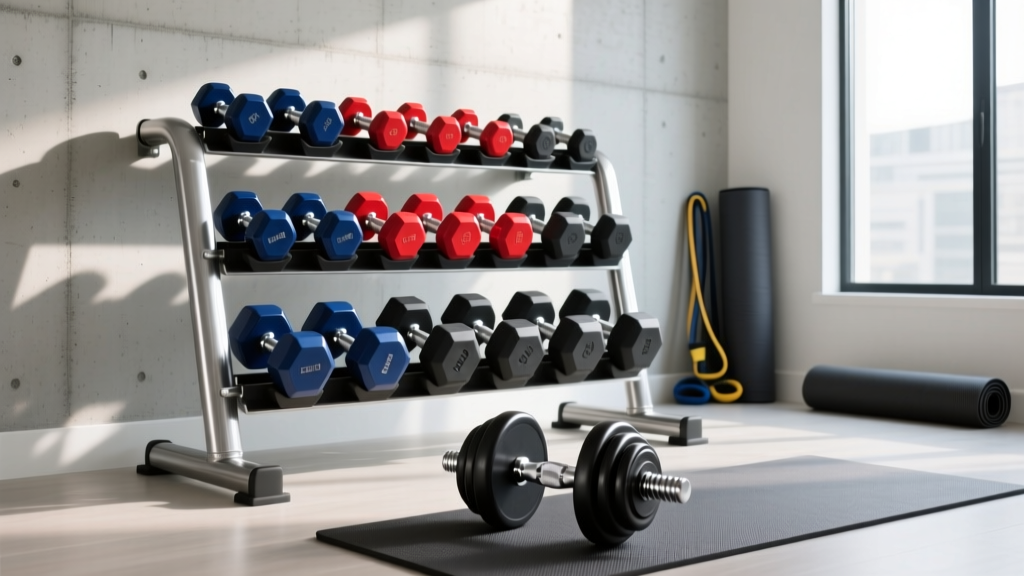
Neoprene vs Rubber: Finding a Good Dumbbell Weight for Beginners
We compare top neoprene and rubber hex dumbbells to help you find a good dumbbell weight for beginners, analyzing handle ergonomics, durability, and pricing.

The Quest for a Good Dumbbell Weight for Beginners
Walking into the fitness equipment market in 2026 can feel like navigating a minefield of conflicting advice. When setting up a home gym or starting a new fitness journey, the first piece of equipment most people buy is a set of dumbbells. But what actually makes a good dumbbell weight for beginners? Is it the price per pound? The grip? The coating? For years, neoprene-coated hex dumbbells have been the default recommendation for novices, touted for their vibrant colors, soft grip, and budget-friendly price tags. However, as manufacturing standards have evolved and virgin rubber prices have stabilized, the gap between entry-level neoprene and mid-tier rubber has narrowed significantly.
In this head-to-head comparison, we are putting the most popular neoprene dumbbells on the market—specifically the Yes4All Neoprene Hex and CAP Barbell Neoprene Hex—up against a premium beginner alternative, the REP Fitness Rubber Hex. We will analyze material hardness, handle ergonomics, long-term failure modes, and exact 2026 pricing to help you make an evidence-based decision.
Quick Verdict: The 2026 Beginner Standard
If your primary goal is high-repetition isolation work and you have smaller hands, the Yes4All Neoprene remains a solid, budget-friendly choice due to its 35mm handle. However, if you plan to progress to heavier compound movements (like goblet squats or dumbbell presses) and want equipment that will survive a decade of use, investing in REP Fitness Rubber Hex dumbbells is the superior long-term play. The neoprene price advantage is no longer wide enough to justify the material's inherent degradation risks.
Head-to-Head Matrix: Neoprene vs. Virgin Rubber
Before diving into specific models, it is crucial to understand the material science behind the coatings. Neoprene (polychloroprene) is a synthetic rubber that is typically dipped or molded over a cast iron core. Virgin rubber, on the other hand, is a denser, more resilient compound that withstands higher impact forces.
| Feature | Neoprene Coated (Yes4All / CAP) | Virgin Rubber Hex (REP / Rogue) |
|---|---|---|
| Shore A Hardness | 70 - 80 (Softer, grippier) | 85 - 90 (Firmer, durable) |
| Average 2026 Price | $1.50 - $1.90 / lb | $2.20 - $2.80 / lb |
| Handle Diameter | 35mm (Ideal for small hands) | 38mm - 41mm (Standard Olympic) |
| Drop Tolerance | Low (Prone to seam splitting) | High (Absorbs impact well) |
| Off-Gassing Odor | Minimal to None | Moderate (Requires 1-2 weeks airing) |
Contender 1: Yes4All Neoprene Coated Hex Dumbbells
The Yes4All Neoprene line has dominated Amazon and big-box retail for the better part of a decade. The core appeal lies in the ergonomics. Yes4All utilizes a 35mm handle diameter, which is noticeably thinner than standard Olympic-style dumbbell handles. For beginners, particularly women or individuals with smaller hand spans, this thinner grip drastically reduces forearm fatigue during high-rep sets of lateral raises or tricep extensions.
Pros and Cons
- Pros: Excellent grip texture, highly visible weight markings, 35mm handle reduces grip fatigue, hex shape prevents rolling.
- Cons: The neoprene sleeve is glued to the cast iron core; heavy drops will cause the sleeve to slide or tear. The knurling is very mild, which can feel slippery during heavy pressing movements if you are sweating.
2026 Pricing: A 25 lb pair typically retails around $75.00 ($1.50/lb), making it one of the most accessible entry points on the market.
Contender 2: CAP Barbell Neoprene Hex Dumbbells
CAP Barbell offers a slightly more robust take on the neoprene dumbbell. While the material is similar, CAP's manufacturing process often involves a tighter molding tolerance, meaning the neoprene sits flush against the steel handle with fewer visible seams. The handle diameter is slightly thicker at 36.5mm, and the knurling pattern is more aggressive than the Yes4All.
The 'Chalk Trap' Edge Case
One specific failure mode we have documented with CAP's neoprene line is what we call the 'Chalk Trap.' Because the neoprene is slightly porous at the micro-level, users who apply liquid chalk or traditional magnesium carbonate chalk will find that the residue embeds itself into the coating. Over 12 to 18 months, this can lead to a sour odor and can actually degrade the adhesive binding the sleeve to the core. If you are a heavy sweater or plan to use chalk, neoprene is not the optimal choice.
The Challenger: REP Fitness Rubber Hex Dumbbells
To truly determine what makes a good dumbbell weight for beginners, we must look at what beginners eventually become: intermediate lifters. The REP Fitness Rubber Hex dumbbells feature a 38mm handle with deep, chrome-finished diamond knurling. The virgin rubber heads are rated at an 85 Shore A hardness. This means they are firm enough to withstand being dropped on a rubber mat floor without splitting at the seams, a common failure point for neoprene.
While the initial investment is higher—averaging $2.40 per pound in 2026—the lifespan of a virgin rubber dumbbell is easily three to four times that of a dipped neoprene dumbbell. The deep knurling also ensures that as you progress to heavier weights (e.g., 40+ lb dumbbells for chest presses), your grip will not be the limiting factor.
Failure Modes: The Reality of Neoprene Degradation
Many beginners buy neoprene assuming the coating will protect their floors and the dumbbell itself. However, neoprene is highly susceptible to environmental factors. Here are the most common edge-case failure modes we see in home gyms:
- UV Dry Rot: If your home gym is in a sunroom, garage with direct sunlight, or near a large window, UV rays will break down the polychloroprene chains. Within 14 to 24 months, the neoprene will become brittle, flake off, and leave black residue on your hands and floors.
- Seam Splitting: Neoprene hex dumbbells are rarely drop-rated. Dropping a 30 lb neoprene dumbbell from shoulder height onto concrete will cause the shockwave to travel through the cast iron core, splitting the neoprene sleeve at the weakest point (usually the seam where the mold meets).
- Core Rust: If moisture gets trapped between the neoprene sleeve and the cast iron core, it creates a hidden pocket for oxidation. The dumbbell will look pristine on the outside while rusting and expanding on the inside, eventually pushing the coating off entirely.
Expert Maintenance Tip: If you already own neoprene dumbbells, wipe them down with a damp microfiber cloth after every use. Never use harsh chemical cleaners or alcohol-based wipes, as these strip the natural moisture from the synthetic rubber and accelerate dry rot.
Selecting Your Starting Load: Evidence-Based Guidelines
Finding a good dumbbell weight for beginners is not just about the material coating; it is about selecting the correct starting load to stimulate muscle adaptation without risking joint injury. According to guidelines published by the Mayo Clinic, beginners should start with a weight that allows them to complete 12 to 15 repetitions with proper form, reaching a state of near muscle fatigue by the final rep.
Furthermore, research highlighted by Harvard Health Publishing emphasizes that even light resistance training is highly effective for improving bone density and metabolic health in novices. You do not need to start heavy to see results.
Recommended 2026 Starter Pairings
For Upper Body Isolation
Weight: 5 lbs to 10 lbs per hand.
Use Case: Lateral raises, bicep curls, tricep extensions.
Recommendation: Yes4All Neoprene (The 35mm handle is perfect for high-rep isolation).
For Compound Movements
Weight: 15 lbs to 25 lbs per hand.
Use Case: Goblet squats, dumbbell floor presses, rows.
Recommendation: REP Fitness Rubber Hex (The 38mm handle and deep knurling provide the security needed for heavier, multi-joint lifts).
Final Verdict: Which Should You Buy?
So, what is a good dumbbell weight for beginners? The answer depends entirely on your timeline and training style. If you are buying a single pair of 8 lb or 10 lb dumbbells for light cardio, Pilates, or physical rehabilitation, the Yes4All Neoprene dumbbells are unbeatable for their price point and ergonomic, small-hand-friendly grip.
However, if you are building a home gym with the intention of progressive overload—meaning you will be increasing your weights every few months—skip the neoprene. The $0.70 per pound savings is not worth the inevitable seam splitting, UV degradation, and chalk absorption. Investing in a set of virgin rubber hex dumbbells from REP Fitness or Rogue will provide a safer, more durable, and ultimately more effective training experience that will carry you well past your beginner phase and into intermediate strength training.
More gear to consider
All reviews
Fixing Plate Mistakes in Dumbbell Workouts for Biceps and Chest
How to Fly With Dumbbells: 2026 Adjustable Set Review
Mastering Dumbbell Deadlift Variations with Neoprene Home Weights: Mistakes & Fixes

EZ Curl Bar vs Straight Bar & Crush Grip Dumbbell Press Review
Incline Dumbbell Press Targets Which Muscle? Best Adjustable Dumbbells