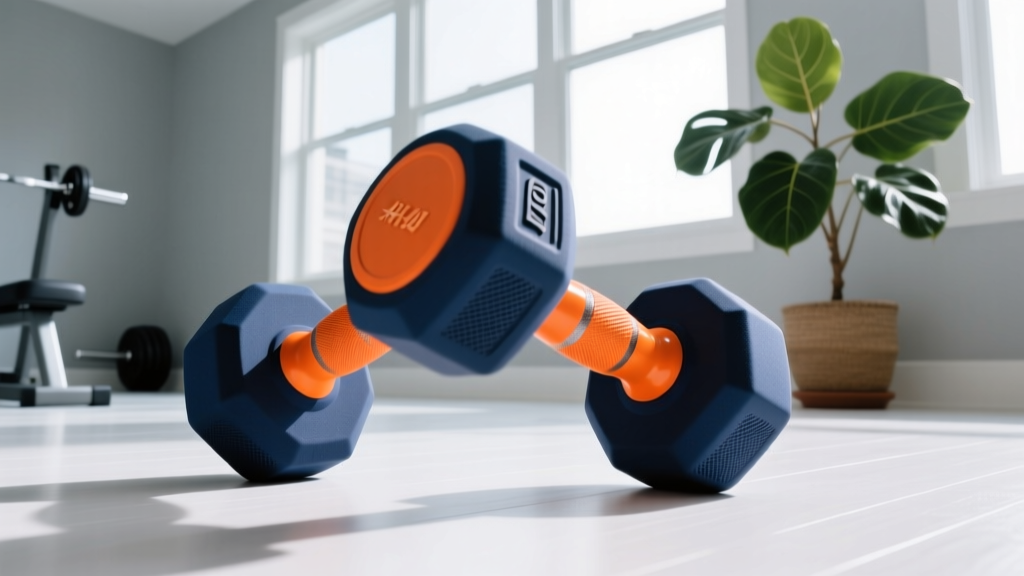
Stiff Legged Deadlifts with Dumbbells: Top Neoprene Picks
Master stiff legged deadlifts with dumbbells at home. We compare top neoprene-coated models for grip, durability, and biomechanical alignment.

The Grip Dilemma: Neoprene for Hinge Movements
When outfitting a home gym, neoprene-coated dumbbells are frequently the default choice. They protect hardwood floors, resist rust, and offer a tactile, soft-touch finish that feels forgiving on the palms during high-repetition isolation work. However, applying this equipment to compound posterior chain movements introduces a unique set of biomechanical and material challenges. Specifically, performing stiff legged deadlifts with dumbbells places immense eccentric loading on the hamstring complex, demanding a grip that can withstand heavy sheer forces without slipping.
⚠️ Material Friction Warning: Neoprene is a closed-cell synthetic rubber. While excellent for impact absorption, it lacks the aggressive knurling of bare steel or the textured grip of cast iron. During the eccentric (lowering) phase of a stiff legged deadlift, the friction coefficient of neoprene drops significantly when exposed to sweat. For intermediate lifters, grip fatigue will almost always precede hamstring failure when using standard neoprene models.To solve this, we must look at handle diameter, grip contouring, and weight distribution. Below, we break down the top three neoprene dumbbells on the market to determine which model best supports the biomechanics of the stiff legged deadlift (SLDL) for home athletes.
Head-to-Head: Top 3 Neoprene Dumbbells for Home SLDLs
1. Yes4All Neoprene Hex Dumbbells (The Contour Grip)
Yes4All dominates the budget home gym space, and their neoprene hex dumbbell is engineered with a slight ergonomic contour. The handle features a subtle hourglass shape that naturally nests into the metacarpal ridge of the hand.
- Handle Diameter: 1.15 inches (tapering slightly at the center)
- Max Weight Available: 50 lbs per dumbbell
- Pricing: ~$38.00 for a 20 lb pair (approx. $0.95/lb)
- SLDL Performance: The narrower 1.15-inch grip is crucial for SLDLs. A thinner handle allows the fingers to wrap completely around the bar, engaging the flexor digitorum profundus more effectively and delaying grip blowout during the 3-second eccentric descent.
2. CAP Barbell Neoprene Dumbbells (The Budget Cylinder)
CAP Barbell offers a traditional cylindrical handle encased in a thick neoprene sheath. The hexagonal head prevents rolling, which is vital for safety when setting the weights down mid-set during a fatiguing hinge movement.
- Handle Diameter: 1.20 inches (uniform cylinder)
- Max Weight Available: 50 lbs per dumbbell
- Pricing: ~$28.00 for a 20 lb pair (approx. $0.70/lb)
- SLDL Performance: The 1.20-inch uniform cylinder is a double-edged sword. For lifters with larger hands (gloves size L/XL), it feels secure. For smaller hands, the lack of contouring forces the wrist into slight extension under heavy loads, shifting tension away from the hamstrings and into the forearm flexors.
3. Amazon Basics Neoprene Dumbbells (The Baseline Standard)
Amazon Basics provides a no-frills, highly accessible option. The neoprene coating is notably thinner than CAP or Yes4All, which actually brings the tactile feel closer to a traditional cast-iron dumbbell.
- Handle Diameter: 1.18 inches
- Max Weight Available: 40 lbs per dumbbell
- Pricing: ~$24.00 for a 20 lb pair (approx. $0.60/lb)
- SLDL Performance: Because the neoprene layer is thinner, the handle feels slightly more rigid. However, the weight ceiling of 40 lbs limits progressive overload for the SLDL, a movement where most adults will quickly surpass 80 lbs total (two 40 lb dumbbells) within their first six months of consistent training.
Feature Comparison Matrix
| Feature | Yes4All Neoprene | CAP Barbell Neoprene | Amazon Basics |
|---|---|---|---|
| Grip Profile | Contoured / Ergonomic | Uniform Cylinder | Uniform Cylinder |
| Handle Diameter | 1.15" | 1.20" | 1.18" |
| Weight Ceiling | 50 lbs | 50 lbs | 40 lbs |
| Coating Thickness | Thick (High shock absorption) | Medium-Thick | Thin (Closer to iron feel) |
| Best For SLDL | Small/Medium Hands | Large Hands | Beginners / Rehab |
Biomechanics & Execution: Optimizing the SLDL at Home
According to ExRx.net's biomechanical breakdown, the stiff legged deadlift differs from the Romanian deadlift (RDL) primarily in the degree of knee flexion and the starting position (often from the floor or a slight deficit). The SLDL demands extreme hamstring elongation. When executing stiff legged deadlifts with dumbbells, the equipment you hold directly dictates your spinal alignment and hip hinge mechanics.
Step-by-Step Execution Framework
- The Stance: Place the hex heads of your neoprene dumbbells on the floor. Stand with feet hip-width apart, toes pointing forward. The flat hex edges prevent the weights from rolling into your shins.
- The Grip: Hinge at the hips, keeping a neutral spine. Grip the dumbbells laterally (palms facing your thighs). The Yes4All contoured grip should sit naturally in the callus line of your fingers, not high in the palm.
- The Ascent: Drive through the mid-foot. Squeeze the glutes at the top. Do not hyperextend the lumbar spine.
- The Eccentric Descent: Push the hips backward as if closing a car door with your glutes. Lower the dumbbells until you feel a profound stretch in the hamstrings (usually mid-shin). Crucial: Keep the dumbbells in contact with your legs to minimize shear force on the lower back.
"Grip strength is often the limiting factor in posterior chain development for home gym athletes. If you cannot hold the weight, your central nervous system will down-regulate hamstring activation to protect the body from dropping the load." — Principles of Strength and Conditioning
The 50-Pound Ceiling: When to Ditch Neoprene
While neoprene is exceptional for beginners learning the hip hinge, it possesses a hard limitation for intermediate lifters: The Clank Factor and Volume Constraints.
Because neoprene is a lightweight foam/rubber composite, a 45 lb neoprene dumbbell is physically massive compared to a 45 lb cast-iron or urethane dumbbell. When performing SLDLs, the dumbbells must travel close together down the midline of the body to maintain an optimal center of gravity. If you are using 40 lb or 50 lb neoprene dumbbells, the oversized heads will physically collide with one another before you reach the bottom of the movement. This forces the lifter to artificially widen their stance or bow their arms outward, compromising the lat engagement required to stabilize the shoulder girdle during the hinge.
The Upgrade Trigger: Once you can comfortably perform 3 sets of 10 repetitions of SLDLs with 35 lb neoprene dumbbells, it is time to liquidate them and invest in adjustable steel dumbbells (like Nuobell or PowerBlock) or hex urethane sets. The Mayo Clinic recommends progressive overload as a non-negotiable pillar of muscle adaptation, and neoprene simply cannot support the heavy loads required for advanced hamstring hypertrophy.
Frequently Asked Questions (FAQ)
Can I use chalk with neoprene dumbbells?
Yes, but with caution. Traditional magnesium carbonate block chalk will embed into the micro-pores of the neoprene, turning the handle into a gritty, sandpaper-like surface that can tear calluses. If you must use chalk to secure your grip during SLDLs, opt for a liquid chalk (alcohol-based magnesium carbonate). It dries quickly, improves the friction coefficient of the neoprene, and wipes off cleanly with a damp cloth post-workout.
Should I use lifting straps for stiff legged deadlifts with dumbbells?
If your primary goal is hamstring hypertrophy and you are limited by grip fatigue, using figure-8 or cotton lifting straps is highly recommended. Straps eliminate the grip bottleneck, allowing you to take the hamstrings to true muscular failure. However, if your goal is overall functional strength and grip development, avoid straps and instead utilize the contoured Yes4All handles to build forearm endurance.
Do neoprene dumbbells smell?
High-quality neoprene (like the sets from CAP and Yes4All) is virtually odorless after the first 48 hours of off-gassing. Cheaper, unbranded alternatives often use PVC or low-grade TPR (Thermoplastic Rubber) masquerading as neoprene, which can emit a persistent chemical odor that is particularly unpleasant when brought close to the face during floor-level exercises like the SLDL.
More gear to consider
All reviews
Home Gym Setup for a Dumbbell Leg Workout Women Can Master

Dumbbell Quad Workouts: Power Rack vs Squat Rack vs Stand Mistakes

Best Type of Dumbbells: 2026 Adjustable Comparison Guide
2026 Rack Trends: Storage Solutions for Chest Presses with Dumbbells

Barbell Clamps Compared: Dumbbell Exercises for Golf & Rotations
