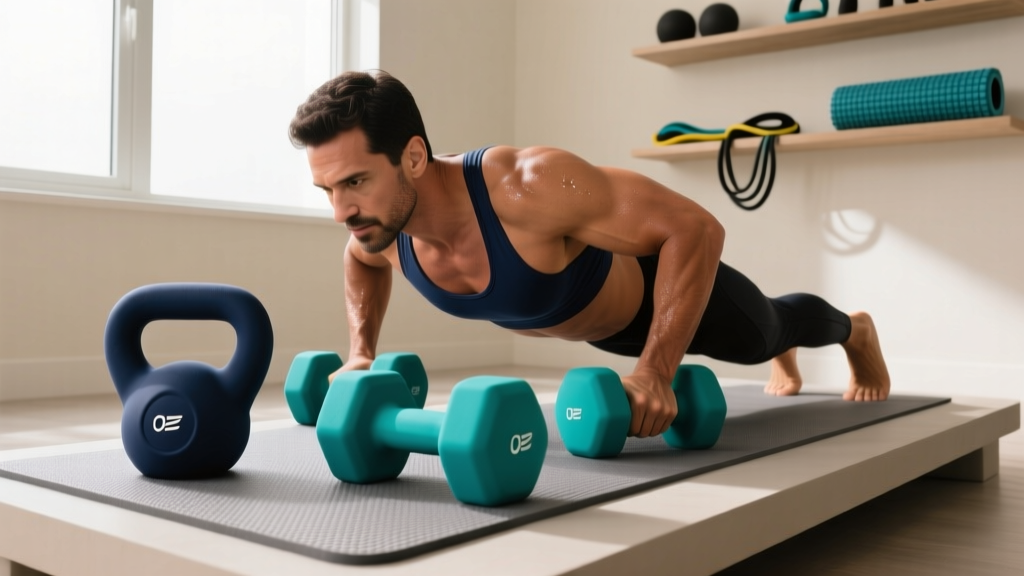
Neoprene Dumbbell Guide: Lower Chest Workout With Dumbbells at Home
Discover the best neoprene dumbbells for home use. Our buying guide includes a comparison table and a complete lower chest workout with dumbbells.

The Intersection of Home Gym Flooring and Chest Biomechanics
Building a comprehensive home gym requires balancing equipment durability, floor protection, and biomechanical efficiency. When programming a lower chest workout with dumbbells, the physical properties of your equipment matter just as much as the weight on the handle. Unlike rubber or bare cast iron, neoprene (polychloroprene) offers a unique matte-grip surface and shock-absorbing exterior that is highly prized for home environments where heavy metal plates cannot be dropped on hardwood or laminate flooring.
However, not all neoprene dumbbells are created equal. As of early 2026, the market has seen a surge in budget-friendly imported neoprene sets, but discerning lifters must look past the color-coded aesthetics to evaluate handle knurling, seam integrity, and hexagonal stability. This guide breaks down exactly what to look for when buying neoprene dumbbells for home use, culminating in a targeted routine to develop the sternocostal head of the pectoralis major.
Expert Insight: The lower chest (sternocostal fibers) is optimally activated through a decline angle or adduction movements that cross the lower torso. Performing these movements at home often requires floor-based decline variations, making the anti-roll and floor-safe properties of hexagonal neoprene dumbbells absolutely critical for safety.Material Science: Why Neoprene for Home Chest Routines?
Neoprene is a synthetic rubber that provides a soft, velvety exterior over a cast-iron core. According to material testing standards in fitness equipment, neoprene excels in three specific areas relevant to home chest training:
- Floor Protection: During a decline floor press or dumbbell pullover, weights are frequently set down or dropped from a height of 12 to 18 inches. Neoprene disperses this impact energy, protecting subflooring and reducing acoustic noise by up to 40% compared to bare iron.
- Thermal Comfort: Bare metal and hard rubber can become uncomfortably cold in garage gyms during winter months. Neoprene maintains a neutral surface temperature, improving grip security during the initial lift-off of a chest press.
- Sweat Resistance: The closed-cell structure of high-density neoprene repels moisture, preventing the rust and degradation common in uncoated iron dumbbells stored in humid environments.
The Critical Flaw: Seam Tearing and Handle Diameter
While neoprene is excellent for light to moderate isolation work, it has a known failure mode: seam tearing at the junction where the handle meets the weighted head. If you repeatedly drop 40lb+ neoprene dumbbells from the top of a flye position, the kinetic shock can cause the coating to split. Furthermore, standard neoprene dumbbells typically feature a 33mm to 35mm handle diameter. While this accommodates smaller hands, lifters with larger grips may experience premature forearm fatigue during heavy pressing, limiting their ability to overload the lower chest effectively.
2026 Neoprene Dumbbell Comparison Matrix
Below is a comparative analysis of the top neoprene dumbbell models available for home use, evaluated on grip ergonomics, durability, and price-to-weight ratio.
| Brand & Model | Shape | Handle Diameter | Price Range (2026) | Best Application |
|---|---|---|---|---|
| CAP Barbell 150lb Neoprene Hex Set | Hexagonal | 35mm (Ergo) | $140 - $160 | Full-body home routines, floor presses |
| Yes4All Neoprene Coated Pairs | Round / Hex | 33mm (Standard) | $18 - $45 / pair | Light isolation, high-rep flyes |
| SPRI Elite Neoprene Dumbbells | Hexagonal | 38mm (Thick) | $35 - $60 / pair | Lifters with larger hands, heavy pressing |
Executing the Lower Chest Workout With Dumbbells
Designing an effective lower chest workout with dumbbells at home requires manipulating the angle of resistance to target the inferior fibers of the pectoralis major. Since most home lifters lack a dedicated 45-degree decline bench, we utilize biomechanical workarounds. According to ExRx.net's kinesiology database, the decline press and specific adduction movements are paramount for lower chest hypertrophy.
1. The Glute-Bridge Decline Floor Press
- Setup: Lie flat on your back on a thick exercise mat. Hold your hexagonal neoprene dumbbells and drive your hips into the air, establishing a firm glute bridge. This creates a makeshift 15-to-20-degree decline angle.
- Execution: Press the dumbbells upward, focusing on bringing the handles together at the peak without clanking the neoprene heads. Lower the weights until your triceps lightly brush the floor.
- Volume: 4 sets of 10-12 reps. The floor limits your range of motion, which protects the shoulder capsule while allowing you to safely overload the lower pecs.
2. Standing Upward Chest Scoop (Dumbbell Flye Variation)
The American Council on Exercise (ACE) highlights that upward adduction mimics the natural fiber orientation of the lower chest. Stand with a slight forward hinge, holding lighter neoprene dumbbells (10-20 lbs) at your sides with palms facing forward. Scoop the weights upward and inward, finishing with your hands at eye level, as if lifting a heavy basin of water. Perform 3 sets of 15 reps, focusing entirely on the mind-muscle connection at the bottom of the sternum.
3. Dumbbell Pullover (Lower Chest & Serratus Focus)
Lie across a sturdy bench or stability ball, supporting only your upper back. Holding a single heavy neoprene dumbbell with both hands, lower it behind your head until you feel a deep stretch in the lats and lower chest. Pull the weight back over your chest using an arcing motion. The soft neoprene coating ensures that if you set the weight on the floor between sets, it won't chip your tiles or roll away unpredictably.
"The tactile feedback of a neoprene grip reduces the need for excessive chalk during high-volume home workouts, keeping your equipment and floors clean while maintaining secure contact during the most vulnerable part of the pressing movement." — FitGearPulse Ergonomics Team
Maintenance and Edge Cases: When Neoprene Fails
To maximize the lifespan of your investment, be aware of the environmental factors that degrade polychloroprene:
- UV Degradation: If your home gym is in a sunroom or garage with direct sunlight, prolonged UV exposure will cause the neoprene to fade, dry out, and eventually flake. Store them in a shaded rack or opaque bin.
- VOC Off-Gassing: Budget neoprene dumbbells often emit a strong chemical odor (Volatile Organic Compounds) upon unboxing. To mitigate this, unpack the weights and leave them in a well-ventilated garage or outdoors in the shade for 48 to 72 hours before bringing them into your living space.
- The 'Roll-Off' Danger: Never purchase round neoprene dumbbells for floor-based chest routines. A round dumbbell can easily roll away when placed on the floor during a setup, potentially causing severe wrist or ankle injuries. Always opt for hexagonal profiles.
Frequently Asked Questions
Can I build a massive lower chest using only light neoprene dumbbells?
While heavy mechanical tension is the primary driver of hypertrophy, you can stimulate significant growth with lighter weights (e.g., 15-25 lb neoprene pairs) by utilizing metabolic stress. Incorporate slow eccentrics (3-4 seconds lowering the weight), 1.5 rep styles, and minimal rest periods (30 seconds) to force muscular adaptation without requiring heavy iron.
Is neoprene toxic to touch during intense, sweaty workouts?
No. Once the initial manufacturing off-gassing period has passed, medical-grade and fitness-grade neoprene is entirely inert, hypoallergenic, and safe for prolonged skin contact. It is the same material used in high-end wetsuits and orthopedic braces.
How do I clean sweat and oils off my neoprene dumbbells?
Avoid harsh chemical solvents or bleach, which will break down the synthetic rubber polymers. Instead, use a microfiber cloth dampened with a mild solution of water and dish soap, or a dedicated gym-equipment wipe that is free of alcohol and ammonia. Wipe them down after every session to prevent the breakdown of the matte finish.
More gear to consider
All reviews
Overhead French Press Dumbbell Care: Rubber Hex vs Urethane

Beyond a Good Dumbbell Bench Press Weight: Bumper vs Iron Plate Care

2026 Olympic Barbell Buying Guide: Weight, Knurling, and the Supinated Dumbbell Row
Olympic vs Standard Plates: Plus, What Weight Dumbbells Should I Use?

Olympic vs Standard Plates: Setup for Dumbbell Rows
