Neoprene Dumbbells for Home Use vs. Benching 100 Pound Dumbbells
Compare neoprene coated dumbbells for home use with heavy hex sets for benching 100 pound dumbbells. Expert coating, durability, and buying advice.

The Home Gym Evolution: From Light Coatings to Heavy Iron
Building a home gym is rarely a one-and-done purchase; it is an evolution that mirrors your strength progression. Most lifters begin their journey with lightweight, color-coded sets designed for high-repetition accessory work, rehabilitation, or general fitness. However, as your baseline strength increases, the equipment that once served you well becomes a limiting factor. This is especially true when transitioning from light isolation movements to heavy compound presses. If your ultimate goal is benching 100 pound dumbbells, the gear you use to get there matters immensely.
In this comprehensive guide, we break down the material science, practical applications, and limitations of the neoprene coated dumbbell for home use, and contrast it directly with the heavy-duty rubber and urethane options required for elite-level dumbbell bench pressing. Whether you are outfitting a starter garage gym or upgrading to commercial-grade iron, understanding these material differences will save you hundreds of dollars in ruined equipment and protect your floors from catastrophic damage.
Neoprene Coated Dumbbells for Home Use: The Starter Standard
Neoprene (polychloroprene) is a synthetic rubber that has dominated the light-to-medium dumbbell market for over a decade. Manufactured by dipping a cast-iron core into a vat of liquid neoprene, these dumbbells are cured to form a soft, matte, and slightly porous outer shell. They are ubiquitous in commercial gyms' functional fitness zones and are the default choice for home users focusing on light resistance training.
The Advantages of Neoprene
- Ergonomic Grip: The matte texture provides a secure, non-slip grip even when hands are sweaty, eliminating the need for chalk during high-rep sets.
- Floor Protection (Light Impacts): For weights ranging from 5 to 30 pounds, the neoprene shell offers enough shock absorption to prevent scuffing on hardwood or laminate flooring if set down carefully.
- Color-Coded Progression: Neoprene sets are universally color-coded by weight, making it easy to track progressive overload during fast-paced circuit training.
- Cost-Effective: As of early 2026, neoprene dumbbells remain highly affordable, typically pricing out between $1.25 and $2.00 per pound for retail sets.
The Critical Limitations
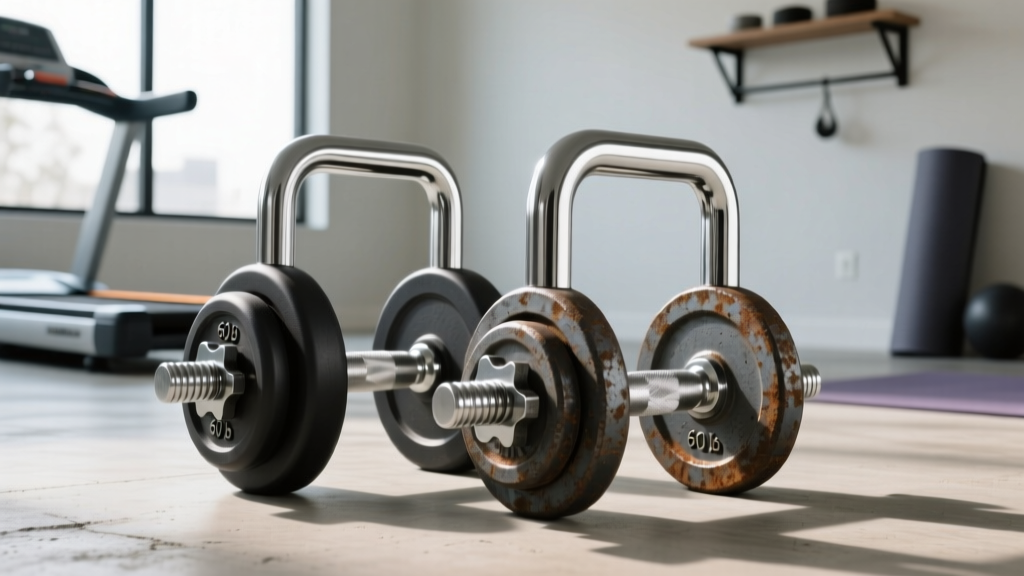
Despite their popularity, neoprene dumbbells possess a hard ceiling in terms of durability and maximum weight. The dip-coating process does not bond chemically with the iron core; it merely forms a tight sleeve. When subjected to the sheer force of heavy drops, this sleeve tears, exposing the raw iron underneath to moisture, which rapidly leads to rust and structural degradation.
Why Neoprene Fails When Benching 100 Pound Dumbbells
Reaching the milestone of benching 100 pound dumbbells places you in an elite tier of home gym lifters. At this weight, the physical and mechanical demands on your equipment change drastically. Here is why a neoprene coated dumbbell for home use is entirely unsuited for heavy pressing:
- The Footprint Problem: Neoprene is a low-density coating. To coat a 100-pound iron core in neoprene while maintaining a grippable handle, the dumbbell heads would need to be absurdly massive. This bulk would physically interfere with your range of motion, forcing your hands too wide and placing dangerous torque on your rotator cuffs at the bottom of the press.
- Shearing Force on Drops: When benching heavy, safety dictates that you must drop the dumbbells to the floor at the end of a set (rather than risking a shoulder tear by trying to bring them back to your chest). A 100-pound drop generates immense kinetic energy. Neoprene lacks the durometer hardness to absorb this; it will instantly split, delaminate, and shatter upon impact with a rubber mat.
- Handle Fatigue: Heavy dumbbells require thick, knurled steel handles to prevent the weight from rolling out of your grip. Neoprene molds cannot replicate the aggressive knurling required to secure 200 pounds of total load during a heavy bench press.
Material Comparison Matrix: Neoprene vs. Rubber vs. Urethane
To bridge the gap between light home use and heavy benching, you must upgrade your materials. Below is a data-driven comparison of the three primary dumbbell coatings available on the market today.
| Material | Max Practical Weight | Durometer (Hardness) | Drop Tolerance | 2026 Avg. Cost / lb |
|---|---|---|---|---|
| Neoprene | Up to 50 lbs | Soft (Shore A 60-70) | Low (Tears easily) | $1.50 - $2.00 |
| Virgin Rubber (Hex) | Up to 120 lbs | Medium (Shore A 80-85) | High (Bounces slightly) | $2.50 - $3.50 |
| Urethane | 150+ lbs | Hard (Shore A 90+) | Extreme (Zero bounce) | $4.50 - $6.50 |
As highlighted in Barbend's comprehensive testing on dumbbell durability and drop ratings, virgin rubber and urethane are the only acceptable materials for heavy pressing. Urethane, in particular, is virtually impervious to moisture, UV light, and the shearing forces of a 100-pound drop, making it the gold standard for commercial facilities and elite home gyms.
The Upgrade Path: Progressing to the 100-Pound Milestone
If you are currently utilizing a neoprene coated dumbbell for home use and want to work your way up to pressing the 100s, follow this equipment and training progression framework:
Phase 1: The Adjustable Bridge (50 to 80 lbs)
Before buying a full rack of heavy hex dumbbells, invest in a high-end adjustable set. Models like the Bowflex SelectTech 1090i (which adjusts from 10 to 90 pounds) or the Nuobell 80lb set allow you to micro-load your bench press in 2.5 or 5-pound increments. This is crucial for central nervous system adaptation without spending $3,000 on a full dumbbell rack.
Phase 2: The Heavy Hex Acquisition (80 to 100 lbs)
Once you can comfortably press the 80s for working sets, it is time to purchase dedicated heavy rubber hex dumbbells. Brands like Rep Fitness and American Barbell offer excellent rubber hex pairs featuring medium-knurled steel handles. The hex heads prevent rolling, which is a critical safety feature when you are kicking heavy weights up into position.
Phase 3: Implementing Dumbbell Spotter Arms
Benching 100 pound dumbbells alone in a home gym is inherently dangerous. If you fail a rep, you cannot easily rack the weights. You must install specialized dumbbell spotter arms on your power rack. The Rogue Monster Lite Dumbbell Spotter Arms (priced around $115) feature high-density UHMW plastic sleeves that catch the dumbbell heads safely if your arms give out, protecting your face and chest from a 200-pound total load collapse.
Frequently Asked Questions
Can I find a 100 lb neoprene dumbbell?
No. Reputable manufacturers do not produce 100 lb neoprene dumbbells. The physical volume required to coat a 100 lb iron core in neoprene would make the dumbbell impossibly bulky, and the soft coating would instantly destroy itself upon impact with the floor. For weights above 50 lbs, the industry universally shifts to rubber or urethane.
Will rubber hex dumbbells smell up my home gym?
Cheap, recycled rubber dumbbells (often imported from overseas liquidators) off-gas volatile organic compounds (VOCs) that smell like burning tires and can cause headaches. To avoid this, only purchase virgin rubber or urethane dumbbells from established brands like Rogue, Rep Fitness, or Titan Fitness. Virgin rubber is cured properly and has little to no odor after a few days of airing out in a garage.
How do I safely kick 100 lb dumbbells up for a bench press?
Sit on the bench with the dumbbells resting on your thighs, just above the knees. Kick one knee up at a time to launch the dumbbell to your shoulder, immediately leaning back onto the bench as you kick the second leg. Never attempt to clean the weights from the floor directly to your chest, and never lower them back to your thighs at the end of the set—drop them safely to the floor beside the bench.
More gear to consider
All reviews
Barbell Knurling & Weight Guide: Seated Dumbbell Rear Delt Fly

Power Rack vs Squat Stand: Woman's Dumbbell Chest Press Setup

2026 Bumper vs Iron Plates & Bicep Workouts with Dumbbells at Home

Men's Leg Workouts with Dumbbells: Rubber vs Urethane

2026 Dumbbell Rack Trends: Storage for Dumbbell Russian Twists