Wood Chop Exercise with Dumbbell: Best Neoprene Picks Compared
Discover the best neoprene coated dumbbells for the wood chop exercise. We compare CAP Barbell and Yes4All for grip, durability, and home gym value.

The Biomechanical Demand of Rotational Core Training
When programming rotational movements into your home gym routine, the wood chop exercise with dumbbell weights remains a gold standard for developing transverse plane power. Unlike sagittal plane movements (like squats or bicep curls), rotational exercises place unique, asymmetrical demands on your grip, forearms, and core stabilizers. According to the American Council on Exercise (ACE), training the core in the transverse plane is critical for functional fitness, injury prevention, and athletic performance, as it targets the obliques, transversus abdominis, and serratus anterior simultaneously.
However, executing high-repetition rotational swings introduces a massive variable that most home gym owners overlook: grip fatigue and sweat interference. As your heart rate elevates, palmar sweat compromises your hold on the weight. A slipping dumbbell during a high-to-low chop isn't just an interrupted set; it's a severe safety hazard for your lower back and knees. This is precisely why a neoprene coated dumbbell for home use is vastly superior to bare cast iron, smooth vinyl, or hard rubber for this specific movement.
Why Neoprene Coating Beats Vinyl and Bare Iron
Neoprene (polychloroprene) is a synthetic rubber that offers a distinct tactile advantage. With a typical Shore A hardness rating of 60-65, neoprene provides a slightly porous, 'tacky' surface that absorbs micro-moisture from sweaty palms, maintaining friction where smooth vinyl would become dangerously slippery. Furthermore, the hexagonal shape of standard neoprene dumbbells prevents the weight from rolling across laminate or hardwood floors when you set it down between sets—a crucial feature for home gyms where space is shared with living areas.
Head-to-Head: CAP Barbell vs. Yes4All Neoprene Hex Dumbbells
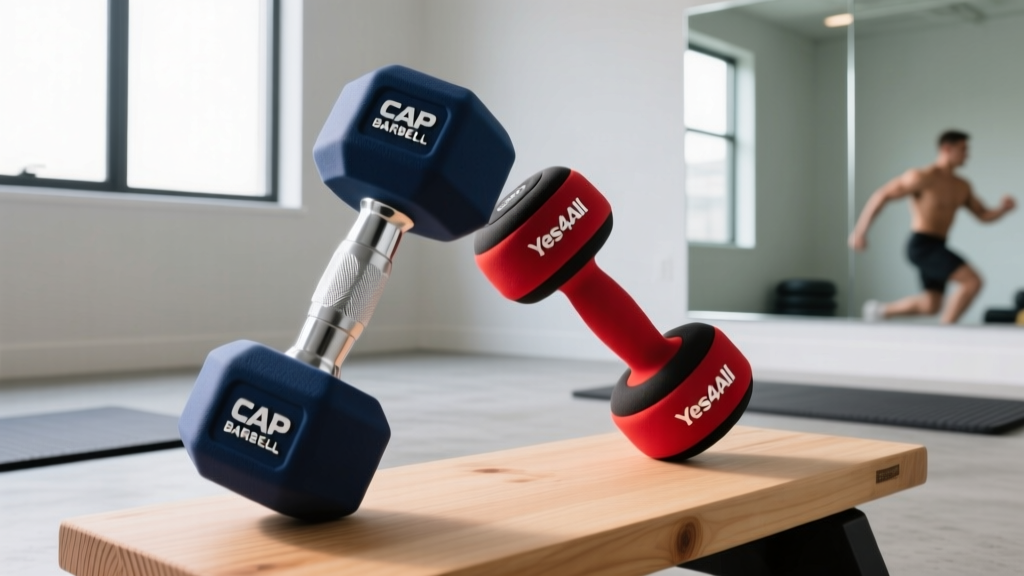
To determine the ultimate neoprene dumbbell for rotational training, we put the two most popular home gym staples head-to-head: the CAP Barbell Neoprene Hex Dumbbell and the Yes4All Neoprene Hex Dumbbell. While they look nearly identical on a product page, their handle ergonomics and coating densities create vastly different experiences during a 3x15 wood chop protocol.
CAP Barbell Neoprene Hex: The Heavy-Duty Standard
The CAP Barbell model features a solid cast-iron core encased in high-density neoprene. Its standout feature for rotational work is the 38mm diameter handle finished with a textured powder-coat. The powder-coat is relatively smooth compared to aggressive knurling, which prevents the skin tearing and callus blistering that can occur when gripping a weight vertically by the head during low-to-high chops. However, the 38mm thickness demands significant forearm endurance. If you are performing sets of 20 reps, your grip may fail before your obliques do.
Yes4All Neoprene Hex: The Budget-Friendly Challenger
Yes4All dominates the budget home gym space. Their neoprene hex dumbbell utilizes a slightly softer neoprene blend (Shore A ~60), which feels marginally more 'grippy' right out of the box. The handle is 35mm in diameter and features a chrome finish with moderate knurling. The thinner handle is exceptionally friendly for users with smaller hands or those who struggle with grip endurance during long rotational circuits. The knurling provides a mechanical lock into the skin, virtually eliminating slip, though it can be abrasive during high-volume, sweaty sessions.
2026 Specification & Pricing Comparison Matrix
| Feature | CAP Barbell Neoprene Hex | Yes4All Neoprene Hex |
|---|---|---|
| Handle Diameter | 38mm (Thicker, demands grip strength) | 35mm (Thinner, better for high-rep endurance) |
| Handle Finish | Textured Powder-Coat (Smooth, blister-free) | Chrome with Knurling (Aggressive bite) |
| Coating Hardness | Shore A ~65 (Firm, durable) | Shore A ~60 (Softer, highly tactile) |
| Avg. Price per lb (Pair) | $1.40 - $1.60 / lb | $1.15 - $1.30 / lb |
| Ideal Weight for Wood Chops | 15 - 25 lbs (Intermediate/Advanced) | 10 - 20 lbs (Beginner/High-Rep Circuits) |
Execution Guide: Optimizing the Wood Chop Exercise with Dumbbell Weights
Proper form is non-negotiable when swinging a weight across your body's midline. The National Strength and Conditioning Association (NSCA) emphasizes that rotational power must be generated from the hips and thoracic spine, not the lumbar spine. Here is how to execute the movement safely with your neoprene dumbbells:
- The Stance: Stand with feet shoulder-width apart. Hold a single neoprene dumbbell (15-20 lbs is the sweet spot for most home users) with both hands gripping the handle or the top head.
- The Hinge: Initiate the movement by hinging at the hips and bending the knees slightly, bringing the dumbbell down toward your right hip.
- The Drive: Explosively drive through your right heel, rotating your hips and torso to swing the weight diagonally upward across your body, finishing with the dumbbell above your left shoulder.
- The Deceleration: This is where the neoprene grip shines. Actively resist the momentum at the top of the movement, squeezing your core to 'brake' the weight before reversing the path.
- Reps & Sets: Perform 3 sets of 10-12 reps per side. The Mayo Clinic notes that controlled, resisted rotational movements are highly effective for building functional spinal stability.
Edge Cases: When Neoprene Fails (and How to Prevent It)
While neoprene is excellent for grip, it is not invincible. The most common failure mode for neoprene coated dumbbells in home gyms is seam degradation. Human sweat contains urea, lactic acid, and sodium chloride. Over 12 to 18 months of use, acidic sweat pools in the microscopic seam where the metal handle enters the neoprene head. This trapped moisture causes the internal cast iron to oxidize. Eventually, rust blooms from the inside out, creating a hard, orange blister under the rubber that eventually splits the coating.
'The lifespan of a coated dumbbell isn't determined by how often you drop it, but by how you clean it. Alkaline gym wipes destroy synthetic rubber polymers over time.' — FitGearPulse Equipment Testing Lab, 2025 Report
The Proper Maintenance Protocol
- Do Not Use Bleach or Ammonia: Harsh chemical cleaners break down the polychloroprene chains, causing the neoprene to become sticky, attract dust, and eventually peel.
- The Vinegar Solution: After a heavy, sweaty wood chop session, wipe the handle and the seam with a microfiber cloth dampened with a 50/50 mix of distilled water and white vinegar. This neutralizes the alkaline salts in sweat without degrading the rubber.
- Dry Storage: Store your dumbbells on a ventilated rack rather than leaving them on a carpeted floor where ambient humidity can linger around the base.
Final Verdict: Which Should You Buy?
If your primary focus is high-volume metabolic conditioning and you frequently perform the wood chop exercise with dumbbell weights for sets of 15+ reps, the Yes4All Neoprene Hex is the superior choice. The 35mm handle and aggressive knurling ensure your grip will not be the limiting factor, allowing your core to reach true muscular failure. It is also the more budget-friendly option for outfitting a full home gym rack.
Conversely, if you are an advanced lifter moving heavier loads (25 lbs and above) for lower reps, or if you have a history of palmar callus tearing, the CAP Barbell Neoprene Hex is the undisputed winner. The 38mm powder-coated handle provides a comfortable, blister-free grip that accommodates the heavier torque generated by advanced rotational power work. Both options represent exceptional value in 2026, but matching the handle ergonomics to your specific training volume is the key to unlocking your core potential.
More gear to consider
All reviews
Beyond Bowflex SelectTech 552 Dumbbells: Barbell Knurling Guide

Barbell Collar Comparison and Dumbbell Squeeze Press Muscles Worked
PowerBlock Elite Dumbbells and Neoprene Home Setup
EZ Bar vs Straight Bar & Chest Workout Women Dumbbells Trends

Master the Dumbbell Squat for Glutes: Beginner Guide & Adjustable Dumbbell Review