Deadlift With Dumbbells vs Barbell: Beginner Home Guide
Master the deadlift with dumbbells vs barbell debate. A beginner's step-by-step guide to using neoprene coated dumbbells for safe home workouts.

The Great Debate: Deadlift With Dumbbells vs Barbell for Beginners
Building a home gym in 2026 requires strategic decisions, especially when space, budget, and experience levels are limited. One of the most common dilemmas for novices is deciding between a deadlift with dumbbells vs barbell setup. While the barbell is the undisputed king of absolute strength, it is not always the best starting point for a beginner training in a spare bedroom or garage. This is where the often-overlooked neoprene coated dumbbell for home use becomes a game-changer. This comprehensive guide will walk you through why starting with neoprene dumbbells is a biomechanically sound choice, how to execute the movement perfectly, and exactly when you should graduate to the barbell.
Quick Decision Framework
- Choose Neoprene Dumbbells If: You are learning the hip hinge, have limited floor space, lack a dedicated lifting platform, or want to protect hardwood floors.
- Choose a Barbell If: You have mastered the hip hinge, your grip strength is no longer the limiting factor, and you need to load beyond 100 lbs total.
Why Start with a Neoprene Coated Dumbbell for Home Use?
When outfitting a home gym, the material of your free weights matters just as much as the weight itself. Neoprene is a synthetic rubber that offers a soft, slightly textured exterior over a solid cast-iron core. For beginners, a neoprene coated dumbbell for home use provides three distinct advantages over bare iron, rubber, or high-end urethane.
1. Floor Protection and Noise Dampening
Most beginners do not have the budget or space for a 3/4-inch thick horse-stall mat or a dedicated deadlift platform. Neoprene features a 2mm to 3mm thick shock-absorbing sleeve. When you inevitably misjudge a rep and drop a 25 lb or 35 lb dumbbell, the neoprene coating prevents the catastrophic cracking of floorboards or concrete that bare iron would cause. It also significantly reduces acoustic vibration, keeping your household or neighbors happy.
2. Ergonomic Grip and Tactile Feedback
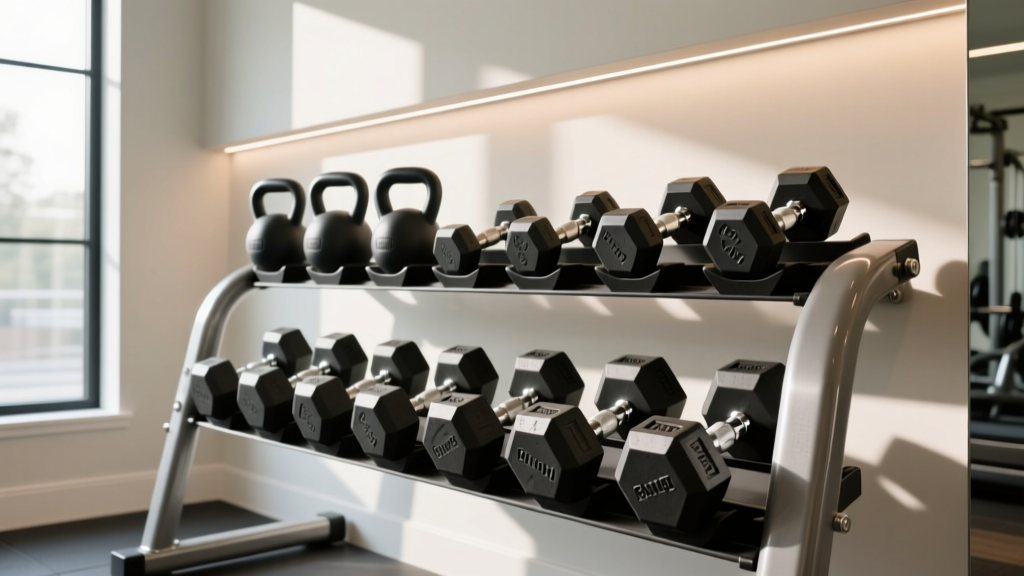
Unlike cheap vinyl or slick painted iron, neoprene offers a mild tackiness. When performing a deadlift, your forearms will fatigue quickly. The tactile grip of neoprene reduces the coefficient of friction required to hold the weight, allowing you to focus on your posterior chain rather than your grip failing prematurely. Furthermore, the hexagonal shape standard on most neoprene dumbbells (like the popular CAP Barbell or Yes4All lines) prevents the weights from rolling away between sets—a crucial safety feature in tight home gyms.
3. Cost-Effectiveness for Lighter Loads
In 2026, urethane dumbbells remain the gold standard for commercial gyms due to their extreme durability, but they are prohibitively expensive for home users buying lighter weights (averaging $3.50+ per pound). Neoprene dumbbells, conversely, hover around the $1.50 to $2.00 per pound mark. A beginner pair of 35 lb neoprene hex dumbbells will cost roughly $110 to $130, providing an accessible entry point to resistance training.
Step-by-Step: The Neoprene Dumbbell Deadlift
The biomechanics of the dumbbell deadlift differ slightly from the barbell. Because the weights are held at your sides rather than in front of your shins, your arms can hang completely straight, aligning the load directly under your shoulders. According to exercise databases like ExRx.net, this lateral positioning can actually reduce the shear force on the lumbar spine for lifters with poor ankle mobility.
- The Stance: Place the neoprene dumbbells on the floor just outside your feet. Stand with your feet hip-width apart, toes pointing forward or slightly out.
- The Hinge: Push your hips backward as if closing a car door with your glutes. Keep a slight, soft bend in your knees. Do not squat; this is a hinge.
- The Grip: Reach down and grab the dumbbells. Your palms should face your thighs (neutral grip). The hex shape will allow the flat side to rest comfortably against your outer thigh.
- The Brace: Take a deep breath into your belly, creating intra-abdominal pressure. Flatten your back and engage your lats by imagining you are squeezing an orange in your armpits.
- The Drive: Push the floor away from you. Drive your hips forward to stand up tall. Do not hyperextend your lower back at the top; simply squeeze your glutes.
- The Descent: Reverse the motion by pushing your hips back first, keeping the dumbbells dragging lightly against your thighs to maintain a vertical bar path.
When to Transition to the Barbell
While the neoprene dumbbell is an exceptional teaching tool, it has a ceiling. You will know it is time to transition from the deadlift with dumbbells vs barbell debate and commit to the barbell when you hit the 'Grip Bottleneck.' Once you are deadlifting a pair of 50 lb or 60 lb dumbbells (100-120 lbs total), your grip strength will likely fail before your glutes and hamstrings do. Furthermore, holding heavy, bulky dumbbells at your sides can cause the weights to physically collide with your knees or hips depending on your arm length and torso proportions.
Transitioning to an Olympic barbell (which weighs 44 lbs unloaded) allows the weight to be centered over your mid-foot. As noted by the American Council on Exercise (ACE), the barbell deadlift requires navigating the bar around the knees, which demands greater coordination and lat engagement to keep the bar path vertical. When you make the switch, invest in a quality bar with moderate knurling (like the Rogue Ohio Bar, approx. $295) and a set of crumb-rubber bumper plates to maintain the floor-protection you enjoyed with your neoprene dumbbells.
Comparison Matrix: Neoprene Dumbbells vs. Olympic Barbell
| Feature | Neoprene Dumbbells (Home Use) | Olympic Barbell & Plates |
|---|---|---|
| Cost per Pound | $1.50 - $2.00 / lb | $1.80 - $3.50 / lb (Bumpers) |
| Space Required | Minimal (can be stored in a closet) | Requires 7ft width + plate storage |
| Learning Curve | Low (natural arm path) | High (requires knee clearance technique) |
| Max Load Capacity | Limited by grip & dumbbell size (usually max 100-120 lbs total) | Virtually unlimited (500+ lbs) |
| Floor Safety | Excellent (built-in shock absorption) | Poor (requires thick rubber mats/platform) |
Common Form Breakdowns and Fixes
Whether you are holding neoprene hex dumbbells or a loaded barbell, the hip hinge is a movement pattern that requires practice. Here are the most frequent errors beginners make and how to correct them.
The 'Squat-Lift' Hybrid: Many beginners bend their knees too much, turning the deadlift into a squat. This shifts the focus from the hamstrings and glutes to the quadriceps and places the lower back in a vulnerable, rounded position at the bottom of the movement.
- Fix for Squatting: Place a small 2.5 lb or 5 lb neoprene-coated plate under your heels. This artificial elevation forces your hips to push backward rather than your knees to push forward, instantly correcting the hinge mechanics.
- Fix for Lumbar Rounding: Reduce the weight by 30%. Film your set from a lateral (side) angle. If your spine loses its neutral alignment before the dumbbells pass your knees, your hamstrings are too tight or the weight is too heavy. Elevate the dumbbells on yoga blocks or aerobic steps to reduce the range of motion until your mobility improves.
- Fix for Grip Slipping: If the neoprene coating becomes slick from sweat, use liquid chalk (magnesium carbonate in an alcohol base). It provides the friction of traditional chalk without creating a massive dust cloud in your home gym.
Final Verdict for Your Home Gym
The deadlift with dumbbells vs barbell argument is not about which is universally 'better,' but rather which is the right tool for your current phase of development. For the beginner building a home gym, investing in a set of neoprene coated hex dumbbells (ranging from 15 lbs to 40 lbs) is the smartest first move. They protect your floors, teach proper hinge mechanics without the complexity of knee-clearance, and provide a safe, tactile grip. Once you can comfortably perform 3 sets of 10 reps with a pair of 50 lb neoprene dumbbells with perfect form, you will have built the foundational strength and motor control necessary to safely transition to the barbell and pursue heavy, progressive overload.
More gear to consider
All reviews
Barbell or Dumbbell Bicep Curls: Neoprene Mistakes & Fixes

Cast Iron vs Competition Kettlebell Care & Plank Dumbbell Drags

Iron vs Bumper Plates: Beyond How to Exercise Triceps With Dumbbells

Power Rack vs Squat Rack vs Stand: Beyond a Dumbbell Workout PDF
Bumper vs Iron: Budgeting an Arm Workout at Home with Dumbbells