2026 Loadable Dumbbell Market & Proper Dumbbell Squat Form
Explore 2026 loadable dumbbell market trends, top models like Ironmaster and Titan, and how bulky plates impact proper dumbbell squat form.

The 2026 Loadable Dumbbell Market: A Shift Toward Heavy Iron
The home fitness equipment landscape in 2026 has decisively pivoted. While dial-adjustable dumbbells dominated the early 2020s home gym boom, a surge in advanced lifters and hybrid athletes has triggered a massive demand for the loadable dumbbell with interchangeable plates. Consumers are increasingly prioritizing commercial-grade durability, knurling quality, and the tactile feel of solid iron over the fragile plastic housings of mechanical dial systems.
According to recent industry analyses, the market for modular and loadable free weights has grown by 14% year-over-year, driven largely by supply chain stabilization that has made cold-rolled steel and precision-machined sleeves more accessible to direct-to-consumer brands. Lifters are realizing that a loadable system not only mimics the exact biomechanics of a standard barbell but also offers an unmatched cost-per-pound ratio for heavy home training.
2026 Market Data Highlight: Cost Per Pound Analysis- Fixed Urethane Dumbbells: $4.50 - $6.00 per pound
- Premium Dial Adjustables: $3.25 - $4.00 per pound (with a 22% 5-year failure rate)
- Loadable Systems (w/ Olympic Plates): $1.85 - $2.40 per pound
Top Contenders: Ironmaster vs. Titan vs. Rogue
When evaluating the best loadable dumbbell handles on the market, buyers must choose between proprietary square-peg systems and standard 2-inch Olympic sleeves. Below is a structural and financial comparison of the top three models defining the 2026 market.
| Model | Sleeve Type | Max Capacity | Handle Length | 2026 Price Point |
|---|---|---|---|---|
| Ironmaster Quick-Lock V2 | Proprietary Square | 165 lbs | 8.5 inches | $459 (120lb Set) |
| Titan Fitness Loadable | 2" Olympic | 150+ lbs | 17.5 inches | $129.99 (Pair, Handles) |
| Rogue Loadable Handle | 2" Olympic | 150+ lbs | 17.2 inches | $145.00 (Per Handle) |
While the Ironmaster V2 remains the gold standard for compact, heavy drop-sets due to its screw-in locking mechanism, the Titan and Rogue 2-inch Olympic handles have captured the majority of the 2026 market share. Their compatibility with existing bumper plates and fractional change plates makes them an economically superior choice for lifters who already own a barbell plate collection.
Biomechanical Realities: Heavy Loadable Dumbbells and Squat Mechanics
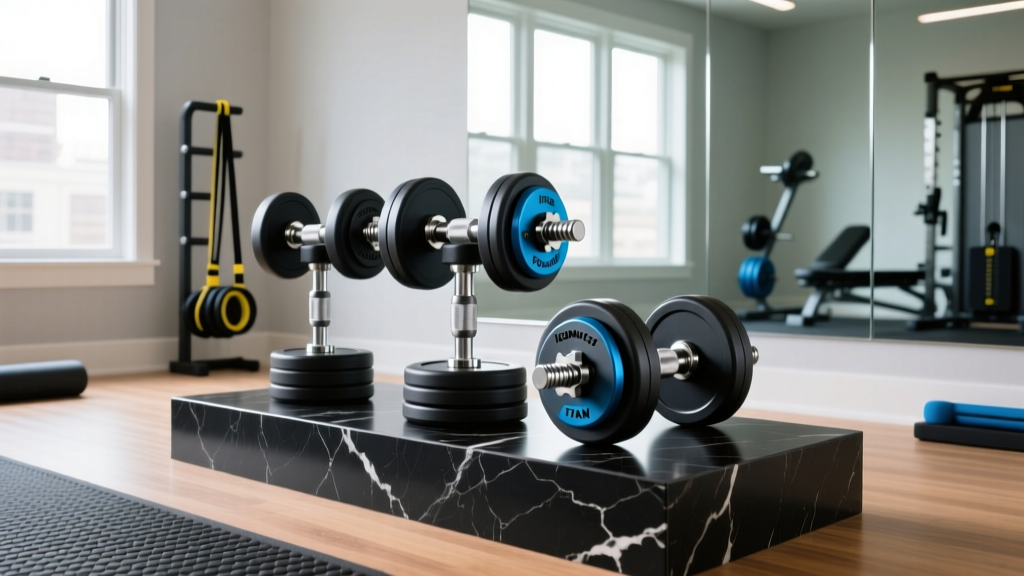
The transition from fixed hex bells or compact adjustable dumbbells to a loadable dumbbell with interchangeable plates introduces a unique biomechanical challenge. When you load a 2-inch Olympic handle with cast iron or bumper plates, the physical footprint of the dumbbell expands drastically. A 60-pound loadable dumbbell built with four 10-pound plates and two 5-pound plates can extend nearly 16 inches in total length.
This structural reality makes mastering proper dumbbell squat form significantly more complex. The widened center of mass alters the moment arm at the wrist and shoulder, particularly during goblet and dual-dumbbell front-rack squats. According to National Institutes of Health (NIH) research on squat kinematics, anterior load placement dictates the required degree of thoracic extension and ankle dorsiflexion. When the load is bulky and elongated, lifters often compensate by flaring their elbows excessively or rounding the upper thoracic spine, leading to cervical strain and reduced quadriceps activation.
Expert Insight: 'The primary error lifters make with loadable Olympic dumbbells is treating them like standard kettlebells. The elongated sleeve of a loadable handle will physically collide with the forearm or clavicle if the grip width and elbow tuck are not adjusted to accommodate the plate diameter.'
Step-by-Step Guide to Proper Dumbbell Squat Form with Bulky Plates
To safely and effectively execute lower body movements with heavy, loadable dumbbells, you must adapt your mechanics. The following protocol ensures optimal joint stacking and muscle recruitment, aligning with the ExRx.net biomechanical breakdown of anterior squat variations.
1. The Grip and Wrist Stacking
Do not wrap your hands around the extreme ends of the handle. Grip the center knurling or the exact point where the handle meets the sleeve. Your wrists must remain in strict neutral extension. If the heavy plates cause your wrists to bend backward (extension), you will lose power transfer and risk carpal impingement. Stack the knuckles directly over the radius and ulna bones.
2. The Front-Rack 'Shelf' Creation
For dual-dumbbell front squats, the thick 2-inch sleeves of loadable handles can dig painfully into the clavicle. To achieve proper dumbbell squat form, elevate your elbows to create a muscular 'shelf' with your anterior deltoids. Rest the inner edge of the dumbbell plates on this deltoid shelf rather than letting the steel handle rest directly on your collarbone.
3. The Eccentric Descent and Elbow Tracking
Initiate the squat by breaking at the hips and knees simultaneously. As you descend, actively pull your elbows down and slightly inward to avoid them colliding with your knees or the bulky plates hitting your thighs. Maintain a rigid torso angle; the heavy anterior load will attempt to pull you forward. Counteract this by engaging your lats and pulling the dumbbells forcefully into your torso.
4. Depth and Pelvic Tracking
Aim for the hip crease to drop just below the patella. Because loadable dumbbells do not have the fixed, compact dimensions of hex bells, you may need to widen your stance by 2 to 3 inches to allow the weights to pass cleanly between your legs without clipping your inner thighs at the bottom of the hole.
5. The Concentric Drive
Drive through the mid-foot, leading the ascent with your chest and shoulders simultaneously. Do not let your hips shoot up faster than your shoulders, as this will cause the heavy loadable plates to pull you forward, compromising your lumbar spine.
Failure Modes and Edge Cases: What Breaks First?
While loadable dumbbells are vastly superior in longevity compared to dial-adjustables, they are not immune to wear. Based on BarBend's comprehensive loadable dumbbell testing and long-term user data, here are the specific failure modes to monitor in 2026:
- Thread Stripping on 1-Inch Spinlocks: Budget-friendly standard 1-inch loadable handles rely on threaded spinlock collars. When subjected to lateral torque during walking lunges or Bulgarian split squats, these threads frequently degrade, leading to mid-set plate slippage. Always upgrade to 2-inch Olympic handles with spring collars or screw-down clamps.
- Sleeve Scoring and Oxidation: Handles with bare steel sleeves (common in budget models) will score and oxidize if used with cast iron plates that have rough inner bores. Look for handles with hard-chrome or Cerakote-coated sleeves to ensure smooth plate loading and unloading.
- Proprietary Pin Loss: Systems like the Ironmaster Quick-Lock are incredibly robust, but the proprietary locking screws can be easily misplaced during travel or gym reorganizations. Always purchase and store backup locking screws.
ROI Analysis: Are Loadable Dumbbells Worth the 2026 Premium?
From a purely financial perspective, the loadable dumbbell with interchangeable plates represents the highest ROI in the free weights category. Building a 150-pound set using Titan Fitness 2-inch handles ($130) and 160 pounds of standard iron or echo bumper plates ($320) brings the total investment to roughly $450. Attempting to replicate this weight range with fixed urethane dumbbells would cost upwards of $1,200, while purchasing multiple pairs of dial-adjustables would exceed $800 and introduce severe drop-durability risks.
However, the physical footprint and the biomechanical adjustments required for movements like the goblet squat cannot be ignored. Lifters must be willing to adapt their stance width, grip positioning, and joint stacking to accommodate the elongated sleeves. By strictly adhering to proper dumbbell squat form and respecting the altered center of mass, the loadable dumbbell transitions from a mere budget alternative to an elite, lifelong training implement capable of supporting advanced hypertrophy and strength phases well into the future.
More gear to consider
All reviews
How to Gain Muscle Using Dumbbells vs. Olympic Barbells: Weight & Knurling Guide

Setting Up Your Home Gym for Different Arm Exercises with Dumbbells

Choosing Olympic vs Standard Plates for Your Burpee Over Dumbbell WODs

Installing a Power Rack vs Squat Stand for Dumbbell Arm Exercises

Olympic vs Standard Plates: Rack Setup & 35lb Dumbbells Guide