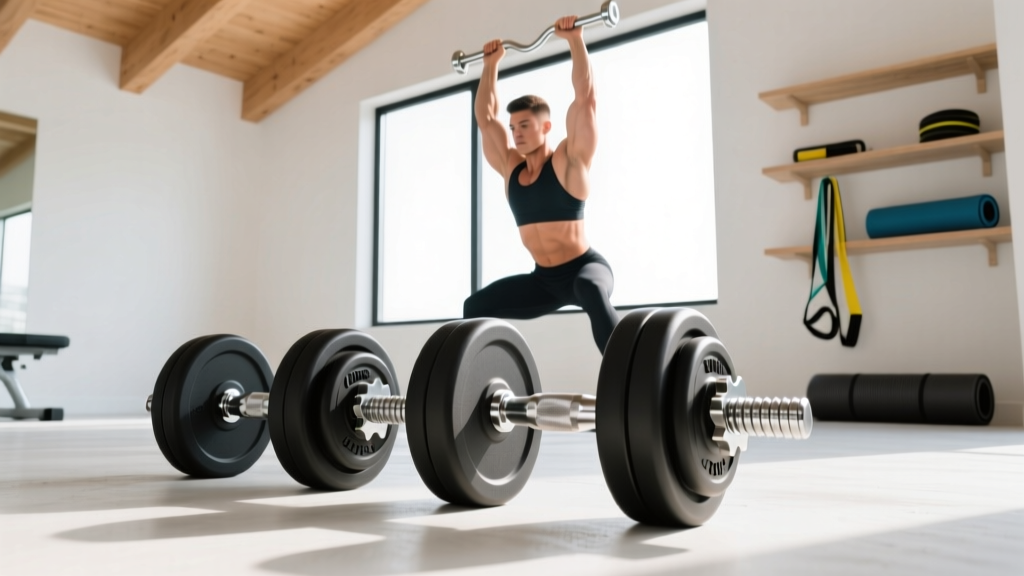
What Dumbbell Exercise Is Good for Triceps? Top Moves & Loadable Dumbbell Maintenance
Discover what dumbbell exercise is good for triceps using loadable handles, plus expert maintenance tips to prevent sleeve scoring and collar wear.

The Biomechanics of Triceps Isolation
Building a comprehensive home gym requires equipment that bridges the gap between heavy compound lifting and precise isolation work. While adjustable selectorized dumbbells dominate the market for convenience, serious lifters often turn to loadable dumbbells with interchangeable plates for their superior durability, knurling quality, and rotational mechanics. But beyond heavy presses and rows, how do these tools fit into arm day? When home gym owners search forums asking, 'what dumbbell exercise is good for triceps?' the consensus among strength coaches points to movements that demand strict wrist stability and micro-loading capabilities—both of which are hallmarks of a high-quality plate-loaded handle.
Answering the Question: What Dumbbell Exercise Is Good for Triceps?
According to biomechanics guidelines outlined by the National Academy of Sports Medicine (NASM), the triceps brachii is best targeted through movements that involve elbow extension with the shoulder in varying degrees of flexion. Using loadable Olympic dumbbell handles, the following exercises are highly effective:
- Overhead Triceps Extension: Performed seated or standing, this movement places the long head of the triceps under a deep stretch. The rotating sleeves of a loadable dumbbell allow your wrists to naturally pronate and supinate, reducing joint strain compared to fixed hex dumbbells.
- Dumbbell Skull Crushers: Lying on a bench, lowering the dumbbells toward your ears targets the lateral and medial heads. The ability to micro-load 2.5 lb or 5 lb fractional plates on a loadable handle is crucial here, as triceps isolation work often stalls on fixed-weight increments.
- Cross-Body Triceps Kickbacks: While often criticized for poor resistance curves, kickbacks performed with a loadable handle and a strict peak contraction provide excellent tension at the shortened muscle position.
Why Loadable Dumbbells Outperform Fixed Hex Dumbbells for Arms
Fixed rubber or urethane hex dumbbells feature thick, static handles. When performing heavy skull crushers, the lack of sleeve rotation forces the wrist to absorb the rotational torque of the movement, frequently leading to medial epicondylitis (golfer's elbow) or general wrist impingement. High-end loadable dumbbell handles—such as the Rogue Loadable Dumbbell Handles (retailing around $95 per pair as of 2026) or Titan Fitness Olympic handles ($70 per pair)—utilize bronze bushings or needle bearings. This engineering allows the plate-loaded sleeve to spin independently of the grip, safeguarding your wrists during high-tension triceps extensions.
The Hidden Cost of High-Frequency Plate Swapping
There is a mechanical toll to this versatility. Answering 'what dumbbell exercise is good for triceps' is only half the battle; maintaining the equipment used for these exercises is where most home gym owners fail. Triceps isolation requires significantly less weight than compound presses. Consequently, a single workout might require you to slide 10 lb plates on and off the sleeve five or six times to accommodate drop sets or supersets.
Cast iron plates often have rough, un-machined center bores. Sliding raw cast iron over a zinc or chrome-finished steel sleeve acts like coarse sandpaper. Over time, this causes sleeve scoring—micro-grooves in the metal that trap moisture, accelerate rust, and eventually make plate changes frustratingly difficult. Furthermore, the constant threading and unthreading of spin-lock collars degrades the zinc threads, leading to cross-threading and dangerous collar slippage during overhead extensions.
⚠️ MAINTENANCE WARNING: Never use standard WD-40 or petroleum-based heavy greases on your dumbbell sleeves or collar threads. These products attract gym chalk, dead skin, and dust, creating an abrasive paste that will permanently ruin the bushings and knurling. Always opt for dry PTFE lubricants or synthetic instrument oils.Collar Type Comparison Matrix
The longevity of your loadable dumbbell system heavily depends on the collar mechanism. Below is a breakdown of how different collars handle the high-frequency swapping required for triceps and arm isolation routines.
| Collar Type | Swap Speed | Thread/Mechanic Wear | Best For |
|---|---|---|---|
| Standard Spin-Lock | Slow | High (Threads strip easily) | Budget setups; infrequent weight changes |
| Screw-Down (e.g., Rogue) | Medium | Low (Robust machined threads) | Heavy isolation work; overhead extensions |
| Spring-Clip / Snap Collar | Fast | Medium (Spring tension fades) | Drop-sets; rapid triceps supersets |
Step-by-Step Sleeve and Knurling Maintenance
To ensure your interchangeable plate system survives years of triceps extensions, lateral raises, and heavy presses, implement this bi-weekly maintenance routine recommended by equipment manufacturers like Rogue Fitness:
- Clear the Debris: Use a stiff nylon-bristle brush (never wire brass on chrome/zinc) to scrub the knurling. During triceps kickbacks and extensions, lifters tend to use a 'death grip' to prevent the dumbbell from slipping, which packs sweat, sebum, and dead skin deep into the knurl diamonds.
- Wipe the Sleeves: Use a microfiber cloth dampened with a pH-neutral cleaner or isopropyl alcohol to wipe down the sleeves. This removes the oxidized metal dust left behind by cast iron plates.
- Lubricate the Bushings: Apply exactly two drops of 3-IN-ONE Multi-Purpose Oil or a specialized synthetic barbell oil to the seam where the sleeve meets the handle shaft. Rotate the sleeve 10 times to work the oil into the bronze bushing.
- Protect the Threads: If using a screw-down or spin-lock collar, apply a microscopic layer of white lithium grease to the threads. This prevents metal-on-metal galling and ensures the collar tightens smoothly when you are prepping for a heavy set of skull crushers.
Environmental Storage for Interchangeable Systems
Loadable dumbbell handles are frequently left on the floor or stored in damp garage environments. Because the sleeves must remain perfectly smooth to accept interchangeable plates, surface rust is a catastrophic failure point. If you live in a high-humidity area, store your handles horizontally on a wooden or UHMW plastic rack rather than a metal rack to prevent galvanic corrosion. For long-term storage, wipe the sleeves and knurling with a silicone-impregnated cloth to create a moisture-blocking barrier.
Final Thoughts on Arm Day and Equipment Care
So, what dumbbell exercise is good for triceps? The overhead extension and the skull crusher remain undisputed kings of arm development, especially when performed on a rotating, loadable Olympic handle that respects your wrist biomechanics. However, the agility required to micro-load these handles for isolation work demands a strict maintenance protocol. By understanding the metallurgy of your sleeves, avoiding abrasive cast-iron friction, and properly lubricating your collar threads, your loadable dumbbell system will remain a staple of your home gym for decades to come. For more exercise programming guidelines, refer to the American Council on Exercise (ACE) database.
More gear to consider
All reviews
Bumper vs Iron Plates: Cost Analysis & Deltoid Workout with Dumbbells

Olympic vs Standard Plates: Finding the Ideal Dumbbell Weight Setup

Stability Ball Dumbbell Exercises: Neoprene Weight Mistakes & Fixes

Lat Pulldown Alternatives: Dumbbell Care (Rubber Hex vs Urethane)
Barbell Collar Guide: Heavy Lifts & Dumbbell Spider Curl
