How to Maintain Loadable Dumbbells for the Single Arm Dumbbell Snatch
Master loadable dumbbell maintenance to ensure safety and longevity during the high-velocity single arm dumbbell snatch. Expert care tips inside.

The single arm dumbbell snatch is one of the most explosive, technically demanding, and rewarding movements in strength and conditioning. Unlike a standard bicep curl or shoulder press, this ballistic exercise requires accelerating a load from the floor to an overhead lockout in a fraction of a second. While fixed-weight dumbbells are the traditional tool for this lift, many advanced home gym owners and garage athletes prefer a loadable dumbbell with interchangeable plates for its space efficiency and micro-loading capabilities.
However, using a loadable handle introduces a critical variable: mechanical integrity under extreme G-forces. If your equipment is not meticulously maintained, the rotational inertia and sudden deceleration at the top of the snatch can cause catastrophic equipment failure, leading to severe wrist, shoulder, or facial injuries. In this comprehensive 2026 guide, we break down the exact maintenance care and longevity protocols required to keep your loadable dumbbells safe, secure, and performing at an elite level for high-velocity Olympic variations.
The Biomechanical Toll of the Snatch on Loadable Handles
To understand why maintenance is non-negotiable, we must look at the physics of the lift. According to the National Strength and Conditioning Association (NSCA), the dumbbell snatch involves a rapid triple-extension of the hips, knees, and ankles, followed by an aggressive pull-under phase. When you punch the weight overhead, the dumbbell experiences a massive, sudden deceleration.
WARNING: Rotational Inertia HazardsIf a 10kg bumper plate on a loadable handle has even 3mm of lateral sleeve play due to worn bushings or a loose end-cap, the sudden stop at the top of the snatch will cause the plate to slam against the collar. This micro-collision transfers kinetic energy directly into your wrist and rotator cuff, drastically increasing the risk of a tear or sprain.
Furthermore, the single arm dumbbell snatch inherently involves rotational torque. As the lifter pulls the weight close to the body and flips the wrist to catch it overhead, the handle spins within the grip. If the sleeve bushings are dry, corroded, or clogged with chalk dust, the handle will not spin freely. Instead, the rotational force will bypass the sleeve and transfer directly into the lifter's grip and forearm, often resulting in a torn callus or a missed lift.
Anatomy of a Modern Loadable Dumbbell (2026 Market Standards)
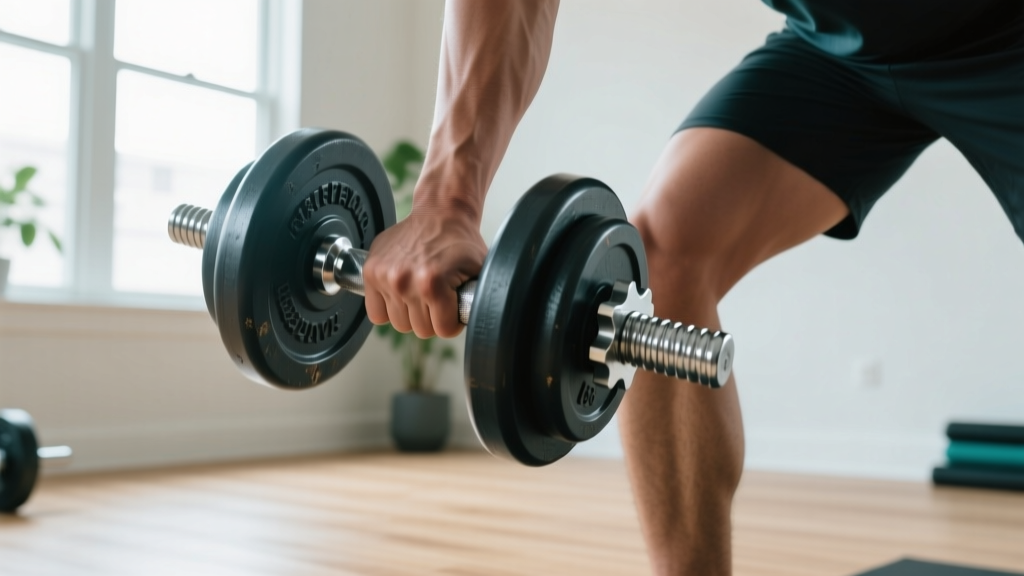
Before applying maintenance protocols, you must understand the engineering of your specific handle. As of 2026, the market is dominated by Olympic-sized (50mm) loadable handles designed to mimic the spin and knurling of premium barbells.
- Premium Tier: The Rogue Fitness Loadable Dumbbell Handle (retailing around $95.00) features a hard chrome shaft, medium-depth knurling, and a high-quality bronze bushing system designed for smooth rotation.
- Value Tier: Options like the Titan Fitness Olympic Loadable Dumbbell (typically $79.99) offer excellent tensile strength but may use lower-tolerance composite bushings that require more frequent cleaning and lubrication.
Regardless of the brand, every loadable dumbbell shares three critical maintenance zones: the knurled shaft, the rotational sleeve/bushing interface, and the sleeve end-cap/retention mechanism.
The Collar Conundrum: Securing Plates for Ballistic Lifts
The most common point of failure during a single arm dumbbell snatch is the collar. Standard spring collars are entirely inappropriate for ballistic movements. The G-force generated during the catch phase can easily compress a standard spring collar, allowing plates to slide off the sleeve mid-air.
| Collar Type | Snatch Suitability | Maintenance Requirement | Failure Mode |
|---|---|---|---|
| Standard Spring Collars | Dangerous | Replace every 6 months | Spring fatigue; slips under G-force |
| Clamp Collars (e.g., Lock-Jaw) | Moderate | Check plastic for micro-fractures | Plastic shattering from repeated drops |
| Screw-Down / Spin-Lock (Aluminum) | Excellent | Lubricate threads monthly | Thread stripping if cross-threaded |
| Lever-Lock (e.g., HG Collars) | Excellent | Clean rubber gaskets | Rubber degradation from sweat/chalk |
Expert Recommendation: For the single arm dumbbell snatch, invest in high-quality aluminum screw-down collars or heavy-duty lever-lock collars. Ensure the collar sits flush against the inner sleeve lip, leaving zero lateral play for the interchangeable plates.
Step-by-Step Maintenance Protocol for Loadable Dumbbells
To maximize the longevity of your equipment and ensure safety during high-velocity lifts, implement this strict maintenance schedule.
1. Weekly: Knurling and Sleeve Surface Care
Chalk, dead skin, and environmental humidity are the enemies of knurling. A clogged knurl loses its tensile grip, which is disastrous during the initial pull of the snatch.
- Brush: Use a stiff brass or nylon-bristle brush (never steel wire, which will strip zinc or black oxide coatings) to scrub the knurling in a circular motion.
- Wipe: Use a microfiber cloth lightly dampened with a 50/50 mix of water and white vinegar to wipe down the shaft and the smooth portion of the sleeve.
- Dry: Immediately dry the handle to prevent flash rusting.
2. Monthly: Bushing Lubrication and End-Cap Torque
The rotational quality of the sleeve dictates how smoothly the dumbbell turns over during the catch phase of the snatch.
- Lubricate: Apply 2-3 drops of synthetic gun oil or a dedicated barbell oil (like 3-IN-ONE Multi-Purpose Oil) directly into the seam where the sleeve meets the shaft. Rotate the sleeve manually for 60 seconds to work the oil into the bronze or composite bushings.
- Avoid WD-40: Never use standard WD-40. It is a solvent that will strip away the factory grease inside the bushing and attract abrasive chalk dust, eventually seizing the sleeve entirely.
- Torque the End-Caps: Most loadable dumbbells secure the outer sleeve with a hex bolt or a threaded cap. Use a 6mm or 8mm Allen key (depending on your brand) to ensure the end-cap is tightened to the manufacturer's specification (usually around 15-20 Nm). A loose end-cap will cause the sleeve to wobble during the overhead lockout.
3. Annually: Deep Disassembly and Plate Tolerance Check
Once a year, completely remove the collars and plates. Inspect the inner lip of the sleeve for metal galling. If you notice deep grooves carved by the interchangeable plates, lightly sand the sleeve with 400-grit sandpaper and apply a thin coat of lithium grease to reduce friction. Additionally, measure the center hole of your bumper plates; if the steel inserts have stretched beyond 51mm, they will rattle excessively on a 50mm Olympic sleeve and must be replaced.
Troubleshooting Common Loadable Dumbbell Issues
Issue: The Sleeve Feels 'Sticky' or Won't Spin Freely
Diagnosis: Chalk dust has mixed with existing oil to create an abrasive paste inside the bushing, or the sleeve has suffered a minor impact bend from being dropped on concrete.
Solution: Flush the bushing seam with a safe degreaser (like Simple Green), wipe away the black residue, let it dry completely, and re-oil with a high-viscosity synthetic lubricant. If the sleeve is physically bent, retire the handle immediately; a bent shaft will snap under the dynamic load of a snatch.
Issue: Excessive Plate Rattle During the Catch Phase
Diagnosis: The interchangeable plates have loose steel inserts, or the collar is not seated flush against the plate.
Solution: Insert a thin rubber shim or a specialized dumbbell donut pad between the inner sleeve lip and the first plate. This takes up the 1-2mm of manufacturing tolerance and deadens the acoustic and kinetic shock when the dumbbell is punched overhead.
Expert FAQs on Dumbbell Snatch Safety
Can I use standard cast-iron plates for the single arm dumbbell snatch?
While you can, it is not recommended for longevity or safety. Cast-iron plates are generally thicker and have wider manufacturing tolerances than calibrated bumper plates. This increases the overall length of the loaded sleeve, shifting the center of gravity further away from your hand. This extended lever arm drastically increases the torque on your wrist during the turnover phase of the snatch. Opt for slim-line urethane or virgin rubber bumper plates designed specifically for Olympic dumbbell handles.
How do I know if my loadable handle's tensile strength is compromised?
Loadable handles from reputable brands (like Rogue or Eleiko) are machined from high-tensile steel (often 190,000 PSI or higher). However, if you frequently drop the dumbbell directly onto the bare sleeve end without a collar or rubber mat, you risk micro-fractures at the shaft-sleeve junction. Inspect this weld or press-fit joint monthly. If you see any hairline cracks or rust weeping from the seam, the structural integrity is compromised, and the handle must be retired.
What is the ideal weight distribution for a loadable snatch?
According to exercise biomechanics databases like ExRx.net, maintaining a balanced, compact load is vital. Always load your interchangeable plates symmetrically if using a dual-sided setup, but for a single loadable dumbbell, use the fewest number of plates possible to reach your target weight. For example, to load 25kg, use a single 20kg bumper and a single 5kg bumper rather than stacking multiple 2.5kg change plates. Fewer plates mean fewer points of potential lateral shift and a more solid, unified mass during the explosive pull.
Final Thoughts on Equipment Longevity
The single arm dumbbell snatch is an unforgiving exercise that exposes any weakness in your physical technique or your equipment's mechanical integrity. By treating your loadable dumbbell not just as a piece of iron, but as a precision rotational instrument, you ensure that your focus remains entirely on power output and athletic development. Stick to the weekly brushing, monthly lubrication, and strict collar protocols outlined above, and your loadable setup will safely support your ballistic training for years to come.
More gear to consider
All reviews
Rubber vs Urethane: 2026 Gear for Arm Workouts Using Dumbbells

EZ Bar vs Straight Bar: 2026 Trends & Dumbbell Thrust Data
Bumper vs Iron Plate Care & How to Build Triceps Using Dumbbells

Hex vs Urethane Dumbbells: Best Gear for Tricep Curls with Dumbbells

Cast Iron vs Competition Kettlebells: Budget Breakdown & Exercises for Upper Body with Dumbbells