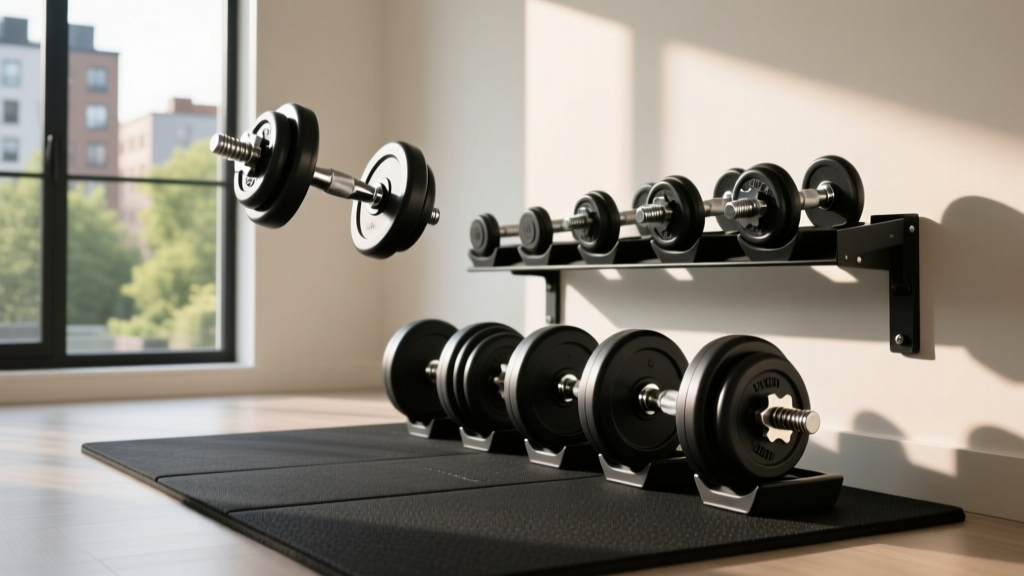
Master the Dumbbell Chest Fly with Space-Saving Loadable Dumbbells
Discover how space-saving loadable dumbbells with interchangeable plates optimize your home gym layout for the perfect dumbbell chest fly.

The Home Gym Dilemma: Fixed Racks vs. Loadable Efficiency
When designing a home gym, spatial efficiency is just as critical as the biomechanics of your lifts. For decades, the gold standard for free weight training was the fixed rubber hex dumbbell set. However, a complete 5-to-50-pound fixed set requires a massive 6-foot horizontal rack, consuming over 12 square feet of valuable floor space. As of 2026, the paradigm has shifted heavily toward loadable dumbbells with interchangeable plates. This setup utilizes a pair of heavy-duty handles paired with a vertical plate tree, reducing the equipment footprint by nearly 80%.
But how does this space-saving equipment affect isolation movements? Specifically, the dumbbell chest fly—a staple for pectoral hypertrophy—requires a deep stretch and precise weight distribution. Transitioning to loadable handles introduces unique mechanical variables that can either enhance your chest development or silently ruin your range of motion if your gym layout and plate selection are poorly planned.
The Spatial Math: Fixed vs. Loadable Footprints
Before diving into the biomechanics of the fly, it is essential to understand the spatial ROI (Return on Investment) of loadable dumbbells. According to facility design guidelines from the American Council on Exercise (ACE), maintaining a clear 3-foot perimeter around lifting zones is vital for safety. Fixed dumbbell racks inherently violate this in small rooms.
| Equipment Type | Weight Range | Floor Footprint | Setup Time |
|---|---|---|---|
| Fixed Hex Dumbbell Set (5-50 lbs) | 10 Pairs | ~14.5 sq ft (Rack) | 0 seconds |
| Loadable Olympic Handles + Plate Tree | 5-100+ lbs | ~2.5 sq ft (Vertical Tree) | 45-90 seconds |
| Adjustable Dial Dumbbells (e.g., Bowflex) | 5-52.5 lbs | ~1.5 sq ft (Cradle) | 2-5 seconds |
While dial-adjustable dumbbells are fast, they lack the durability and knurling quality of solid steel loadable handles. For serious lifters prioritizing both space optimization and barbell-like feel, loadable dumbbells remain the undisputed champion.
The Biomechanics of the Dumbbell Chest Fly
The dumbbell chest fly is an isolation exercise targeting the sternal head of the pectoralis major. Unlike the bench press, which relies heavily on triceps and anterior deltoids, the fly removes the elbow extension component, placing continuous tension on the pecs through a wide arc of motion. As detailed in the kinesiology databases at ExRx.net, the primary driver of hypertrophy in the fly is the stretch-mediated tension at the bottom of the movement.
To maximize this stretch, your elbows must drop below the plane of your torso. This is where the physical design of your loadable dumbbells—and the plates you choose—directly impacts your gains.
⚠️ The Plate Diameter Trap
The most common failure mode when performing a dumbbell chest fly with loadable handles is the 'Plate-to-Floor' collision. A standard 17-inch high weight bench paired with 25-pound Olympic plates (which have a 13.5-inch diameter) leaves only inches of clearance. If you load 45-pound bumper plates (17.75-inch diameter), the plates will hit the floor before your pectorals reach a full stretch, effectively turning the fly into a partial-rep floor press. Solution: Dedicate a set of 10-pound and 15-pound deep-dish cast iron plates (under 10 inches in diameter) exclusively for fly movements, or elevate your bench on 4-inch risers.
Top Loadable Handles for Space-Constrained Gyms (2026 Market)
Not all loadable handles are created equal. The sleeve length, handle thickness, and locking mechanism dictate how smoothly you can transition between sets. Here are the top contenders for optimizing your layout without sacrificing performance:
1. Rogue Fitness Loadable Dumbbell Handles
- Price: ~$195.00 / pair
- Sleeve Length: 5.25 inches (Olympic 2-inch)
- Best For: Lifters who want a premium, barbell-like knurl and ultra-compact storage.
- The Fly Factor: The shorter sleeve means you cannot load massive weight, but it keeps the weight profile compact, preventing the ends of the dumbbell from clashing together at the top of the fly's concentric phase.
2. Titan Fitness 2' Olympic Loadable Dumbbell Handles
- Price: ~$89.99 / pair
- Sleeve Length: 20 inches total (approx. 8.5 inches loadable)
- Best For: Heavy lifters needing massive weight capacity.
- The Fly Factor: The longer sleeve accommodates more plates, but increases the overall length of the dumbbell. You must be mindful of your grip width to avoid the handles hitting each other at the peak contraction of the fly.
3. Yes4All 1-Inch Standard Cast Iron Handles
- Price: ~$32.99 / pair
- Sleeve Length: 6.5 inches (Standard 1-inch)
- Best For: Extreme budget and ultra-small apartments.
- The Fly Factor: Standard 1-inch plates have much smaller diameters than Olympic plates. This entirely eliminates the 'Plate-to-Floor' trap, allowing for a massive, unobstructed stretch at the bottom of the dumbbell chest fly, even on low-profile beds or mats.
Designing Your Layout for Optimal Fly Mechanics
Integrating loadable dumbbells into a small room requires a strategic layout. Because you are manually sliding interchangeable plates on and off the handles, your storage solution must be positioned to minimize bending and maximize workflow.
- The Vertical Plate Tree: Position a vertical Olympic plate tree exactly 24 inches behind the head of your adjustable bench. This allows you to sit on the bench, reach backward, and slide plates directly onto the handles resting on your knees without taking a single step.
- The Matting Zone: Use 3/4-inch thick interlocking EVA foam mats. When performing the dumbbell chest fly, you may need to drop the weights to the floor to safely escape a failed rep. Rubber flooring protects both your subfloor and the loadable handle's end caps.
- Mirror Placement: Mount a mirror on the side wall parallel to your bench. Because loadable dumbbells can sometimes rattle if the collar isn't fully tightened, visual feedback helps you monitor the symmetry of your fly arc without turning your head and straining your cervical spine.
Execution Guide: The Loadable Dumbbell Chest Fly
Once your space is optimized and your plates are selected, execute the movement with precision:
- The Setup: Sit on a flat bench (or a 15-degree incline for upper-pec bias). Rest the loadable dumbbells on your knees. Kick them back one at a time into position.
- The Grip: Hold the handles with a neutral grip (palms facing each other). Because loadable handles often feature aggressive barbell-style knurling, you won't need lifting straps; the grip security is superior to most rubber-coated fixed dumbbells.
- The Descent: Maintain a slight, fixed bend in your elbows (about 15 to 20 degrees). Open your arms wide, focusing on pulling the humerus bone across the chest rather than just moving the weight.
- The Stretch: Lower the weights until you feel a deep, uncomfortable stretch in the pecs. Remember the plate diameter rule: ensure your iron plates clear the floor.
- The Contraction: Squeeze the pecs to bring the dumbbells back to the starting position. Stop just before the dumbbells touch to maintain continuous tension on the muscle.
Frequently Asked Questions
Can I use bumper plates for the dumbbell chest fly?
While you can, it is not recommended for home gyms with standard 17-inch benches. Bumper plates all share a uniform 17.75-inch diameter regardless of weight. They will hit the floor long before your chest achieves a full stretch. Stick to deep-dish cast iron or fractional steel plates for fly movements.
Do loadable dumbbell handles loosen during the fly?
The lateral arc of the dumbbell chest fly generates minimal rotational force compared to movements like the dumbbell snatch. However, always use high-quality spring collars or spin-lock collars. For Olympic handles, aftermarket aluminum clamp collars provide the most secure, rattle-free experience.
How much space do I need for the lifting zone?
For a standard flat bench and loadable dumbbell setup, you need a minimum clearance zone of 6 feet wide by 4 feet deep. This ensures your arms have full wingspan clearance during the bottom of the fly without striking walls or adjacent equipment.
More gear to consider
All reviews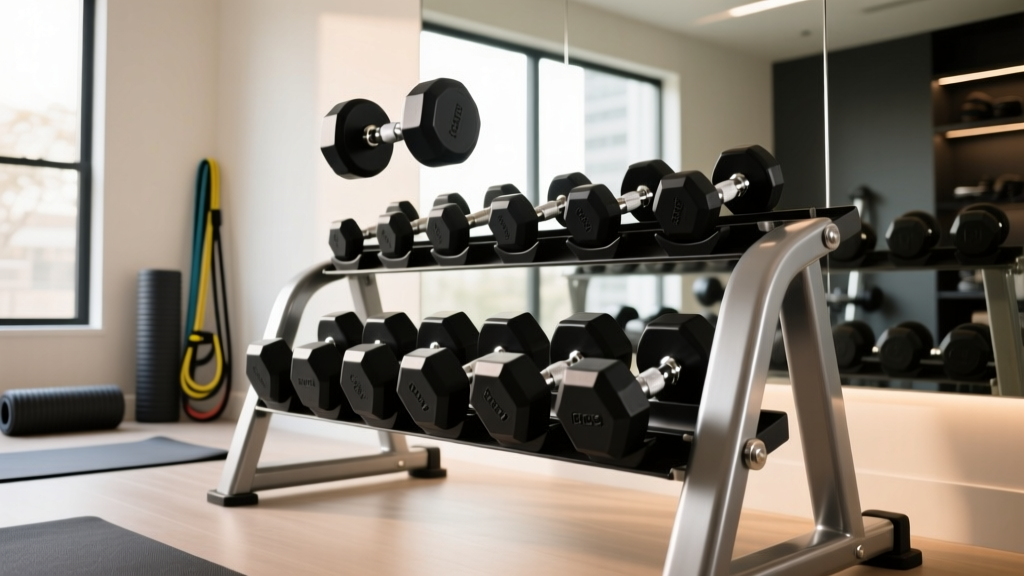
Top 2026 Dumbbell Racks to Support Dumbbell Row Muscles Workouts

Maintaining a Dumbbell and Kettlebell Set: Cast Iron vs Competition

Olympic vs Standard Plates for the Ultimate Dumbbell Farmer Walk

Bumper vs Iron Plates: Heavy Lifts & Bicep Workouts With One Dumbbell

Olympic vs Standard Plates Setup & Most Effective Dumbbell Exercises
