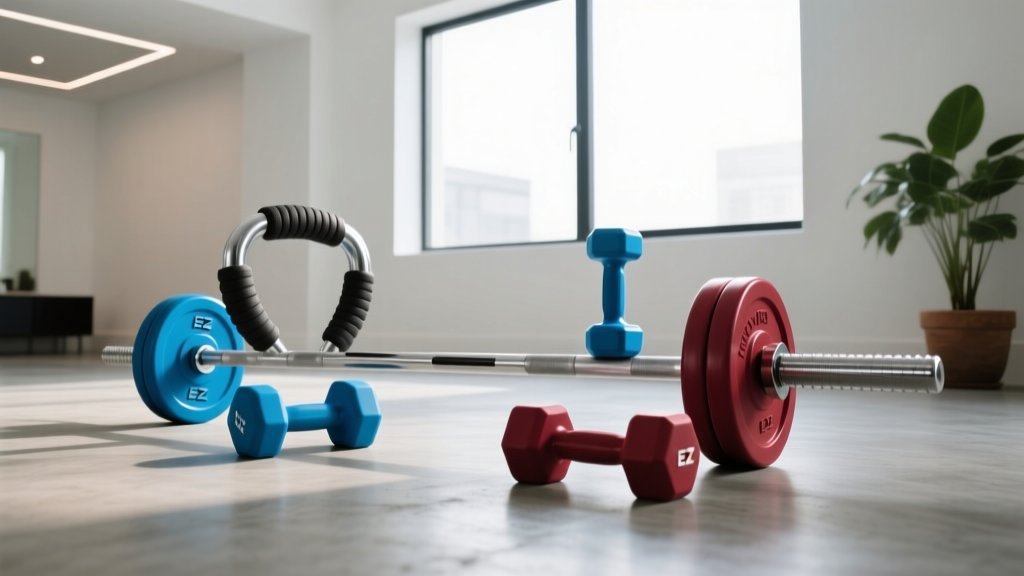
EZ Bar vs Straight Bar: Dumbbell Weights Exercise Alternatives
Is an EZ curl bar or straight bar the better investment? We break down the budget, value, and biomechanics to upgrade your dumbbell weights exercise routine.

The True Cost of Upgrading Your Arm Day
For years, the cornerstone of any arm-focused regimen has been the standard dumbbell weights exercise routine. Dumbbells offer unilateral balance and a natural range of motion. However, as lifters progress, the need to overload the biceps and triceps with heavier, more stable implements becomes undeniable. This is where the debate between the EZ curl bar and the traditional Olympic straight bar enters the chat.
But which bar actually delivers the best return on investment (ROI) for your home gym? In 2026, with steel prices fluctuating and premium fitness brands charging top dollar, making a blind purchase can lead to buyer's remorse. This budget breakdown and value analysis dissects the exact costs, biomechanical advantages, and long-term durability of both bars to help you make a financially sound decision.
Quick Value Verdict
The Straight Bar wins on sheer versatility and cost-per-pound for heavy compound movements. The EZ Curl Bar wins on joint longevity and isolation value, effectively replacing multiple specialized dumbbell variations. If budget is tight, an entry-level straight bar offers more utility; if injury prevention is paramount, the EZ bar is the superior investment.
Anatomy of the Investment: Spec-by-Spec Breakdown
Before analyzing price tiers, we must understand what you are actually paying for. The physical dimensions of these bars dictate their use cases and their manufacturing costs.
| Feature | Olympic Straight Bar | Olympic EZ Curl Bar |
|---|---|---|
| Standard Weight | 44–45 lbs (20 kg) | 15–22 lbs (varies by brand) |
| Shaft Diameter | 28mm – 28.5mm | 25mm (typically) |
| Grip Style | Fully Supinated (Palms up) | Angled / Semi-Supinated |
| Primary Use | Heavy Curls, Presses, Rows | Bicep Curls, Tricep Extensions |
| 2026 Avg. Budget Price | $60 – $85 | $45 – $65 |
Budget Breakdown: Entry-Level vs. Premium Tier
The market is saturated with options, but price tags often obscure the actual quality of the steel and the sleeve mechanics. Here is how the tiers stack up in the current market.
The Under $70 Tier (CAP Barbell, Yes4All)
At the entry-level, you can find the CAP Barbell Super Curl Bar (approx. $55) and standard 7-foot Olympic straight bars (approx. $65). The Value Proposition: These bars use basic carbon steel and cheap brass or composite bushings. The knurling is often passive and shallow. The Catch: The sleeves on budget EZ bars frequently seize up after a year of heavy use due to poor tolerances. Furthermore, the chrome plating on sub-$70 straight bars is notorious for flaking and rusting if not wiped down immediately after a dumbbell weights exercise or barbell session in a humid garage gym.
The $100–$140 Sweet Spot (Titan Fitness, Rep Fitness)
This is where the ROI peaks for most home gym owners. The Rep Fitness EX Curl Bar ($135) and the Titan Fitness Curl Bar ($100) offer massive upgrades. The Value Proposition: Rep Fitness utilizes a 25mm shaft with a highly aggressive, deep knurl that bites into the hands without tearing calluses. The EX bar is also 'rackable' (long enough to sit on standard J-cups), effectively doubling its utility for close-grip bench presses. The Catch: You are paying a premium over the budget tier, but the longevity of the bushings and the zinc-coating rust resistance justifies the $80 price jump.
The Premium Tier ($175+) (Rogue, Eleiko)
The Rogue Curl Bar sits around $195, featuring a Cerakote finish and proprietary bushing systems. The Value Proposition: Unmatched spin, zero sleeve play, and a finish that survives decades of abuse. The Catch: Diminishing returns. Unless you are running a commercial facility or simply demand aesthetic perfection in your gym, the $60 premium over a Rep Fitness bar does not yield a proportional increase in muscle growth or performance.
Biomechanics Meets Budget: Why Form Dictates Value
When evaluating value, we must factor in the 'hidden cost' of injury. According to biomechanical data cataloged by ExRx, the biceps brachii functions primarily to flex the elbow and supinate the forearm.
"Forcing the wrist into full supination (palms facing directly up) while under heavy axial load places immense valgus stress on the medial elbow and compresses the carpal bones in the wrist."
A straight bar forces full supination. If you have a high carrying angle (cubitus valgus) or prior wrist impingements, heavy straight bar curls will eventually lead to medial epicondylitis (golfer's elbow). Treating this via physical therapy costs hundreds of dollars. Therefore, spending $135 on a high-quality EZ curl bar—which places the wrists in a natural, semi-pronated 45-degree angle—is a highly cost-effective preventative measure. It allows you to safely overload the biceps without the connective tissue tax.
Space, Storage, and the 'Rackable' Factor
Home gym real estate is expensive. When analyzing the value of your purchase, consider how the bar integrates with your existing power rack or squat stand.
- Standard EZ Bars (50-55 inches): Too short to rest on standard J-cups. You must load and unload them on the floor, which is cumbersome and limits your ability to perform standing close-grip presses safely.
- Rackable EZ Bars (72+ inches): Cost about $20-$30 more but allow you to unrack the barbell just like a bench press. This transforms the EZ bar from a simple curling tool into a viable tricep and shoulder pressing implement.
- Straight Bars (86 inches): The ultimate space-saver in terms of utility. One bar handles deadlifts, squats, bench presses, and curls. If you can only afford one barbell to complement your dumbbell weights exercise arsenal, the straight bar is mathematically the better buy.
When buying budget straight bars or EZ bars, check the sleeve assembly. Cheaper manufacturers use snap rings that pop off under heavy drop-loads, causing the sleeve to slide off the shaft entirely. Always look for bars that utilize internal retaining pins or high-grade steel snap rings, especially if you plan to perform explosive movements like reverse-grip cleans.
Real-World Wear and Tear: Where Cheap Bars Fail
To truly understand long-term value, we must look at failure modes. Over a 5-year lifecycle, here is how budget bars degrade compared to mid-tier options:
- Knurling Degradation: Budget bars feature 'hill' knurling (shallow, rolled steel). After 2 years of chalk and sweat, the peaks flatten, making heavy curls dangerous. Mid-tier bars use 'volcano' knurling (machined peaks) that retain their bite indefinitely.
- Sleeve Spin Seizure: Budget bushings lack proper lubrication channels. Sweat and chalk dust infiltrate the sleeve gap, mixing with the factory grease to create an abrasive paste. Within 18 months, the sleeves stop spinning, causing the bar to torque violently in your wrists during the eccentric phase of a curl.
- Shaft Bending: While rare on EZ bars due to the shorter lever arms, budget 7-foot straight bars made from low-yield steel (under 160k PSI tensile strength) will permanently bend if dropped with 200+ lbs on a rack.
Final Verdict: Which Bar Wins the ROI Contest?
If your current routine relies heavily on a dumbbell weights exercise protocol and you are looking for your very first barbell to add heavy compound movements (rows, floor presses, heavy reverse curls), the mid-tier Olympic Straight Bar ($100-$130) is the undisputed champion of value. It offers unparalleled versatility.
However, if you already own a straight barbell or a comprehensive set of adjustable dumbbells, and your specific goal is to isolate the arms while protecting your wrists and elbows from heavy-load inflammation, the rackable EZ Curl Bar in the $100–$140 range is the superior investment. It bridges the gap between dumbbell ergonomics and barbell overload, providing a specialized stimulus that pays dividends in both muscle hypertrophy and joint longevity.
For further reading on programming biomechanics and joint safety, consult the resources provided by the National Strength and Conditioning Association (NSCA) regarding load management and wrist positioning in resistance training.
More gear to consider
All reviews
Neoprene Dumbbell Mistakes Ruining Your Dumbbell Workout for Men

Barbell Clamp Comparison: Securing Your Dumbbell Pullover Alternative

Bumper Plate vs Iron Plate: 2026 Trends & Dumbbell Gripper Data
Bumper vs Iron 2026 & Reverse Grip Dumbbell Press Muscles Worked

Power Rack vs Squat Rack vs Stand: Pectoral Exercise with Dumbbells
