
Maintaining Loadable Dumbbells for Safe Dumbbell Squats for Beginners
Learn essential maintenance tips for loadable dumbbells and interchangeable plates to ensure safe, effective dumbbell squats for beginners in your home gym.

Setting up a home gym to master dumbbell squats for beginners usually starts with a versatile, cost-effective equipment choice: loadable dumbbell handles paired with interchangeable plates. While adjustable dial dumbbells offer quick weight changes, traditional loadable handles—such as the CAP Barbell 14-inch Solid Iron Handle or the Yes4All 20-inch Olympic Handle—provide unmatched structural durability, a lower price point per pound of iron, and the ability to handle heavy drops. However, because you are manually securing the plates with star collars or lever-locks, equipment maintenance is not just about longevity; it is a critical safety requirement.
When you are holding a heavy dumbbell vertically against your chest for a goblet squat, or gripping two dumbbells for front squats, a loose collar or stripped thread can cause plates to shift mid-rep. This sudden shift in the center of gravity compromises your form and can lead to severe wrist, knee, or lower back injuries. In this comprehensive 2026 guide, we break down the exact maintenance protocols required to keep your loadable dumbbells and interchangeable plates in pristine, safe condition for years of foundational leg training.
The Anatomy of Loadable Dumbbell Wear
Loadable dumbbell handles endure immense mechanical stress. The primary failure points are the threaded sleeves and the collars. Standard 1-inch handles typically feature zinc-plated steel threads, while 2-inch Olympic handles use heavier, chromed or black-oxide steel sleeves. Over time, three main degradation factors occur:
- Particulate Buildup: Gym chalk, dead skin, sweat, and microscopic iron dust accumulate in the thread grooves, creating a grinding paste that strips the zinc coating.
- Collar Fatigue: The 'star' shape on standard spin-lock collars can warp if over-tightened with tools, preventing a flush fit against the plates.
- O-Ring Degradation: On lever-lock or quick-release Olympic handles, the rubber O-rings that provide tension dry out and snap, leading to dangerous collar slippage.
The Pre-Squat Safety Protocol
Before you attempt any variation of dumbbell squats for beginners, such as the goblet squat or the dual-dumbbell front squat, you must verify the integrity of your loadable assembly. The American Council on Exercise (ACE) emphasizes that equipment stability is just as crucial as biomechanical form when learning foundational lifts.
⚠️ The 10-Second Pre-Lift Check
- The Shake Test: Hold the loaded dumbbell horizontally and give it a sharp, controlled shake. Listen for the 'clack' of loose plates. If you hear it, tighten the collar.
- The Thread Visual: Inspect the exposed threads. If you see white, flaky residue, the zinc plating is degrading and requires immediate cleaning and lubrication.
- The Flush Check: Ensure the collar is seated completely flush against the outermost plate. A gap of even 2 millimeters allows momentum to shift the plates during the eccentric (lowering) phase of the squat.
Step-by-Step Thread and Collar Restoration
Proper cleaning of your interchangeable plate system requires specific tools. Using the wrong materials can permanently ruin your equipment. Follow this monthly restoration protocol:
1. Dry Brushing the Threads
Never use a steel wire brush on standard 1-inch handles; steel is harder than the zinc plating and will strip it away, exposing the raw carbon steel underneath to immediate rust. Instead, use a brass wire brush (typically $8 to $12 at hardware stores). Brass is softer than steel and zinc but harder than chalk and iron dust. Scrub the threads in a circular motion until the grooves are completely clear of debris.
2. Solvent Wiping
Apply a small amount of isopropyl alcohol (70% or higher) to a microfiber cloth and wipe down the sleeves and the inside of the star collars. This removes lingering sweat salts and body oils that accelerate oxidation.
3. Proper Lubrication (Crucial Warning)
Never use standard WD-40 or petroleum-based oils on loadable dumbbells if you are using rubber, neoprene, or urethane interchangeable plates. Petroleum distillates will chemically break down the rubber, causing it to melt, degrade, and emit a foul odor. Instead, use a dry PTFE (Teflon) spray or a food-grade silicone lubricant. Spray a light coat onto the threads and twist the collar on and off three times to distribute it evenly. Dry PTFE leaves a slick film that repels dust and chalk without attracting grime.
Interchangeable Plate Care: Cast Iron vs. Rubber
The longevity of your loadable setup also depends on how you treat the interchangeable plates themselves. According to Bob Vila's expert guide on tool and metal maintenance, controlling ambient moisture and surface oxidation is key to preserving cast iron and steel.
| Plate Material | Primary Threat | Maintenance Solution | Estimated Cost |
|---|---|---|---|
| Raw Cast Iron | Surface Rust & Pitting | Wipe monthly with a rag lightly dampened with 3-IN-ONE mineral oil. | $6 per bottle |
| Rubber / Neoprene | UV Degradation & Chalking | Clean with mild dish soap and water; keep out of direct sunlight. | $3 (Dish Soap) |
| Urethane | Edge Tearing from Drops | Always use on rubber horse-stall mats; inspect edges for micro-tears. | N/A (Mat cost) |
Common Failure Modes and Edge Cases
Even with rigorous maintenance, loadable dumbbells can experience specific failure modes, particularly when subjected to the dynamic forces of lower-body training. Understanding these edge cases will help you troubleshoot before an accident occurs.
Cross-Threading During Fatigue
When finishing a grueling set of dumbbell front squats, beginners often hastily re-thread the collar, slightly misaligning it. This cross-threading permanently damages the first two ridges of the handle. Fix: Always start the collar by turning it counter-clockwise until you feel the threads 'drop' into alignment, then tighten clockwise. If cross-threading occurs, use a metal thread file to gently reshape the damaged grooves.
Bent Olympic Sleeves
If you are using 20-inch loadable Olympic dumbbell handles for heavy goblet squats and you drop them onto a hard surface, the steel sleeve can bend. A bent sleeve prevents the plates from sliding on smoothly and causes the collar to bind. Fix: Roll the empty handle on a perfectly flat glass table or granite countertop. If the sleeve wobbles, it must be replaced; do not attempt to hammer it straight, as this compromises the structural weld where the sleeve meets the grip.
'The biggest mistake home-gym owners make with loadable dumbbells is using a wrench or pliers to tighten the star collars. Hand-tightening provides roughly 40 to 50 foot-pounds of torque, which is more than enough to secure plates for squats and lunges. Using a tool applies upwards of 150 foot-pounds, which will inevitably warp the collar and strip the handle threads over time.'
— Equipment Maintenance Specialist, FitGearPulse Labs
Storage Solutions for Maximum Longevity
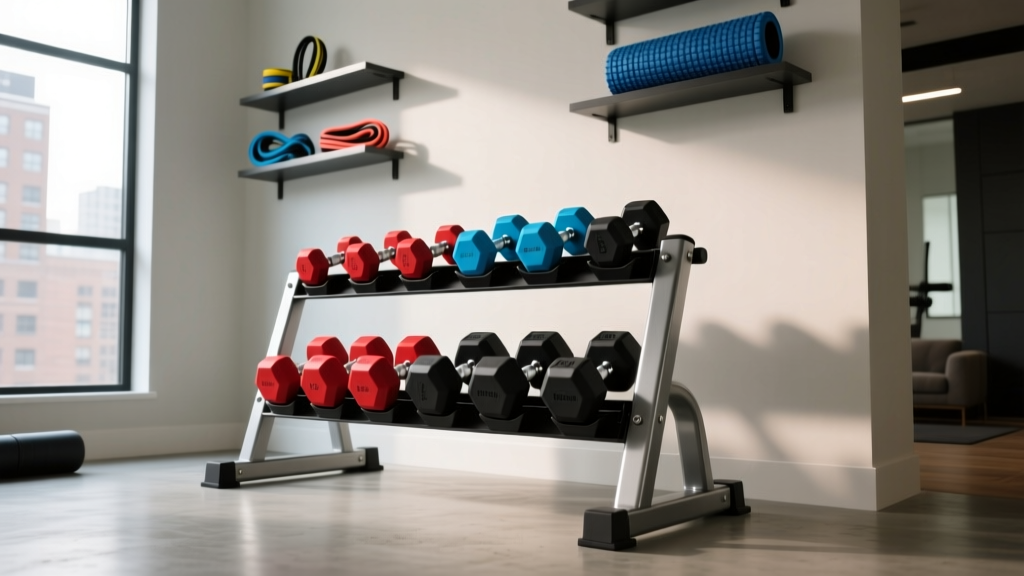
Where you store your loadable dumbbells between your beginner squat sessions dictates their lifespan. Leaving them on a concrete garage floor allows moisture to wick up into the bottom plates and the handle grip, accelerating rust. Invest in a dedicated vertical dumbbell rack or a horizontal A-frame rack (such as the Rogue Fitness Dumbbell Rack, starting around $135). Elevating the equipment ensures air circulation, keeps the threads dry, and prevents the interchangeable plates from warping under sustained, uneven pressure against the floor.
Final Thoughts on Equipment Safety
Mastering dumbbell squats for beginners requires focus, consistency, and a safe training environment. By treating your loadable dumbbells and interchangeable plates with the same respect you give your training program—cleaning the threads, using the correct dry lubricants, and performing pre-lift safety checks—you transform a basic, budget-friendly piece of iron into a lifelong, fail-proof training tool. Maintain your gear meticulously, and it will support your leg day progress for decades to come.
More gear to consider
All reviews
Best Neoprene Dumbbells for a Five Day Dumbbell Split
Budget Dumbbell Racks for Good Lat Workouts with Dumbbells

Barbell Knurling Mistakes & Standing Calf Raise with Dumbbells
Power Rack vs Squat Stand: American Barbell Dumbbell Layout Mistakes
Barbell Collar vs Clamp Types for the Lat Focused Dumbbell Row
