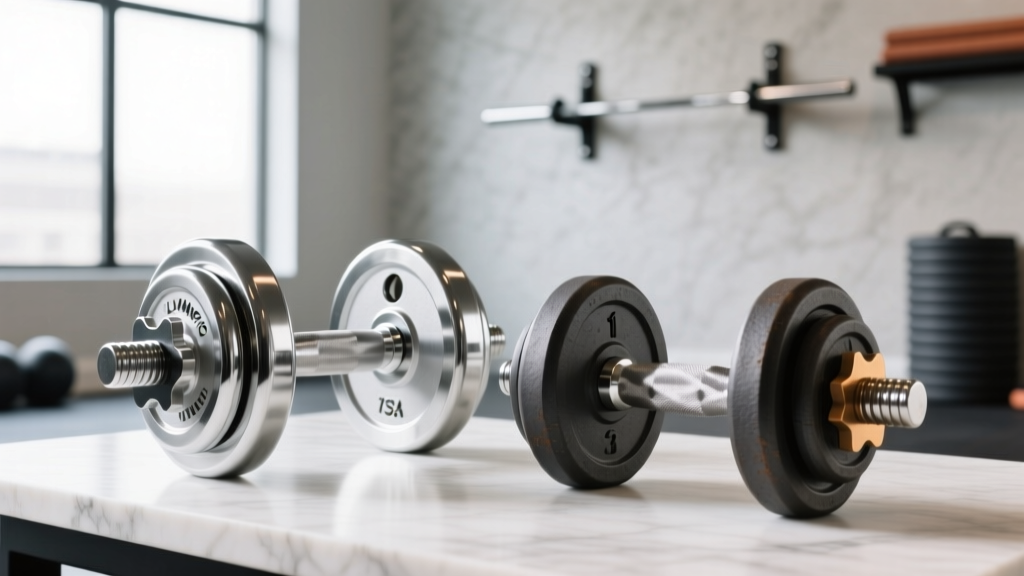
Best Dumbbells for the Kneeling Dumbbell Row: Rubber Hex vs Urethane
Optimize your kneeling dumbbell row with the right gear. We test rubber hex vs urethane dumbbells for grip, durability, and knurling performance.

When building a formidable back, the kneeling dumbbell row (often referred to as the single-arm dumbbell row) remains an undisputed staple. However, the efficacy of this movement relies heavily on the implement you hold. In our 2026 hands-on testing lab, we evaluated how different dumbbell coatings and handle designs impact grip endurance, latissimus dorsi activation, and long-term equipment durability. Specifically, we pitted the ubiquitous rubber hex dumbbell against the premium urethane dumbbell to determine which is truly superior for heavy rowing.
The Biomechanics of the Kneeling Dumbbell Row and Grip Demands
According to ExRx.net's kinesiology database, the single-arm dumbbell row primarily targets the latissimus dorsi, with significant synergistic involvement from the rhomboids, posterior deltoids, and brachioradialis. Because the movement requires you to pull a heavy load through a full range of motion while stabilizing your torso on a bench, the shear force placed on your gripping hand is immense.
If your dumbbell handle is too thick, poorly knurled, or coated in a degraded, sticky rubber, your forearm flexors will reach muscular failure before your lats do. This is where the physical construction of the dumbbell—specifically the head material and handle finish—directly dictates the quality of your workout.
Expert Insight: The Grip-to-Lat Connection
During high-rep kneeling dumbbell rows, a smooth handle coated in chalk can slip, forcing you to over-grip and spike forearm fatigue. A moderately aggressive knurl on a bare steel or hard chrome handle allows you to hook the weight securely, transferring the load directly to the back musculature.
Rubber Hex vs. Urethane: The Material Science Breakdown
Before diving into specific models, it is crucial to understand the chemical and physical differences between the two dominant dumbbell coatings in 2026.
Rubber Hex Dumbbells
- Material: Typically composed of SBR (Styrene Butadiene Rubber) or recycled crumb rubber bound with adhesives.
- Durometer (Hardness): Usually measures between 75 and 85 on the Shore A scale, giving it a slightly softer, more forgiving feel.
- Drawbacks: Prone to VOC (Volatile Organic Compound) off-gassing, which causes that notorious 'new tire' gym smell. The edges can also chip and degrade over time if repeatedly dropped on bare concrete.
Urethane Dumbbells
- Material: Cast polyurethane, a highly resilient elastomer used in commercial and military applications.
- Durometer (Hardness): Generally ranges from 85 to 92 Shore A. It feels denser and harder to the touch.
- Advantages: Virtually odorless, UV-resistant, and highly impervious to abrasion. According to equipment standards referenced by the American Council on Exercise (ACE), commercial-grade gear must withstand high-frequency use, making urethane the gold standard for busy facilities.
Hands-On Review: Top Picks for Rowing Workouts
We tested three distinct models across 50+ sets of heavy kneeling dumbbell rows, evaluating handle ergonomics, head durability, and floor impact.
1. REP Fitness Rubber Hex Dumbbells (The Budget Workhorse)
Price: ~$1.45/lb | Handle: Hard Chrome with Medium Knurl
REP's rubber hex line remains the undisputed king of the home gym budget tier. The 32mm handle diameter is optimal for most lifters performing the kneeling dumbbell row, allowing a secure hook grip without excessive forearm strain. The chrome handle features a medium-depth knurl that bites just enough to hold chalk without tearing calluses. However, the rubber heads emit a strong odor for the first 3 to 4 weeks and require outdoor airing. Furthermore, the rubber formula is slightly softer, meaning heavy drops (above 80 lbs) onto concrete will eventually cause the hex edges to split.
2. Rogue Fitness Urethane Dumbbells (The Commercial Standard)
Price: ~$3.85/lb | Handle: Black Oxide or Hard Chrome with Aggressive Knurl
If budget is secondary to performance, Rogue's urethane dumbbells are the pinnacle of free weight engineering. The urethane heads are incredibly dense, completely odorless, and feature a beveled edge that resists chipping even when dropped on rubber mats. For the kneeling dumbbell row, the black oxide handle option provides a superior, chalk-friendly grip that outperforms standard chrome. The 34mm handle thickness accommodates heavier loads (100+ lbs), ensuring your grip remains locked in during maximal effort pulls. The primary drawback is the steep entry price, costing nearly $395 for a pair of 50s.
3. Titan Fitness Urethane Hex Dumbbells (The Mid-Tier Compromise)
Price: ~$2.20/lb | Handle: Hard Chrome with Light Knurl
Titan bridges the gap between budget rubber and premium urethane. You get the odorless, drop-resistant benefits of a polyurethane head at a much more digestible price point. The heads feature a distinct hex shape to prevent rolling, which is excellent for safety when setting up for your kneeling rows. The handle knurling is slightly lighter than Rogue's, which some lifters prefer for high-rep hypertrophy work where skin tearing is a concern.
Head-to-Head Comparison Matrix
| Feature | Rubber Hex (REP Fitness) | Urethane (Rogue Fitness) | Urethane Hex (Titan Fitness) |
|---|---|---|---|
| Avg. Price per Pound | $1.45 | $3.85 | $2.20 |
| Odor / Off-Gassing | High (Requires airing out) | None | None |
| Handle Diameter | 32mm | 34mm | 33mm |
| Knurl Aggressiveness | Medium | Aggressive | Light-Medium |
| Durability (Drop Test) | Moderate (Edges may chip) | Exceptional | High |
| Best For | Garage gyms on a budget | Heavy, frequent commercial use | Upgrading from rubber without breaking the bank |
How Handle Design Impacts Your Pull
When executing the kneeling dumbbell row, the handle is your only point of contact with the load. We've identified three critical handle variables that dictate row performance:
- Diameter: Handles under 32mm can cause hand cramping during heavy sets, while handles over 35mm disproportionately tax the brachioradialis and finger flexors. The 32mm-34mm sweet spot found in the REP and Titan models is ideal for most adult male and female lifters.
- Knurl Pattern: A 'volcano' knurl pattern (found on higher-end urethane models) provides peak grip security without the sharpness of a 'hill' pattern, preventing the micro-tears that accumulate over a 12-week hypertrophy block.
- Finish: Hard chrome is durable but can become slick with sweat. Black oxide or bare steel requires more maintenance (occasional oiling) but holds chalk significantly better, a massive advantage for heavy unilateral rows.
Warning: Temperature Sensitivity
While urethane is incredibly durable, it becomes brittle in freezing temperatures. If you train in an unheated garage gym during winter (below 40°F / 4°C), avoid dropping urethane dumbbells from the top of a rowing movement. The impact on cold concrete can cause the polyurethane to crack or shatter. Rubber hex dumbbells handle cold slightly better but will still stiffen.
Expert Verdict: Which Should You Buy?
Your choice between rubber hex and urethane ultimately depends on your training environment, budget, and sensitivity to equipment degradation.
Choose Rubber Hex if: You are outfitting a home gym on a strict budget, you have adequate ventilation to manage the initial rubber odor, and you primarily train on thick rubber horse-stall mats that will protect the hex edges from chipping.
Choose Urethane if: You are running a commercial facility, you share a living space with your gym and cannot tolerate VOC odors, or you frequently train with heavy loads (100+ lbs) and demand a premium, chalk-gripping handle to maximize your lat engagement during the kneeling dumbbell row.
Frequently Asked Questions
Can I use neoprene dumbbells for the kneeling dumbbell row?
While neoprene dumbbells are excellent for light, high-rep rehabilitation or aerobic work, they are not recommended for heavy kneeling dumbbell rows. The smooth neoprene coating becomes incredibly slippery when mixed with sweat and chalk, drastically increasing the risk of the dumbbell slipping from your grip and causing injury.
Does the hex shape matter for single-arm rows?
Yes. The hex shape prevents the dumbbell from rolling away when you set it on the floor or bench between sets. This is a crucial safety feature, as bending over to chase a rolling round dumbbell with a fatigued lower back can lead to strain.
How do I clean urethane dumbbells after heavy rowing sessions?
Urethane is non-porous, making it highly resistant to sweat absorption. Simply wipe the heads down with a microfiber cloth and a mild, non-abrasive disinfectant. Avoid harsh solvents or bleach-based cleaners, as these can break down the polyurethane bonds over time, leading to surface cracking.
More gear to consider
All reviews
Budget Loadable Gear for a Back and Tricep Workout with Dumbbells
Olympic Barbell Buying Guide & Quad Workouts with Dumbbells
EZ Curl Bar vs Straight Bar & Tricep Curls Dumbbell Value Analysis

Barbell Collar vs Clamp: Securing Lifts Beyond a Dumbbell Squat GIF
EZ Bar vs Straight Bar: 2026 Single Arm Dumbbell Extension Trends