
Cast Iron vs Competition Kettlebells & Bicep Dumbbell Value
Compare cast iron vs competition kettlebells and the bicep dumbbell. Discover cost-per-pound breakdowns, ROI, and the best 2026 budget allocation.

The Economics of Free Weights: Ballistics vs. Isolation
Building a high-ROI home gym in 2026 requires ruthless prioritization. When allocating a limited equipment budget, lifters often face a critical crossroads: invest heavily in versatile ballistic tools like kettlebells, or dedicate funds to strict isolation implements like a specialized bicep dumbbell? The answer isn't binary, but it is deeply rooted in cost-per-pound metrics, manufacturing standards, and biomechanical realities.
While kettlebells dominate full-body conditioning, grinds, and explosive hip-hinge movements, the humble bicep dumbbell remains irreplaceable for targeted arm hypertrophy. Attempting to replace strict isolation work with a kettlebell often leads to compromised form and forearm bruising. In this comprehensive value analysis, we break down the exact financial and functional differences between cast iron and competition kettlebells, and precisely where a dedicated bicep dumbbell fits into your budget allocation strategy.
💡 The 2026 Budget Rule of Thumb: Allocate 65% of your free-weight budget to multi-joint ballistic tools (kettlebells/barbells) and 35% to adjustable or specialized isolation tools (bicep dumbbells, tricep extensions) to maximize total muscle recruitment per dollar spent.Cast Iron vs. Competition Kettlebells: A Cost-Per-Pound Breakdown
The kettlebell market is broadly divided into two categories: traditional cast iron (hardstyle) and steel competition bells (sport style). The price disparity between the two is significant, driven by manufacturing tolerances, material costs, and dimensional consistency.
| Feature | Cast Iron (e.g., Rep Fitness, Rogue) | Competition (e.g., Kettlebell Kings) |
|---|---|---|
| Average Cost Per Pound | $1.60 - $2.20 / lb | $3.50 - $5.50 / lb |
| Dimensional Consistency | Varies by weight (horn thickness changes) | Identical across all weights (8kg to 48kg) |
| Primary Use Case | Hardstyle, grinds, goblet squats, swings | Sport snatches, jerks, high-rep cycling |
| Durability / Maintenance | Requires rust prevention (powder coat/e-coat) | Solid steel, virtually indestructible |
When to Buy Cast Iron
Cast iron bells offer the highest raw value for general fitness enthusiasts. A 24kg (53lb) cast iron bell from a reputable brand like Rep Fitness typically retails around $95, yielding a cost of roughly $1.79 per pound. The thicker, curved horns of cast iron bells are ergonomically superior for two-handed swings and goblet squats. However, because the physical dimensions scale with weight, transitioning from a 16kg to a 24kg bell requires adjusting your rack position and grip width.
When to Invest in Competition Bells
Competition bells are machined from solid steel with a hollow core, ensuring that an 8kg bell has the exact same handle diameter (33mm) and horn width as a 32kg beast. This consistency is non-negotiable for sport lifters performing high-rep snatches or clean-and-jerks. According to comprehensive equipment reviews by Garage Gym Reviews, the uniform geometry of competition bells prevents the wrist tearing and grip fatigue associated with scaling up cast iron handles. However, you will pay a premium—often upwards of $160 for a single 24kg competition bell.
Where the Bicep Dumbbell Fits in Your Budget
A common mistake among budget-conscious home gym owners is attempting to use kettlebells for strict arm isolation. While you can perform a makeshift kettlebell curl, the biomechanics are deeply flawed for maximizing bicep brachii activation.
⚠️ The Kettlebell Curl Edge Case: Curling a heavy competition kettlebell forces the steel horn directly into the forearm flexors and radial nerve at the top of the movement. This not only limits your range of motion but actively causes nerve compression and bruising, severely limiting your progressive overload potential.
This is where the dedicated bicep dumbbell proves its ROI. Biomechanical analyses outlined by ExRx.net emphasize that optimal bicep isolation requires a neutral or supinated grip with a straight line of force against gravity. A properly designed bicep dumbbell—whether a fixed rubber hex or an adjustable model—allows for uninterrupted supination and peak contraction without forearm interference.
Fixed vs. Adjustable Bicep Dumbbells: The Value Matrix
- Fixed Rubber Hex (e.g., Titan Fitness): Costing roughly $1.40 to $1.80 per pound, buying a pair of 35lb hex dumbbells will set you back about $100. Verdict: High value, but requires buying multiple pairs as you get stronger, consuming floor space and capital.
- Adjustable Dumbbells (e.g., Nuobell or PowerBlock): A 5-50lb adjustable pair costs around $350-$400 in 2026. While the upfront cost per pound is higher ($4.00/lb), it replaces 15 pairs of fixed dumbbells. Verdict: The ultimate long-term ROI for hypertrophy, allowing micro-loading (2.5lb increments) which is critical for bicep tendon health and sustained growth.
2026 Home Gym Allocation Strategy
To synthesize this data into an actionable purchasing framework, let's look at how to allocate a strict $500 free-weight budget for a lifter focused on both functional conditioning and arm hypertrophy.
- The Ballistic Foundation ($180): Purchase a 16kg and a 24kg Cast Iron Kettlebell. This covers 90% of your swing, snatch, and goblet squat needs without overpaying for competition steel tolerances you don't need.
- The Isolation Engine ($320): Invest in a high-quality adjustable dumbbell set (like the PowerBlock Sport 24 or a used Nuobell set). This acts as your dedicated bicep dumbbell, shoulder press tool, and row implement.
Comparative strength data from BarBend highlights that while kettlebells elicit higher cardiovascular and core stabilization demands, dumbbells remain vastly superior for unilateral hypertrophy and correcting muscle imbalances. By splitting your budget this way, you avoid the 'jack of all trades, master of none' trap that plagues lifters who try to use a single piece of equipment for every movement pattern.
Final Verdict: Maximizing Your Free Weight ROI
When evaluating cast iron vs competition kettlebells, the cast iron variant wins the pure value analysis for 85% of lifters. The cost-per-pound savings can and should be redirected toward a proper bicep dumbbell solution. Attempting to build a complete physique using only kettlebells will inevitably leave your isolation movements under-stimulated and your forearms battered. By respecting the distinct biomechanical purposes of these tools and allocating your 2026 budget accordingly, you secure a home gym setup that delivers elite conditioning and precise hypertrophy without unnecessary financial bloat.
More gear to consider
All reviews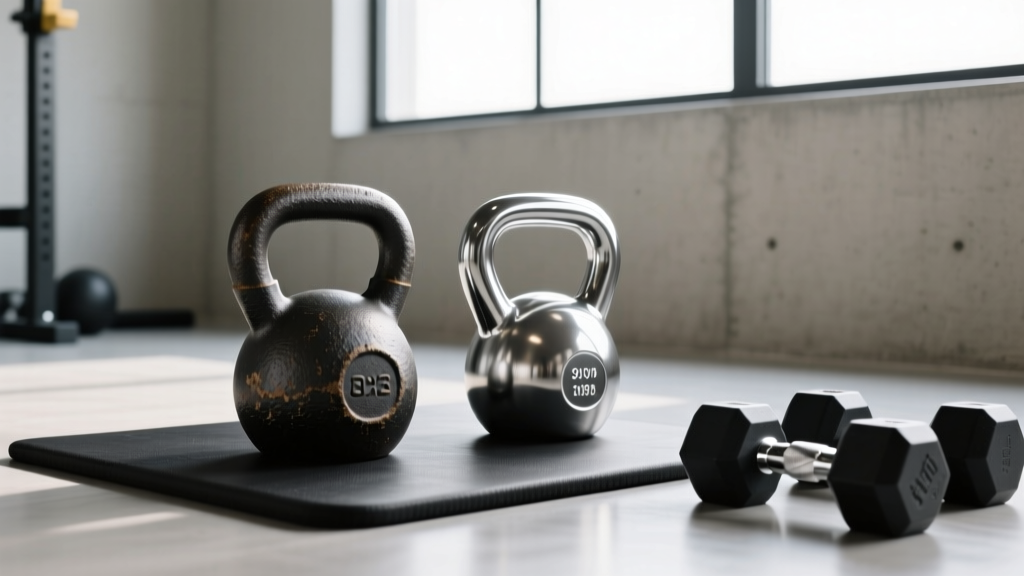
Cast Iron vs Competition Kettlebells: Deltoid Exercises with Dumbbells

Olympic vs Standard Plates: Finding the Ideal Dumbbell Weight Setup

Bumper vs Iron Plates: Layouts & How to Make Triceps with Dumbbells

Power Rack vs Squat Rack vs Stand: Seated Dumbbell Shoulder Press Muscles Worked

Cast Iron vs Competition Kettlebells & Dumbbell Shoulder Extension
