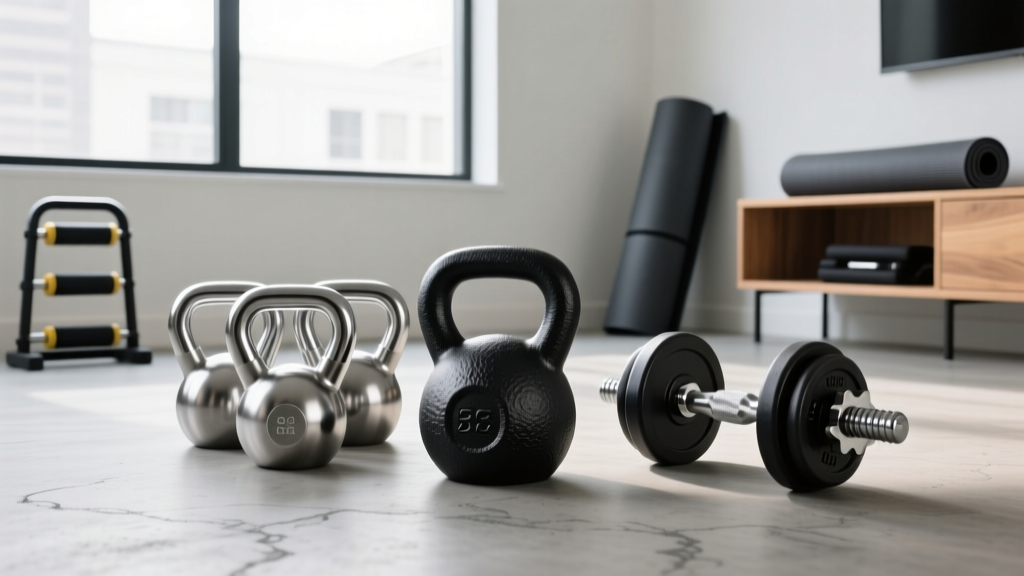
Kettlebell Value: Cast Iron vs Competition & Single Dumbbell Bicep Workout
Analyze cast iron vs competition kettlebell costs. We break down the 2026 budget, value per pound, and compare it to a single dumbbell bicep workout setup.

Building a functional home gym in 2026 requires ruthless financial prioritization. With premium fitness gear prices stabilizing at a new, higher baseline, every dollar allocated to free weights must deliver measurable biomechanical and longevity returns. For athletes expanding beyond basic barbells, the kettlebell market presents a primary dilemma: do you invest in traditional cast iron or premium competition steel? Furthermore, how does this investment compare to funding isolation gear for a targeted single dumbbell bicep workout routine?
This budget breakdown and value analysis dissects the true cost-per-pound, dimensional consistency, and long-term failure modes of cast iron versus competition kettlebells, helping you allocate your equipment budget with surgical precision.
The Core Distinction
Cast Iron Kettlebells: Poured into molds, meaning the bell's physical footprint and handle thickness scale up as the weight increases. Typically finished in powder coat or enamel.
Competition Kettlebells: Constructed from a hollow steel shell filled with steel shot or solid steel. They maintain identical dimensions (including a 35mm handle and uniform base) regardless of whether they weigh 8kg or 48kg.
The 2026 Market: Cost Per Pound and Long-Term Value
When evaluating free weights, the "cost per pound" metric is the gold standard for budget analysis. However, the value proposition shifts depending on your training modality. According to the standards set by StrongFirst, the uniform dimensions of competition bells are non-negotiable for high-rep ballistic mastery, as muscle memory relies on consistent horn spacing and handle diameter.
| Feature | Premium Cast Iron (e.g., Rogue, Rep) | Competition Steel (e.g., Kettlebell Kings) |
|---|---|---|
| Average Cost (2026) | $1.80 - $2.50 / lb | $3.50 - $5.50 / lb |
| Handle Diameter | Varies (30mm - 35mm) | Uniform 35mm |
| Horn Spacing | Varies by weight | Uniform ~100mm |
| Base Footprint | Grows with weight | Uniform 8.25" x 8.25" |
| Primary Use Case | Grinds, Presses, General Fitness | Snatches, Jerks, Sport, Technique |
If you are building a foundational arsenal (e.g., a 16kg, 24kg, and 32kg set), a premium cast iron set will cost approximately $320. The exact same weight progression in competition steel will push past $650. For the budget-conscious lifter, cast iron offers undeniable initial value.
The Opportunity Cost: Isolation vs. Ballistics
Every dollar spent on a premium kettlebell is a dollar not spent elsewhere. This brings us to a critical biomechanical crossroads. If your weekly split heavily prioritizes isolation movements—such as a dedicated single dumbbell bicep workout day—the biomechanical ROI of a $180 competition kettlebell is virtually zero.
Kettlebells are engineered for offset center-of-mass ballistics and complex flows. They are suboptimal for strict, symmetrical hypertrophy work. Studies highlighted by the American Council on Exercise (ACE) demonstrate that while kettlebell swings generate massive posterior chain activation and caloric expenditure, they do not replace the targeted mechanical tension required for arm and shoulder isolation.
Budget Allocation Matrix: $300 Limit
- The Hypertrophy Route: $250 for a high-end adjustable dumbbell (e.g., Nuobell or PowerBlock Elite) + $50 for a specialized curl bar. This perfectly funds a progressive single dumbbell bicep workout and tricep isolation routine, but leaves you zero budget for heavy swings or snatches.
- The Functional Power Route: $160 for a 24kg Cast Iron Kettlebell + $140 for a 32kg Cast Iron Kettlebell. This unlocks heavy goblet squats, Turkish get-ups, and ballistic hinges, but limits strict isolation work.
"Never buy a competition kettlebell if your primary goal is slow-twitch isolation hypertrophy. The uniform 35mm handle is designed to slide seamlessly during a high-rep snatch, not to provide the aggressive knurling bite needed for a heavy, strict curl." — Home Gym Equipment Analyst, FitGearPulse
Failure Modes: Where Cheap Gear Costs You More
When analyzing the budget, we must factor in the "replacement tax"—the cost of replacing gear that fails prematurely. The free weight market is flooded with subpar imports, and understanding failure modes is crucial for long-term value.
- Enamel Chipping and Rust (The Cheap Cast Iron Trap): Budget cast iron bells (often found on Amazon for $1.00/lb) use a thin enamel paint over porous iron. Within 6 months of outdoor or humid garage use, this enamel chips. Moisture penetrates the iron, causing structural rust that flakes onto your flooring and ruins your grips.
- Handle Tearing (The Aggressive Powder Coat Issue): Some mid-tier cast iron brands over-apply powder coat to hide casting seams. This creates a "cheese grater" effect on the palms during high-rep cleans. Premium brands like Rogue machine the handles post-casting to ensure a smooth, 33mm-35mm grip that protects your calluses.
- The Competition Bell "Rattle": Lower-tier competition bells are filled with loose steel shot. Over thousands of drops, the internal welds can fracture, causing the shot to shift. This alters the center of mass mid-swing, leading to wrist bruising and unpredictable ballistic trajectories. Always verify if a competition bell uses solid steel fill or advanced internal baffling.
- Horn Snapping: Extremely rare, but documented in ultra-cheap, hollow-core "concrete-filled" kettlebells. When dropped from overhead on a hard surface, the thin cast iron horns can shear off. Solid cast iron and steel competition shells do not suffer from this catastrophic failure mode.
Final Verdict: Engineering Your 2026 Free Weight Budget
The decision between cast iron, competition steel, and traditional dumbbells ultimately hinges on your specific training micro-cycles and environmental factors.
Buy Cast Iron If: You train in a humid garage, prioritize heavy grinds (presses, squats), and want to maximize your cost-per-pound ratio without sacrificing structural integrity. Expect to pay around $2.00/lb for a lifetime-rated bell.
Buy Competition Steel If: You are pursuing kettlebell sport (Girevoy), practice high-rep snatches and jerks, or share a gym space where uniform stacking and color-coded weight identification are necessary for group programming.
Buy Adjustable Dumbbells Instead If: Your programming is heavily skewed toward bodybuilding splits, and your weekly routine relies on the precise, symmetrical loading of a single dumbbell bicep workout or lateral raise progression. In this scenario, the offset handle of a kettlebell is a biomechanical hindrance, not a feature.
By aligning your equipment purchases with your actual biomechanical demands—rather than marketing hype—you ensure that every dollar spent in 2026 directly translates to measurable strength and longevity gains.
More gear to consider
All reviews
Power Rack vs Squat Rack vs Stand: Rigs & What Do Dumbbell Rows Work

Olympic Barbell Guide & Biceps Workout Without Dumbbells at Home
Prone Dumbbell Hamstring Curl vs RDL: Olympic Knurling Guide

Olympic vs Standard Plates Setup & Rear Delt Pulls Dumbbell Guide

EZ Curl Bar vs Straight Bar: Space Layout & Dumbbell Jumps
