Cast Iron vs Competition Kettlebell Care & Push Day Workout Dumbbells
Master the longevity of cast iron vs competition kettlebells and push day workout dumbbells with expert cleaning, rust prevention, and storage tips.

The Hidden Cost of Neglected Free Weights
Building a premium home or garage gym in 2026 requires a significant financial investment, particularly when outfitting your space with high-grade free weights. Whether you are swinging a 32kg steel bell or pressing heavy hex pairs, the metallurgy and coatings of your equipment demand specific maintenance protocols. Neglecting these details leads to degraded grips, compromised structural integrity, and premature replacement costs. According to the American Council on Exercise (ACE), improper cleaning agents and environmental exposure are the leading causes of premature degradation in commercial and home gym equipment.
In this comprehensive guide, we break down the exact maintenance routines for bare cast iron kettlebells, powder-coated competition bells, and the urethane-coated push day workout dumbbells that anchor your upper-body hypertrophy blocks. We will cover specific chemical agents, abrasion techniques, and storage frameworks to ensure your gear outlasts your fitness journey.
Cast Iron Kettlebells: Fighting Oxidation and Pitting
Bare cast iron kettlebells, such as the classic Titan Fitness or Rogue Cast Iron lines (typically priced between $1.50 and $2.20 per pound), offer an unmatched, raw tactile grip. However, bare iron is highly susceptible to flash rust, especially in garage gyms where ambient humidity frequently exceeds 60%. When iron oxidizes, it creates microscopic pits that not only weaken the bell's structural density over decades but also act like cheese graters on your calluses during high-rep snatches.
Step-by-Step Bare Iron Restoration and Care
- Initial De-Rusting: If your bell has developed surface rust, do not use a steel wire brush. Steel bristles can break off and embed into the softer cast iron, creating new, aggressive rust points. Instead, use a brass wire brush (available for ~$8 at hardware stores) to gently scour the oxidation without damaging the base metal.
- Deep Cleaning: Wipe the bell down with a microfiber cloth dampened with a 50/50 mix of white vinegar and water to neutralize any remaining alkaline residues from sweat and chalk.
- Sealing and Oiling: Apply a light coat of Boeshield T-9 or 3-IN-ONE Multi-Purpose Oil. Spray or dab the oil onto a cloth and rub it into the iron. Let it sit for 15 minutes, then buff it completely dry. This leaves a microscopic hydrophobic barrier that repels moisture without leaving a slick residue on the handle.
Expert Insight: Never use WD-40 standard solvent on bare cast iron gym equipment. It strips away natural oils and evaporates quickly, leaving the iron more vulnerable to humidity than before.
Competition Kettlebells: Preserving Powder Coats
Competition kettlebells (like the Rogue Competition Kettlebells or Onnit Primal Bells, ranging from $135 to $225 each) are forged from solid steel and finished with a durable powder coat or enamel. While they do not rust as easily as cast iron, their primary failure mode is coating degradation and handle slickness.
The Chalk Dilemma
Gym chalk (magnesium carbonate) is essential for heavy swings, but it acts as a desiccant and an abrasive. When chalk mixes with sweat in the pores of a powder-coated handle, it bakes into a concrete-like paste. This clogs the texture of the grip and accelerates the wear of the coating. Solution: Use a stiff nylon bristle brush (not wire) with a mild dish soap solution to scrub the handle weekly. Avoid abrasive Scotch-Brite pads, which will strip the powder coat down to the bare steel.
If your competition bell's handle has become dangerously slick after years of use, you can restore the grip using 220-grit aluminum oxide sandpaper. Lightly scuff the handle in a crosshatch pattern to recreate the micro-texture, then wipe clean with a damp cloth. Do not use lower grits (like 80 or 120), as they will gouge the steel and create sharp burrs that will tear your hands.
Maintaining Your Push Day Workout Dumbbells
While kettlebells dominate ballistic movements, your push day workout dumbbells endure massive static and eccentric loads during heavy incline presses, seated shoulder presses, and lateral raises. Most modern home gyms utilize urethane or virgin rubber hex dumbbells (such as Rep Fitness or Rogue Urethane lines, currently averaging $2.50 to $3.00 per pound in 2026). The maintenance of these dumbbells is entirely different from raw iron.
Urethane vs. Rubber: Chemical Sensitivities
Urethane is highly prized because it does not emit the harsh off-gassing odors associated with cheap recycled rubber, and it resists scratching. However, urethane is incredibly sensitive to UV radiation, ozone, and harsh alkaline cleaners. The National Strength and Conditioning Association (NSCA) warns against using bleach, ammonia, or concentrated Lysol on polyurethane and rubber fitness surfaces, as these chemicals break down the polymer chains, leading to dry rot, flaking, and structural crumbling.
- Safe Cleaning Agent: Use a diluted Simple Green solution (10 parts water to 1 part cleaner) or a dedicated gym wipe that is quaternary ammonium-free.
- UV Protection: If your dumbbells are stored near a sunlit window, the UV rays will cause the urethane to yellow and become brittle within 18 to 24 months. Apply a UV-resistant polymer protectant (like 303 Aerospace Protectant) twice a year, or simply invest in blackout blinds for your gym space.
- Knurling Care: For the steel handles of your push day workout dumbbells, use a nylon brush and a few drops of mineral oil to lift dead skin and chalk out of the knurling valleys. This prevents the buildup of corrosive sweat salts.
2026 Maintenance Matrix & Cost Breakdown
To keep your maintenance routine streamlined, refer to the matrix below. This framework ensures you are using the correct, cost-effective materials for each specific piece of equipment in your arsenal.
| Equipment Type | Finish / Material | Primary Cleaning Agent | Restoration Tool | Est. Annual Cost |
|---|---|---|---|---|
| Cast Iron Kettlebells | Bare Iron / E-Coat | Boeshield T-9 / Mineral Oil | Brass Wire Brush | $15 - $22 |
| Competition Bells | Powder Coat / Enamel | Diluted Dish Soap | 220-Grit Sandpaper | $5 - $10 |
| Push Day Dumbbells | Urethane / Virgin Rubber | 10:1 Simple Green Solution | Nylon Bristle Brush | $12 - $18 |
| Olympic Bumpers | Recycled Rubber | Mild All-Purpose Cleaner | 303 UV Protectant | $20 - $25 |
Environmental Controls and Storage Solutions
The longevity of your free weights is inextricably linked to how they are stored. Leaving heavy kettlebells or push day workout dumbbells on bare concrete floors is a critical error. Concrete is highly porous and wicks moisture from the ground, transferring it directly into the flat bottoms of your iron or steel weights, accelerating bottom-up oxidation.
Optimal Storage Configurations
- Vertical Kettlebell Shelves: Store bells on a dedicated 3-tier steel rack with rubber-lined shelves. This prevents the iron bases from grinding against each other and chipping the enamel or e-coat.
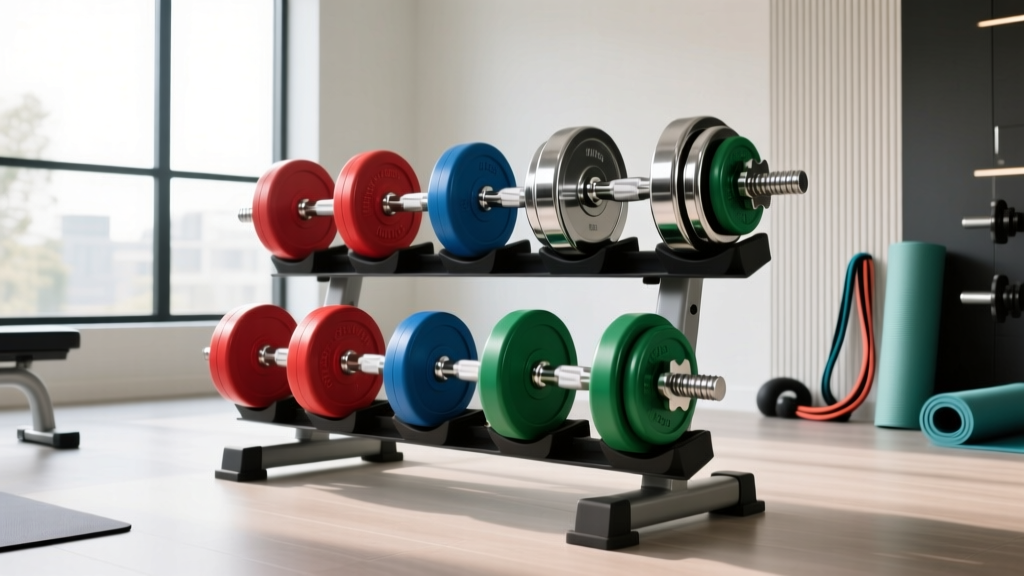
- Dumbbell Tier Racks: For your push day dumbbells, utilize an angled tier rack (like the Rogue 3-Tier Dumbbell Rack). Angled storage prevents the urethane heads from bearing the full point-load of the steel handle resting on a flat shelf, which can cause micro-fractures in the urethane bonding over time.
- Humidity Management: If your gym is in a basement or uninsulated garage, invest in a commercial-grade dehumidifier. Keeping the ambient relative humidity below 50% is the single most effective passive maintenance step you can take for bare cast iron.
Frequently Asked Questions (FAQ)
Can I use baby oil to condition my cast iron kettlebell handles?
While baby oil (mineral oil) is safe and will prevent rust, it does not dry or cure. It remains tacky and will attract dust, chalk, and pet hair, creating a grimy paste on the handle. Stick to drying lubricants like Boeshield T-9 or dedicated gun oils that leave a dry, protective film.
How do I remove white oxidation from my rubber push day dumbbells?
White, powdery oxidation on rubber or urethane is a sign of UV and ozone degradation (dry rot). While you cannot reverse the chemical breakdown, you can temporarily restore the black finish and slow further degradation by vigorously applying a silicone-based rubber restorer or 303 Aerospace Protectant. If the rubber is flaking off, the dumbbell head is structurally compromised and should be replaced.
Is it safe to drop urethane dumbbells on rubber flooring?
Urethane is highly impact-resistant, which is why it is the standard for commercial gyms. However, dropping heavy hex dumbbells (50+ lbs) from shoulder height onto low-density EVA foam mats will shatter the foam and potentially crack the urethane edge. Always use high-density (40mm+ thickness) vulcanized rubber drop mats for heavy push day drops.
More gear to consider
All reviews
EZ Bar vs Straight Bar: 2026 Trends & Incline Dumbbell Press Benefits
Rubber Hex vs Urethane: Value for Jumping Squats with Dumbbells

Rogue vs Titan Barbells: Upgrading Your Chest Dumbbell Home Workout

Optimize Space for a Light Dumbbell Workout: Hex vs Urethane Dumbbells

EZ Bar vs Straight Bar Budget: Dumbbell Row for Upper Back Value