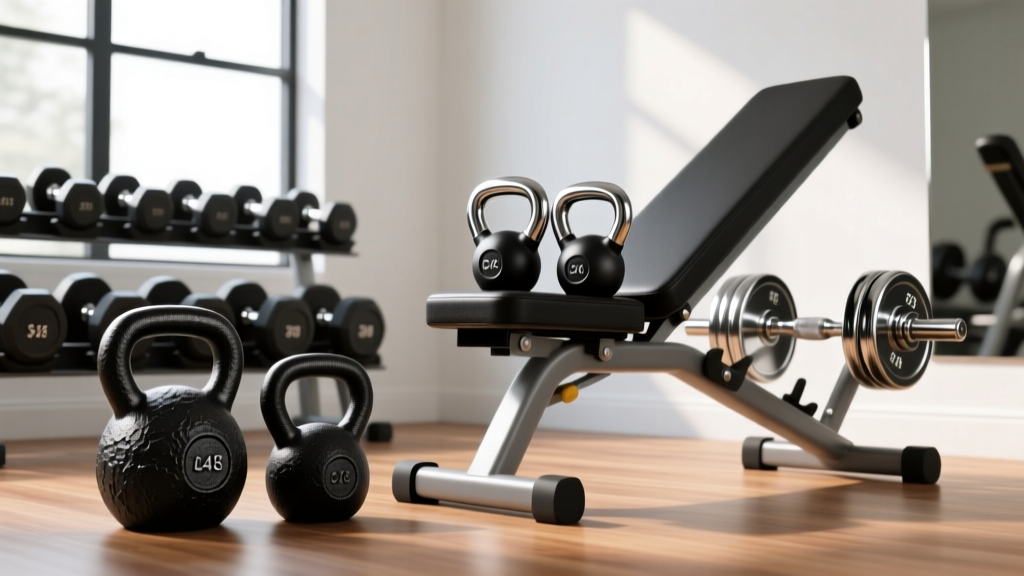
Cast Iron vs Competition Kettlebells & Incline Dumbbell Bench Press
Analyze the 2026 budget breakdown of cast iron vs competition kettlebells and how your choices impact incline dumbbell bench press performance.

Building a comprehensive free-weight arsenal in 2026 requires ruthless financial prioritization. Whether you are outfitting a garage gym or upgrading a commercial facility, the tension between buying premium specialty equipment and securing versatile foundational gear is real. Two areas where this budget friction frequently surfaces are the selection of kettlebells (specifically the cast iron vs. competition debate) and the acquisition of a high-quality adjustable bench for the incline dumbbell bench press.
At first glance, these two equipment categories might seem unrelated. However, from a biomechanical and budget-allocation perspective, they are deeply intertwined. If you are utilizing kettlebells as a dumbbell substitute for incline pressing, or if you are trying to balance your overall free-weight budget to afford both premium bells and a heavy-duty adjustable bench, understanding the exact cost-per-pound and dimensional nuances is critical. This guide breaks down the real-world value, failure modes, and budget frameworks for these essential tools.
The 2026 Cost-Per-Pound Reality: Cast Iron vs. Competition
The most immediate differentiator between cast iron and competition kettlebells is the price. In the current 2026 market, raw material costs and manufacturing tolerances have widened the gap between entry-level and professional-grade bells.
- Cast Iron Kettlebells: Typically priced between $1.50 and $2.20 per pound. Brands like CAP Barbell and Yes4All dominate this space. They are poured into molds, meaning the physical dimensions of the bell and the handle diameter change as the weight increases.
- Competition Kettlebells: Priced between $4.50 and $6.50 per pound. Brands like Kettlebell Kings and Rogue Fitness produce these from hollow steel shells. They feature uniform dimensions (a standard 11.8-inch height and 8.3-inch width) and a consistent 35mm handle diameter, regardless of whether the bell is 8kg or 48kg.
Head-to-Head Specification Matrix
| Feature | Standard Cast Iron | Competition Grade |
|---|---|---|
| Average Cost (per lb) | $1.60 - $2.20 | $4.80 - $6.50 |
| Handle Diameter | Variable (30mm - 42mm) | Strict 35mm |
| Horn Spacing | Variable (Wider on heavy bells) | Uniform & Compact |
| Center of Gravity | Shifts outward as weight increases | Consistent, centered in the palm |
| Primary Failure Mode | Seam lines tearing calluses; uneven racks | Paint chipping; handle rust if not maintained |
The Biomechanical Clash: Kettlebell Horns and the Incline Dumbbell Bench Press
Why does the cast iron vs. competition debate matter when discussing the incline dumbbell bench press? Many home gym owners on a strict budget attempt to use their kettlebells as makeshift dumbbells for incline pressing to avoid buying a full set of hex dumbbells. According to ExRx.net's biomechanical breakdown of the incline dumbbell bench press, the clavicular head of the pectoralis major requires a 30 to 45-degree angle for optimal activation, demanding a deep eccentric stretch at the bottom of the movement.
This deep stretch is where cheap cast iron kettlebells fail the budget-conscious lifter.
Warning: Ulnar Impingement RiskWhen you lower a heavy cast iron kettlebell (e.g., a 24kg or 32kg bell) to the bottom of an incline press, the excessively wide horns and variable handle thickness will aggressively dig into the ulna and radius of your forearms. This not only causes severe bruising but also artificially limits your range of motion, robbing you of the hypertrophic benefits of the incline dumbbell bench press.
Competition kettlebells, with their uniform 35mm handles and compact, standardized horn spacing, sit much cleaner in the rack position and allow for a safer, deeper stretch during incline pressing. If your budget forces you to use kettlebells for incline presses, competition bells are a non-negotiable investment for joint longevity.
Budget Allocation: The Bench vs. The Bells
If you are buying dedicated dumbbells for the incline dumbbell bench press, you must allocate funds for a premium adjustable bench. A wobbling bench with a wide gap between the seat and backrest will ruin your pressing mechanics and pose a severe safety risk.
Scenario A: The Hypertrophy Generalist
Total Budget: $1,200
- The Bench ($450): Rep Fitness AB-3100 2.0 or Rogue Adjustable Bench 3.0. These offer zero-gap designs, 1,000 lb+ weight capacities, and precise 30-degree incline notches.
- The Dumbbells ($550): A pair of adjustable dumbbells (e.g., PowerBlock Pro EXP) to handle the incline dumbbell bench press progression.
- The Kettlebells ($200): A single, high-quality 16kg or 20kg cast iron kettlebell for swings and goblet squats. Since ballistic movements don't require the precision of competition bells, cast iron provides excellent value here.
Scenario B: The Ballistic & Functional Athlete
Total Budget: $1,200
- The Kettlebells ($750): A matched set of competition kettlebells (12kg, 16kg, 24kg) from Kettlebell Kings. Essential for sport-specific training, juggling, and high-rep snatches where handle consistency prevents tear-offs.
- The Bench ($250): A basic, flat utility bench. You sacrifice the incline dumbbell bench press entirely, opting instead for floor presses and standing overhead variations.
- The Dumbbells ($200): A pair of fixed 20lb hex dumbbells for isolated accessory work.
Real-World Failure Modes: Where Cheap Gear Costs You More
When analyzing value, we must look beyond the initial purchase price and consider the lifespan and maintenance of the equipment. StrongFirst's kettlebell standardization guidelines emphasize that the tactile feedback and structural integrity of the bell directly impact training longevity.
Cast Iron Edge Cases
Cheaper cast iron bells often suffer from aggressive mold seams along the handle. If you do not spend 30 minutes sanding the handle with 80-grit sandpaper upon arrival, these seams will rip your calluses during high-rep snatches. Furthermore, the powder coating on budget bells tends to oxidize and chalk over time, requiring periodic wire-brushing and a coat of rust-inhibitor paint.
Competition Bell Edge Cases
While structurally superior, competition bells are painted steel. If you drop a 32kg competition bell onto a bare concrete floor, the steel shell will not crack, but the paint will chip, exposing the raw metal to humidity. In a humid garage gym, this requires immediate touch-up with enamel paint to prevent surface rust, which can ruin the smooth glide required for cleans and snatches.
Bench Stability Failures
When setting up for the incline dumbbell bench press, the lateral stability of the bench is paramount. Budget benches (under $150) often use 2x2 steel tubing with thin padding. When you press heavy dumbbells asymmetrically or experience a momentary muscular failure, the frame will torque and wobble. Premium benches utilize 3x3 or 2x4 heavy-gauge steel and laser-cut adjustment ladders, ensuring the backrest locks in with zero play.
The Final Verdict: Maximizing Your 2026 Free Weight Budget
The decision between cast iron and competition kettlebells ultimately hinges on your primary training modality and how you plan to integrate them with your bench work. If your programming heavily features the incline dumbbell bench press and traditional bodybuilding hypertrophy, allocate the majority of your budget toward a premium adjustable bench and dedicated dumbbells, utilizing a basic cast iron kettlebell for accessory ballistic work.
Conversely, if you are a kettlebell sport athlete or prioritize functional, full-body conditioning, the uniform dimensions of competition bells are worth the steep cost-per-pound premium. Just remember: if you attempt to substitute those competition bells into an incline press, the standardized 35mm handle will save your forearms, but you will still need a rock-solid bench to support the load. By understanding these precise mechanical and financial trade-offs, you can build a home gym that delivers maximum ROI without compromising on safety or biomechanics.
More gear to consider
All reviews
Dumbbell Deadlift to Press: Loadable Dumbbell ROI

Best Neoprene Dumbbells for Home Use: Single RDLs with Dumbbells

Barbell Collars & Long Head Tricep Exercises Dumbbell Safety

Best Loadable Pec Fly Dumbbells: 2026 Hands-On Review
Bumper vs Iron Plates Value Guide: Beyond the Squat One Dumbbell Phase
