
Beyond a 20-Minute Dumbbell Workout for Beginners: Kettlebell Guide
Transitioning from a 20-minute dumbbell workout for beginners? We break down the budget and value of cast iron vs competition kettlebells for your home gym.

Mastering a standard 20-minute dumbbell workout for beginners is a massive milestone in any fitness journey. You have built foundational strength, learned basic movement patterns, and developed the discipline required for consistent training. However, as you look to introduce explosive, ballistic movements like kettlebell swings, snatches, and cleans into your programming, standard dumbbells quickly reveal their limitations. The offset center of mass and thick, dual-handed grip of a dumbbell make high-repetition ballistics awkward and potentially hazardous to your wrists.
This realization inevitably leads home gym owners to a critical purchasing decision: buying a kettlebell. But as you browse the market in 2026, you are immediately confronted by two distinct categories—Cast Iron and Competition kettlebells. The price discrepancy between the two can be jarring, leaving many lifters wondering if the premium cost of competition bells is justified for general fitness.
In this comprehensive budget breakdown and value analysis, we will dissect the exact cost-per-pound metrics, physical dimensions, and long-term durability of both styles to help you make the most financially sound decision for your training needs.
The Core Dilemma: Cast Iron vs. Competition Specifications
Before analyzing the budget, it is vital to understand what you are actually paying for. The manufacturing processes and design philosophies behind these two tools are fundamentally different.
Cast Iron Kettlebells: The Traditional Workhorse
Cast iron kettlebells are created by pouring molten iron into a mold. Because they are solid iron, their physical size scales linearly with their weight. A 16kg (35lb) cast iron bell will be noticeably smaller than a 32kg (70lb) bell. Furthermore, handle thickness and the 'window' (the gap between the handle and the bell) vary depending on the manufacturer and the specific weight.
Competition Kettlebells: The Standardized Precision Tool
Originally designed for the sport of Girevoy (kettlebell sport), competition kettlebells are constructed from steel. The defining feature of a competition bell is its uniform dimensions. Whether it weighs 8kg or 48kg, every competition kettlebell shares the exact same physical footprint: 280mm in height, 210mm in width, and a strict 33mm handle diameter. To achieve this, lighter bells are hollow and filled with steel shot or ball bearings to reach the target weight.
Budget Breakdown: Cost-Per-Pound Value Analysis
As of 2026, global supply chain stabilization has normalized freight costs, but the raw material and machining differences between cast iron and steel still dictate a massive price gap. Below is a comparative breakdown of the current market leaders.
| Brand & Model | Type | Avg. Cost Per Pound | Handle Finish | Best For |
|---|---|---|---|---|
| Rep Fitness Cast Iron | Cast Iron | $1.60 - $1.80 | Matte Powder Coat | Budget Home Gyms |
| Rogue Powder Coat | Cast Iron | $2.10 - $2.40 | Textured Powder Coat | Durability & Grip |
| Yes4All Vinyl/Powder | Cast Iron | $1.10 - $1.40 | Smooth / Vinyl | Extreme Budgets |
| Kettlebell Kings Comp | Competition | $5.00 - $6.50 | Bare Polished Steel | Technique & Sport |
| Rogue Competition | Competition | $5.50 - $7.00 | Bare Steel / Painted | Premium Aesthetics |
Deep Dive: The True Value of Cast Iron Kettlebells
For 90% of home gym owners transitioning from a 20-minute dumbbell workout for beginners, cast iron is the most logical financial investment. The cost-per-pound is roughly a third of competition bells, allowing you to purchase a 'starter trio' (e.g., 16kg, 20kg, and 24kg) for under $180.
Where the Budget Goes: Coatings and Machining
Not all cast iron is created equal. The value proposition lies in the post-casting finishing process.
- Budget Tier (Yes4All, Amazon Basics): Often coated in thick vinyl or cheap enamel. The primary failure mode here is the handle mold seam. If the manufacturer does not CNC-machine the handle smooth, that raised line of iron will act like a cheese grater on your palms during snatches.
- Mid-to-Premium Tier (Rep Fitness, Rogue): These brands invest in secondary machining to ensure the handle is perfectly smooth before applying a high-quality powder coat. According to BarBend's comprehensive kettlebell testing, Rogue's powder coat finish provides optimal chalk retention without being overly abrasive, justifying the slight premium over bare-bones budget options.
Deep Dive: The Premium Investment of Competition Kettlebells
If cast iron is so much cheaper, why do competition kettlebells command $5.00 to $7.00 per pound? The answer lies in metallurgy, precision manufacturing, and biomechanical consistency.
The Cost of Uniformity
Manufacturing a hollow steel shell that can withstand repeated drops while maintaining exact dimensional tolerances is expensive. When you buy a Kettlebell Kings Competition bell, you are paying for single-cast steel construction. There are no welds at the handle joint, meaning zero risk of structural failure at the horn.
The Biomechanical Advantage
Because the handle diameter is locked at 33mm and the window is exceptionally wide, competition bells are vastly superior for specific movements:
- Double Kettlebell Work: The compact, uniform bell shape rests perfectly in the 'rack' position against your forearm without bruising your wrist, regardless of whether you are holding two 12kg bells or two 24kg bells.
- High-Rep Ballistics: The 33mm handle is widely considered the anatomical sweet spot for the human grip during high-repetition swings and snatches, reducing forearm pump and grip fatigue.
'If your goal is to compete in Girevoy sport, or if you are strictly programming high-volume, double-kettlebell complexes, the uniform dimensions of a competition bell are not a luxury—they are a biomechanical necessity.' — StrongFirst Kettlebell Certification Standards
The 3-Year Value Retention & Failure Mode Framework
To truly analyze value, we must look at how these tools age in a home gym environment over a 3-to-5-year horizon.
Cast Iron Failure Modes
- Paint Chipping: Dropping cast iron on concrete will eventually chip the powder coat or paint. While this exposes the raw iron to potential surface rust, it is easily remedied with a wire brush and a coat of Rust-Oleum.
- Handle Smoothing: Over years of use, the powder coat on the handle will wear down to bare, polished iron. Many lifters actually prefer this 'broken-in' feel.
Competition Kettlebell Failure Modes
- Steel Denting: Steel is actually softer and more malleable than thick cast iron. If you drop a competition bell directly onto a concrete garage floor from overhead, the thin steel shell can dent. While this doesn't affect the weight, it can ruin the aesthetic and, if severe, alter the flatness of the base.
- Internal Filler Shift: In lower-quality competition bells, the internal steel shot can settle or shift over years of aggressive snatches, causing a slight off-center balance. Premium brands mitigate this by tightly packing the filler and sealing it with industrial adhesives.
Final Verdict: Which Should You Buy?
Your transition out of the beginner dumbbell phase should dictate your purchase based on your specific training goals and budget constraints.
🏆 Buy Cast Iron If:
- You are on a strict budget (under $150 for your first set).
- Your programming focuses on heavy, low-rep 'grinds' like Turkish Get-Ups, strict presses, and goblet squats.
- You prefer using chalk and want a textured powder coat handle for grip security.
- You want the physical size of the bell to scale with the weight, providing a psychological and physical cue for heavier lifts.
🏆 Buy Competition If:
- Budget is secondary to precision and longevity.
- Your programming heavily features double-kettlebell front squats, double presses, and high-rep sport-style snatches.
- You have smaller hands and struggle with the thick, variable handles found on heavier (24kg+) cast iron bells.
- You want a uniform rack position that won't bruise your forearms as the weight increases.
Ultimately, both tools are incredibly durable and will easily outlast your fitness journey. For most lifters upgrading from a basic dumbbell routine, a high-quality powder-coated cast iron bell from Rogue or Rep Fitness offers the absolute best return on investment. However, if your training evolves toward kettlebell sport or high-volume double-bell complexes, the premium price of a competition steel bell pays immediate dividends in comfort and performance.
More gear to consider
All reviews
Rubber Hex vs Urethane: Budget Guide for Dumbbell Serratus Punch

Bumper Plate vs Iron Plate: 2026 Trends for Dumbbell Eyes

EZ Curl Bar vs Straight Bar Care & Seated Military Press with Dumbbells
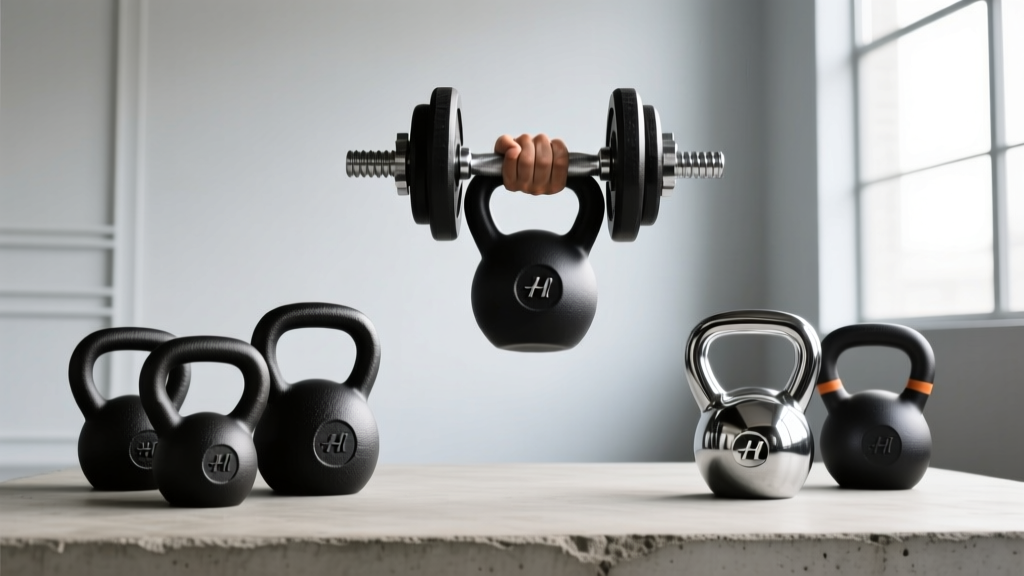
Kettlebell Value: Cast Iron vs Competition & Dumbbell Lat Raise Form
Olympic Dumbbell & Barbell Collars: A Beginner Guide
