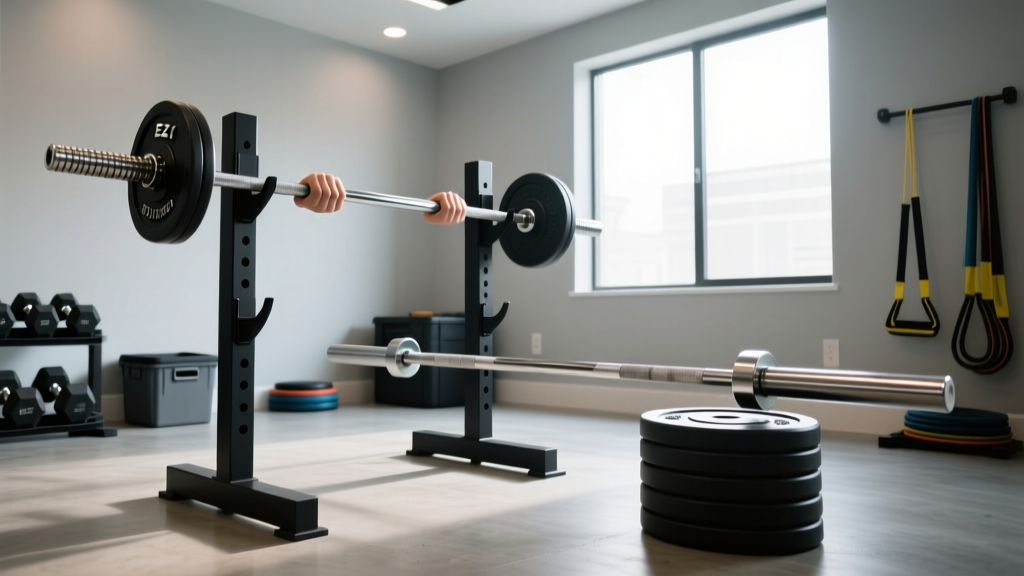
Beyond 200 Pound Dumbbells: Barbell Weight & Knurling Mistakes
Transitioning from 200 pound dumbbells to Olympic barbells? Avoid common weight calibration and knurling mistakes with our expert troubleshooting guide.

When advanced lifters max out their commercial gym's heaviest iron, the search for 200 pound dumbbells often begins. However, sourcing a pair of 200 lb urethane dumbbells from premium manufacturers like Iron Grip or Sorinex will cost upwards of $1,200 to $1,400 in 2026. Beyond the brutal price tag, the sheer physical footprint of a 200 lb dumbbell—often exceeding 15 inches in bell length—makes unilateral pressing a logistical nightmare. The bells collide, the grip fails, and the risk of dropping a 200 lb mass on your face becomes a genuine hazard.
This is the exact ceiling where most elite home-gym owners and strength athletes pivot back to the Olympic barbell. But this transition is fraught with expensive errors. Buying an Olympic barbell is not as simple as picking up a generic 45 lb bar. If you are moving from heavy dumbbells to serious barbell work, you must troubleshoot your understanding of weight tolerances, knurling geometry, and tensile strength. Here is your expert troubleshooting guide to avoiding the most common Olympic barbell buying mistakes.
Mistake #1: Blindly Trusting the 45 LB Weight Stamp
The most frequent mistake lifters make when upgrading their home gym is assuming every bar stamped with 45 LBS or 20 KG actually weighs that amount. When you are used to the precise, albeit massive, casting of high-end 200 pound dumbbells, the sloppy manufacturing tolerances of budget Olympic bars will severely impact your progressive overload tracking.
According to the International Powerlifting Federation (IPF) technical rules, a certified competition barbell must weigh exactly 20 kg with a tolerance of just 10 grams. Budget bars, often manufactured with low-grade spring steel and poor machining, can be off by 300 to 500 grams. Over a 12-week peaking block, this ghost weight can ruin your RPE (Rate of Perceived Exertion) calculations.
Barbell Weight Tolerance Matrix (2026 Market Data)
| Barbell Tier | Weight Tolerance | Typical Price | Best For |
|---|---|---|---|
| Generic / Budget | +/- 500g | $150 - $220 | Beginners, light accessories |
| Commercial Standard | +/- 200g | $250 - $350 | General home gyms, hypertrophy |
| IPF / IWF Calibrated | +/- 10g | $350 - $1,200+ | Competitive powerlifters, elite tracking |
Troubleshooting Fix: If you already own a suspect bar, weigh it on a calibrated digital floor scale. If it is light, account for the deficit in your spreadsheet. If you are buying new, look for manufacturers that explicitly state their IWF or IPF weight tolerances, such as the Rogue Fitness Ohio Power Bar or the Eleiko competition lineup.
Mistake #2: Knurling Profile Shock (Hill vs. Volcano vs. Mountain)
Dumbbells—especially heavy rubber or urethane models designed to survive drops—typically feature a mild, worn-down knurl pattern to prevent tearing hands during high-rep, sweaty metabolic conditioning. When you transition to a dedicated power bar, the knurling geometry changes drastically, and unprepared lifters often suffer severe callus tears within their first two weeks.
⚠️ Troubleshooting Warning: Hand TearingIf you are moving from heavy dumbbells to an aggressive power bar, your skin is not ready. Do not use heavy chalk immediately on a new mountain-knurl bar. Spend two weeks breaking in your grip with bare hands or light chalk to allow your skin's dermis to adapt to the sharper steel peaks.
Understanding knurl geometry is critical for troubleshooting grip failures during heavy deadlifts or low-bar squats:
- Hill Knurl: The peaks are rounded off. Common on cheap bars and multi-purpose dumbbells. It provides poor grip for heavy singles but is comfortable for high-rep work.
- Volcano Knurl: The gold standard for modern power bars (like the Ohio Power Bar). The machine cuts deep grooves but leaves a flattened, crater-like peak. It offers massive surface area for grip without acting like a cheese grater on your hands.
- Mountain Knurl: Sharp, pointed peaks. Found on older IPF-spec bars and specialized deadlift bars. It bites aggressively into the skin and requires meticulous hand care and callus shaving.
Mistake #3: Ignoring Tensile Strength and Bar Whip
When you load 200 pounds on a pair of dumbbells, the iron is solid and unyielding. When you load 405 lbs onto an Olympic barbell, the steel bends. This is known as 'whip,' and it is dictated by the bar's tensile strength, measured in PSI (pounds per square inch).
A common mistake is buying a bar with a tensile strength under 190,000 PSI for heavy powerlifting. Bars with 165k to 180k PSI will permanently deform (bend) if subjected to heavy eccentric loads or dropped during failed squats. For serious lifters moving past the dumbbell ceiling, you must invest in a bar with a minimum of 190k PSI for general powerlifting, or 215k PSI for elite-level squats and deadlifts where bar oscillation (whip) needs to be minimized for stability.
Expert Insight: Olympic weightlifting bars are designed to be thin (28mm) and whippy (around 150k-160k PSI) to absorb the shock of a heavy clean. Do not use a weightlifting bar for heavy powerlifting squats; the extreme whip will destabilize your spine at the bottom of the hole.
Troubleshooting Your Setup: Storage and Rack Integration
One of the most overlooked mistakes in the heavy iron community is storage. If your home gym contains both 200 pound dumbbells and a collection of Olympic barbells, standard storage solutions will fail, leading to damaged equipment and safety hazards.
Integrating Heavy Dumbbells and Bars on a Single Rack
To safely store your heavy arsenal, you need a modular power rack system. Racks like the Rep Fitness PR-4000 or Rogue Monster series allow for vertical integration:
- Lower Tier (Dumbbell Storage): Install a heavy-duty 3-tier dumbbell tray attachment at the base of the rack. Crucial: Ensure the tray is rated for at least 1,500 lbs total. Standard commercial trays will buckle under the density of 150+ lb dumbbells.
- Mid Tier (Gun Racks): Use J-cups with UHMW plastic lining to store specialty bars (like a safety squat bar or cambered bar) horizontally on the outside of the uprights.
- Upper Tier (Vertical Bar Holders): Mount a vertical bar holder to the rear crossmember. Never store Olympic bars leaning against a wall; the 15kg shaft will warp over time under its own weight if not supported vertically or fully horizontally.
Frequently Asked Questions
Can I use an Olympic barbell for dumbbell-style unilateral work?
While you can perform unilateral landmine presses or single-arm rows with an Olympic bar, the 28-29mm shaft diameter and the aggressive knurl are not optimized for the neutral grips typically used with heavy dumbbells. Furthermore, the bar whip will make stabilization significantly harder than a solid cast dumbbell.
Why do my hands tear on my new power bar when they never did on dumbbells?
Heavy dumbbells usually feature a shallow 'hill' knurl designed for comfort during high-volume accessory work. Dedicated power bars use deep 'volcano' or sharp 'mountain' knurling to prevent the bar from slipping during 1-rep max deadlifts. You must adjust your chalk usage and implement a weekly pumice stone callus-care routine to prevent tearing.
Is a center knurl necessary if I only bench and deadlift?
If you are exclusively benching and deadlifting, a smooth center or a very mild center knurl is preferable. However, if you plan to transition to heavy back squats or front squats, an aggressive center knurl is mandatory to prevent the bar from sliding down your back when wearing a cotton t-shirt.
More gear to consider
All reviews
Rubber Hex vs Urethane Dumbbells for Dumbbell Reverse Crunches

Loadable Dumbbell Care: The Dumbbell Back Workout Women Swear By
Cast Iron vs Competition Kettlebells & Dumbbell Bent Rows Value

Loadable Dumbbells vs Bench Press and Dumbbells: 2026 Budget Guide

Barbell vs Dumbbell Rows: Olympic Barbell Knurling & Weight