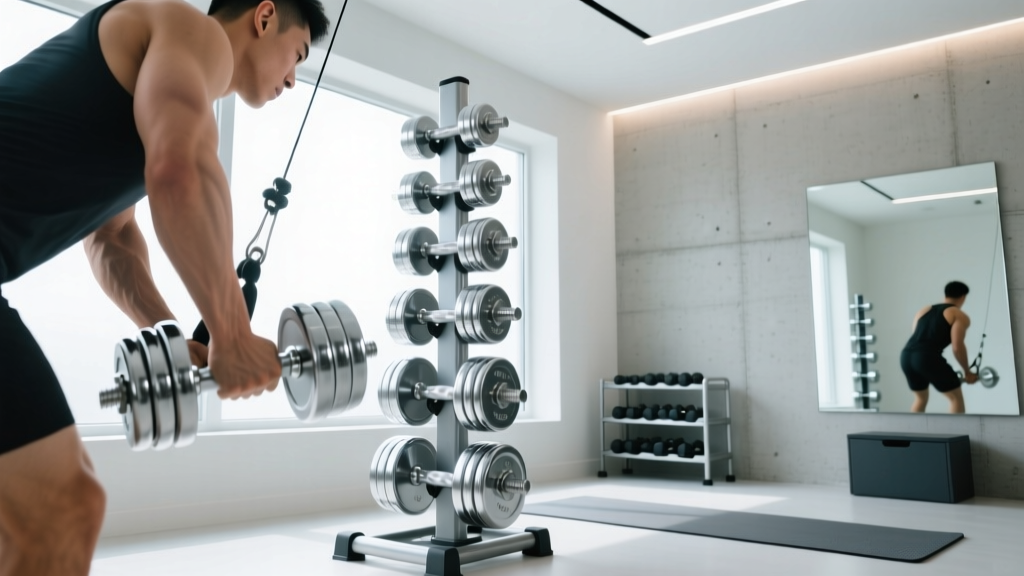
Cast Iron vs Competition Kettlebells: Value per Dumbbell Lbs
Compare cast iron vs competition kettlebells with our budget breakdown. Analyze cost per pound, sizing, and value against standard dumbbell lbs.

The Home Gym Budget Dilemma: Cast Iron vs. Competition
Building a comprehensive free weight arsenal requires navigating a minefield of pricing, metallurgy, and biomechanics. For home gym owners in 2026, the debate between cast iron and competition kettlebells is no longer just about aesthetics or sport-specific rules; it is fundamentally a question of budget allocation and long-term value. When planning your equipment purchases, many lifters use the cost per dumbbell lbs as a baseline metric to gauge the relative value of kettlebells. However, applying a simple cost-per-pound metric to kettlebells ignores critical variables like handle geometry, dimensional consistency, and manufacturing failure modes.
This guide provides a deep-dive budget breakdown and value analysis of cast iron versus competition kettlebells, translating the investment into practical lifting outcomes and comparing the true cost against traditional fixed dumbbells.
Metallurgy and Manufacturing: Why Prices Differ
To understand the pricing gap, you must first understand how these tools are born. The manufacturing processes dictate not only the retail price but also the lifespan and performance of the bell.
Cast Iron Kettlebells: The Sand-Casting Reality
Cast iron kettlebells are produced by pouring molten iron into sand molds. This process is highly cost-effective, which is why cast iron bells generally retail between $1.20 and $1.60 per pound. However, sand casting introduces inherent inconsistencies. As the iron cools, it can shrink or warp slightly, leading to uneven bases that wobble on hard floors. Furthermore, the handle diameter scales with the overall size of the bell. A 16kg (35 lb) cast iron bell might feature a comfortable 35mm handle, but a 32kg (70 lb) bell from the same manufacturer can swell to over 45mm, making single-arm snatches and high-repetition cleans a grip-limiting nightmare.
Competition Kettlebells: Precision Steel Stamping
Competition kettlebells are engineered to exact International Union of Kettlebell Lifting (IUKL) specifications. Regardless of whether the bell is 8kg or 48kg, the dimensions remain strictly uniform: 210mm height, 210mm width, and 280mm depth. The handle diameter is locked at either 33mm or 35mm. To achieve this, manufacturers use steel stamping and welding. Lighter bells are hollow and filled with internal ballast (like steel shot or concrete) to reach the target weight, while heavier bells (typically 24kg and above) are solid steel. This precision manufacturing pushes the price to $2.50 to $3.50 per pound, but guarantees that your muscle memory and grip mechanics remain identical whether you are warming up with a 12kg or maxing out with a 32kg.
Expert Insight: The internal ballast in lighter competition bells can sometimes rattle or degrade over years of heavy drops. If you are buying competition bells under 16kg, prioritize brands that use solid steel cores or high-density resin fills rather than loose steel shot to prevent internal failure modes.The 2026 Budget Matrix: Cost Per Pound Breakdown
How do kettlebells actually compare to standard free weights when we break down the budget? The table below maps the average market pricing for 2026, allowing you to weigh the premium of competition steel against the utility of standard hex dumbbells.
| Equipment Type | Material / Build | Avg Cost Per Pound | Handle Consistency |
|---|---|---|---|
| Cast Iron Kettlebell | Sand-cast iron, powder coat | $1.20 - $1.60 | Poor (scales with weight) |
| Competition Kettlebell | Stamped steel, color-coded | $2.50 - $3.50 | Perfect (uniform 33-35mm) |
| Standard Hex Dumbbells | Cast iron core, rubber/urethane | $1.50 - $2.20 | Good (varies slightly by brand) |
When calculating the value per dumbbell lbs equivalent, a standard pair of 50 lb hex dumbbells (100 lbs total) will cost roughly $180. A single 48kg (106 lb) competition kettlebell will cost upwards of $300. While the kettlebell demands a higher upfront premium per pound, it offers a vastly different biomechanical stimulus and requires significantly less floor space than a full dumbbell rack.
Translating Dumbbell Lbs to Kettlebell Sizing
One of the most common budgeting errors lifters make is buying kettlebells that are too light because they base their purchase on their strict dumbbell press numbers. The offset center of mass and the unique grip demands of a kettlebell mean that your dumbbell lbs do not translate 1:1 to kettlebell presses. Use the framework below to budget for the correct starting sizes.
- Strict Dumbbell Press (40 lbs): Translates to a 16kg (35 lb) or 20kg (44 lb) kettlebell for strict presses. Budget for a 20kg if you plan on rapid strength progression.
- Strict Dumbbell Press (60 lbs): Translates to a 24kg (53 lb) or 28kg (62 lb) kettlebell. The 24kg is the gold standard for advanced male lifters in hardstyle kettlebell training.
- Strict Dumbbell Press (80+ lbs): Translates to a 32kg (70 lb) or 40kg (88 lb) kettlebell. At this tier, competition bells are highly recommended to avoid the massive, un-grippable handles found on heavy cast iron models.
For authoritative sizing and strength standards, referencing established organizations is crucial. According to the ExRx Fitness Kettlebell Standards, an advanced male lifter should aim to press the 32kg bell, while intermediate lifters should target the 24kg. You can also explore the Rogue Fitness Kettlebell Catalog to compare real-time pricing and shipping weights for these specific tiers.
Hidden Costs: Shipping, Maintenance, and Floor Protection
The sticker price of a kettlebell is only half the budget equation. Because kettlebells are incredibly dense, they trigger hidden logistical and maintenance costs that dumbbells often avoid.
The Freight vs. Parcel Trap
Shipping companies like UPS and FedEx impose severe surcharges on packages exceeding 50 lbs, and often refuse to ship packages over 70 lbs via standard ground networks. If you order a 24kg (53 lb) and a 32kg (70 lb) cast iron kettlebell together, you will either get hit with a massive heavy-package surcharge (often $30 to $50 extra), or the retailer will be forced to ship them via LTL (Less Than Truckload) freight, which can add $100+ to your total cost. Budget Tip: Order heavy bells individually or look for retailers offering free freight shipping thresholds (usually around $500+).
Maintenance and Failure Modes
"A wobbly cast iron kettlebell isn't just annoying during renegade rows; it's a safety hazard that alters your biomechanical alignment and forces micro-adjustments that can lead to wrist strain over high-repetition sets."
Cast Iron Failure Modes: The powder coating on cheaper cast iron bells will inevitably chip around the handle and the base, exposing raw iron to humidity. If you live in a humid climate or have a garage gym without climate control, you must budget time and money for wire-brushing and applying 3-in-One oil or Rust-Oleum clear coat. Additionally, sand-casting burrs on the underside of the handle can tear your calluses during high-rep snatches, requiring you to manually file the handle smooth with a metal file.
Competition Failure Modes: Competition bells are painted to denote weight (e.g., Yellow for 16kg, Green for 24kg, Red for 32kg). The paint on the main body will chip when the bells clash during double cleans or juggling. While this doesn't affect performance, it ruins the aesthetic. More importantly, the bare steel handles on competition bells can become dangerously slippery when polished by years of chalk and sweat. You may need to periodically scuff the handle with fine-grit sandpaper to maintain grip traction.
Expert Verdict: Where Should Your Budget Go?
The decision between cast iron and competition kettlebells ultimately hinges on your training style and your tolerance for dimensional inconsistency.
Buy Cast Iron If:
- You are on a strict budget and prioritize cost per dumbbell lbs equivalent.
- You primarily train two-handed movements like heavy swings and goblet squats where handle thickness variations are less detrimental.
- You only plan to buy 1 or 2 bells (e.g., a 16kg and 24kg) and don't need uniform dimensions for complex juggling or sport-specific snatches.
Buy Competition If:
- You practice Kettlebell Sport (GS) or high-repetition hardstyle snatches and cleans where a consistent 33mm or 35mm handle is non-negotiable.
- You perform a lot of single-arm work, bottoms-up presses, or juggling, which require the uniform 210x210x280mm dimensions for spatial awareness.
- You are buying heavier bells (28kg, 32kg, 40kg) and want to avoid the comically thick, un-grippable handles found on large cast iron models.
By understanding the true cost per pound, the hidden shipping fees, and the biomechanical translations from your standard dumbbell lbs, you can allocate your home gym budget with precision. Don't just buy weight; buy the right geometry for your training goals.
More gear to consider
All reviews
Loadable Dumbbells for Dumbbell Neck Exercises: 2026 Review

EZ Bar vs Straight Bar: Space Layouts & Standing Flys with Dumbbells
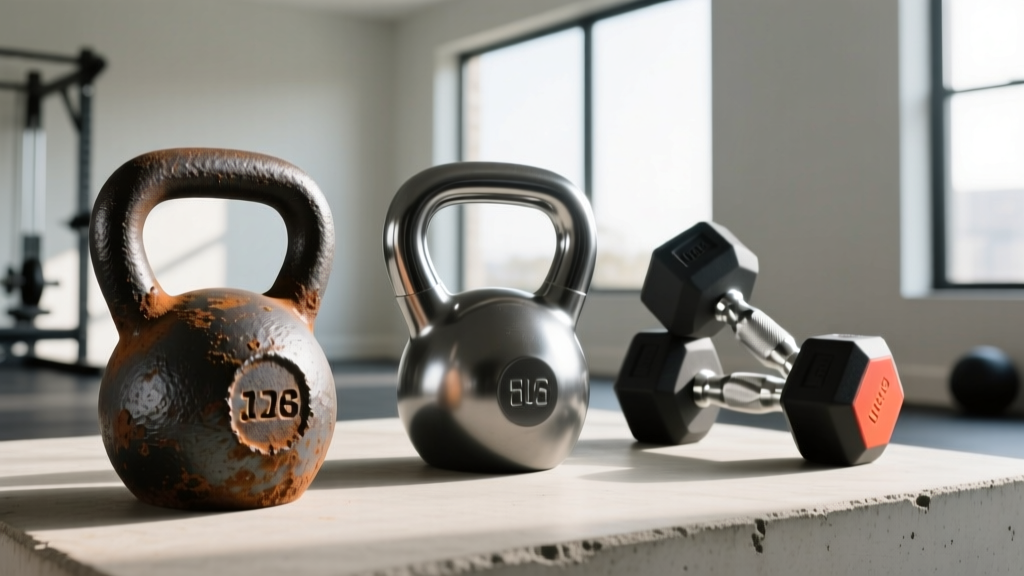
Kettlebell Care: Cast Iron vs Competition & Dumbbells for Pecs

Ivanko Dumbbell Setup & Adjustable Systems Compared

Nike Dumbbells vs Olympic & Standard Weight Plates: 2026 Guide