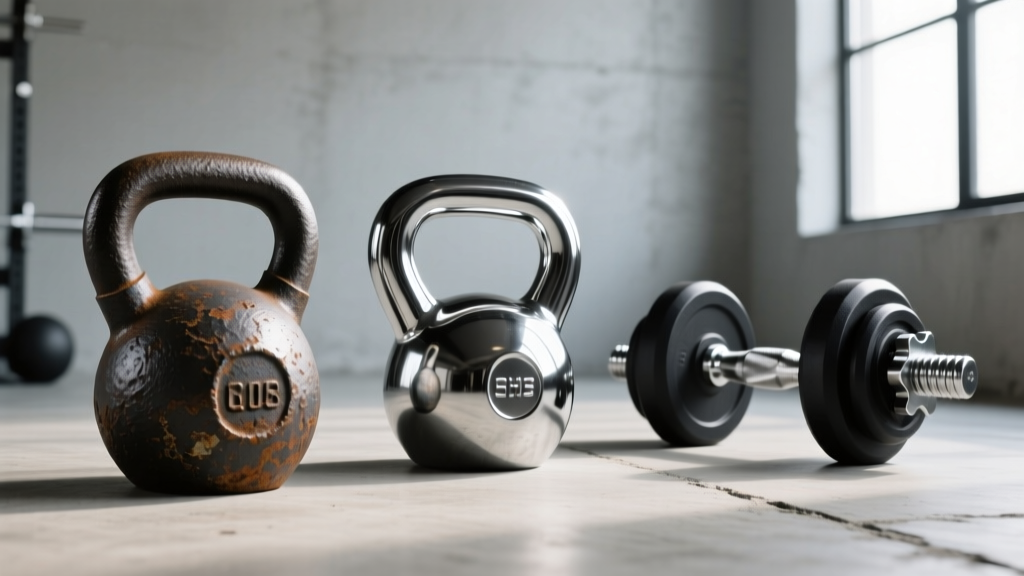
Kettlebell Care: Cast Iron vs Competition & Dumbbell Reverse Crunch
Master kettlebell longevity with our 2026 cast iron vs competition maintenance guide, featuring safety tips for the dumbbell reverse crunch adaptation.

The Core Dilemma: Cast Iron vs. Competition Kettlebells
Investing in free weights is a long-term commitment to your physical health, but the longevity of your equipment depends entirely on your maintenance protocols. In 2026, the market remains divided into two primary camps: traditional cast iron kettlebells and competition-grade steel kettlebells. While both serve the fundamental purpose of offsetting gravity, their metallurgical compositions, coating vulnerabilities, and care requirements are vastly different. Understanding these nuances is the difference between a bell that lasts a decade and one that degrades into a rusted, chalk-clogged hazard within a year.
This guide breaks down the exact maintenance frameworks required for both styles, explores common failure modes, and highlights critical safety considerations for floor-based core movements—specifically how equipment integrity impacts adaptations of the dumbbell reverse crunch.
The Metallurgy and Coating Matrix
Before applying oil or wire brushes, you must understand what you are working with. The table below outlines the structural differences and 2026 market realities for a standard 16kg (35lb) bell.
| Feature | Cast Iron (Standard) | Competition (Steel) |
|---|---|---|
| Core Material | Grey cast iron (porous) | Hollow steel shell (solid core) |
| Standard Coating | Powder coat, e-coat, or bare | Industrial enamel/paint |
| Handle Diameter | Tapered (31mm - 35mm) | Uniform 33mm |
| Primary Vulnerability | Coating chips leading to iron oxidation | Paint scratching; internal moisture trapping |
| Avg. 2026 Price (16kg) | $45 - $75 USD | $95 - $140 USD |
Cast Iron Longevity Protocols
Cast iron is inherently porous. If left bare, it will flash-rust within 48 hours in a humid garage gym. To combat this, manufacturers apply powder coatings. However, the friction of high-rep snatches and the acidic nature of human sweat (which contains lactic acid and urea) will eventually degrade this coating, particularly on the horns and the underside of the handle.
The 5-Minute Post-Workout Remediation
- Neutralize the Acid: Wipe the handle down with a slightly damp microfiber cloth to remove sweat and chalk. Do not use chemical degreasers, as they can strip the protective oils from the iron pores.
- Inspect for Micro-Chips: Run your thumb along the inner curve of the handle. If you feel jagged edges where the powder coat has chipped, you have a localized rust vector.
- Apply a Protectant: Use a light coat of 3-IN-ONE Multi-Purpose Oil or a specialized barbell oil. Avoid WD-40 standard solvent, as it strips moisture but leaves no lasting protective barrier. Use WD-40 Specialist Corrosion Inhibitor instead if you live in high-humidity coastal regions.
Expert Warning: Never use a steel wire brush to remove rust from a cast iron kettlebell. Steel bristles will shed microscopic iron particles that embed into the softer cast iron, accelerating future rusting. Always use a brass wire brush or synthetic Scotch-Brite pads.
Competition Steel Maintenance
Competition kettlebells (from brands like Onnit or Kettlebell Kings) are uniform in size regardless of weight, featuring a hollow steel shell filled with a solid core material. Their primary enemy is not structural degradation, but crevice corrosion caused by chalk and moisture accumulation.
Managing Chalk Crevice Corrosion
The handle window of a competition bell has sharp inner corners where gym chalk (magnesium carbonate) loves to pack tightly. Magnesium carbonate is hygroscopic—it pulls moisture from the air. When packed into the unpainted or lightly painted inner corners of the handle window, it creates a permanent damp sponge against the steel.
- Weekly Deep Clean: Use a stiff nylon bristle brush and warm soapy water to dig chalk out of the handle window corners.
- Dry Thoroughly: Compressed air is highly effective for blowing moisture out of the tight handle geometry of competition bells.
- Touch-Up Paint: Competition bells are color-coded by weight (e.g., Yellow for 16kg, Green for 24kg). When the paint chips on the bell body, use automotive touch-up enamel matched to the RAL color code of your bell to prevent surface oxidation.
Exercise Spotlight: Equipment Safety and the Dumbbell Reverse Crunch
While the dumbbell reverse crunch is traditionally performed by gripping a hex dumbbell vertically between the feet or holding it securely in the hands over the pelvis, many athletes adapt this core movement using a kettlebell. The kettlebell variation involves holding the bell by the horns close to the chest or face during the eccentric and concentric phases of the crunch.
This adaptation brings equipment maintenance directly into the realm of personal safety. When a weight is hovering inches from your face, jaw, or collarbone, the surface integrity of the kettlebell's horns is paramount.
Why Horn Maintenance Matters for Floor Work
Failure Mode Alert: Horn FlakingOn cheaper cast iron kettlebells, the powder coat on the horns is often applied too thickly. During floor exercises like the kettlebell-adapted dumbbell reverse crunch, the horns repeatedly tap against rubber flooring or bump against each other. This causes the thick powder coat to flake off in sharp, abrasive shards. If you are holding the horns near your face during a reverse crunch, these jagged edges can cause severe micro-abrasions to your hands and face.
Solution: If you use cast iron bells for floor-based core work, lightly sand the horns with 400-grit sandpaper to smooth out any flaking coating, then seal with a thin layer of clear matte enamel or mineral oil.
Furthermore, the handle width dictates grip security during this movement. A competition bell's uniform 33mm handle provides a predictable grip, but the wider horn spacing requires greater forearm mobility when holding the bell inverted for a reverse crunch. Always ensure your hands are free of slick, unbrushed oil residues before attempting weighted core movements over the torso.
Troubleshooting Common Failure Modes
1. The 'Squeaky' Competition Bell
The Issue: Over time, the internal filler material of a hollow competition kettlebell can settle or crack, causing a rattling or squeaking sound during swings or snatches.
The Fix: While you cannot easily open a welded steel shell, you can sometimes stabilize the internal core by drilling a microscopic (1/16") hole in the base plug (if present) and injecting a small amount of expanding polyurethane foam or thin cyanoacrylate (super glue) to bind the loose filler. Seal the hole immediately with a steel epoxy putty.
2. Cast Iron Base Pitting
The Issue: Leaving cast iron bells directly on concrete garage floors causes condensation to pool under the flat base, leading to deep pitting rust that ruins the floor and the bell.
The Fix: Always store bells on a rubber mat or wooden rack. If pitting has already occurred on the base, use a random orbital sander with 80-grit paper to flatten the base, followed by a coat of rust-inhibiting flat black primer to seal the porous iron.
The 2026 Purchasing Framework: Which Survives Your Environment?
Choosing between cast iron and competition isn't just about exercise preference; it's about environmental longevity.
- Choose Cast Iron If: You train in a climate-controlled indoor space, prefer the tactile feedback of a tapered handle for high-rep snatches, and are diligent about post-workout oiling. Brands like Rogue Fitness and Rep Fitness offer e-coated options in 2026 that are significantly more resistant to sweat corrosion than traditional powder coats.
- Choose Competition Steel If: You train in a humid, unheated garage or outdoor space. The thick steel shell and enamel paint of a high-quality competition bell will outlast a cast iron bell in harsh environments with minimal maintenance. They are also mandatory if you plan to compete in kettlebell sport (GS or Hardstyle).
For authoritative guidelines on integrating these tools safely into your core routines, refer to the exercise libraries and safety standards maintained by the American Council on Exercise (ACE). Proper equipment care ensures that whether you are executing heavy ballistic swings or precise, controlled movements like the dumbbell reverse crunch, your gear remains a reliable partner in your fitness journey for years to come.
More gear to consider
All reviews
Home Gym Setup & A Simple Dumbbell Arm Workout With Neoprene

Home Gym Layout: Shoulders With Dumbbells & Kettlebell Space Guide
Best Loadable Dumbbells for Back Flys: 2026 Hands-On Review

Urethane vs Rubber Hex Dumbbells: 2026 Trends & Upright Row Form

Power Rack vs Squat Rack: Space for Side Plank Dumbbell Raises?
