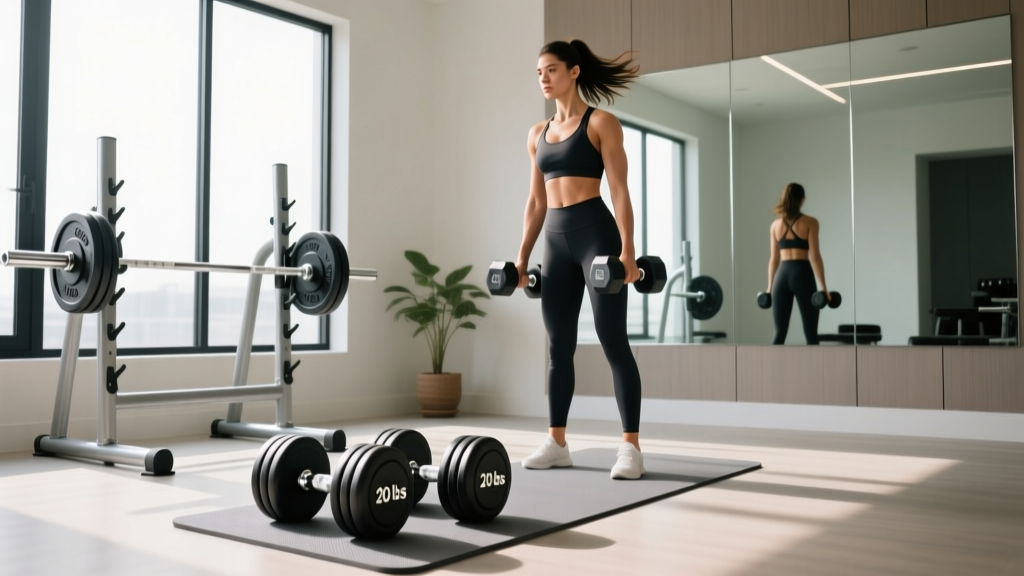
Iron vs Bumper Plates: Budget Guide & Dumbbell Renegade Row GIF Tips
Compare bumper vs iron plates with our budget breakdown. Discover cost-per-pound data, sleeve capacity math, and functional training tips.

The Core Dilemma: Dropping vs. Gripping
Building a home gym in 2026 requires ruthless budget prioritization. For lifters transitioning from commercial gyms to garage setups, the most contentious financial decision often boils down to free weight selection: bumper plate vs iron plate comparison. While commercial facilities stock both to cater to Olympic weightlifters and powerlifters alike, the home gym owner rarely has the luxury of an unlimited equipment budget. Choosing the wrong plate type doesn't just waste money; it can damage your flooring, limit your barbell capacity, and restrict your exercise selection.
This comprehensive value analysis breaks down the exact cost-per-pound metrics, material failure modes, and functional versatility of both plate types. Whether you are dropping cleans from overhead or meticulously programming unilateral core work, understanding where to allocate your capital is the first step toward building a bulletproof training space.
Quick Definitions
Bumper Plates: Olympic-sized plates made of dense rubber or urethane, designed to be dropped from height without destroying the barbell or floor. All bumper plates share a uniform 450mm (17.7-inch) diameter regardless of weight.
Iron Plates: Traditional cast iron or machined steel discs. Their diameter and thickness scale proportionally with their weight. They are meant to be lowered under control, not dropped.
2026 Pricing Breakdown: Cost-Per-Pound Analysis
The most objective way to evaluate gym equipment value is by calculating the cost per pound (or kilogram). Over the last few years, supply chain fluctuations and raw material costs have shifted the landscape, but the hierarchy remains relatively stable. Below is a snapshot of current market pricing for reputable, gym-quality brands.
| Plate Type & Brand Model | Material | Avg. Cost Per Lb | Best Use Case |
|---|---|---|---|
| Rogue Echo Bumper Plates | Virgin Rubber | $2.75 | CrossFit, Oly Lifting |
| REP Fitness Deep Disc Bumpers | Crumb Rubber | $1.90 | Budget Garage Gyms |
| Rogue Machined Olympic Plates | Cast Iron / Machined | $2.10 | Powerlifting, Bodybuilding |
| Standard Grip Iron Plates (Generic) | Cast Iron | $1.30 | General Strength, Accessories |
At first glance, generic iron grip plates offer the highest raw volume per dollar. However, analyzing the budget requires looking beyond the initial purchase price and factoring in the hidden costs of each plate category.
The Hidden Cost of Sleeve Real Estate
One of the most overlooked factors in the bumper plate vs iron plate comparison is barbell sleeve capacity. A standard Olympic barbell sleeve is roughly 16.3 inches long. A 45-pound virgin rubber bumper plate is approximately 3.25 inches thick. If you load four 45-pound bumpers per side, you consume 13 inches of sleeve space, leaving barely enough room for a spring collar. Your max load is capped around 405 pounds (including the bar).
Conversely, a machined 45-pound iron plate is roughly 1.35 inches thick. You can easily fit eight or nine plates per side, allowing advanced lifters to load well over 700 pounds on a standard bar. If you are a strength athlete planning to deadlift or squat heavy in the coming years, buying thick bumpers will eventually force you to purchase specialized extended-sleeve deadlift bars—a hidden $300+ tax on your initial plate purchase.
Material Science and Real-World Failure Modes
Understanding how these plates fail over a 5-to-10-year lifespan is critical for long-term value analysis. According to equipment testing data highlighted by fitness authorities like BarBend, the durometer (hardness) rating of rubber plates dictates their durability and safety profile.
- Virgin Rubber (High Durometer / 90 Shore A): These are dense, dead-bounce plates. They survive thousands of overhead drops without deforming. The failure mode here is cosmetic; the colored rubber can eventually chip or fade if left in direct UV sunlight.
- Crumb Rubber (Lower Durometer / 85 Shore A): Made from recycled tires, these are cheaper but possess a dangerous 'trampoline effect.' Edge Case Warning: Dropping crumb rubber bumpers from a high catch position (like a jerk or snatch) can cause the barbell to violently bounce off the floor and strike the lifter's jaw or collarbone.
- Cast Iron: Iron plates do not bounce, making them inherently safer for heavy, controlled powerlifting drops. However, their failure mode is environmental. If kept in an unclimate-controlled garage gym with high humidity, uncoated iron will oxidize and rust, eventually pitting the surface and degrading the knurling on your barbell sleeves through friction.
Functional Versatility: Beyond the Barbell
A common mistake home gym owners make is allocating 90% of their plate budget to heavy 45-pound Olympic bumpers, completely neglecting the lighter, versatile plates required for functional accessory work and unilateral training.
When programming accessory work, lifters often pull up a dumbbell renegade row gif to study the anti-rotational core mechanics required for the movement. This exercise demands hex dumbbells or specialized, grippable iron grip plates to prevent rolling and ensure wrist safety on the floor. If your entire $800 budget was blown on a set of 45lb virgin rubber bumpers, you lack the versatile, easily gripped iron plates or dumbbells necessary to actually perform these functional, stabilizing movements.
'True functional fitness requires a mix of heavy axial loading and unilateral anti-rotation work. You cannot effectively perform plate pinches, weighted planks, or floor-based core rows with smooth, 17.7-inch diameter bumper plates. Grippable iron plates and dumbbells are non-negotiable for a complete movement repertoire.'
Furthermore, standard iron plates scale in diameter. A 10-pound iron plate is significantly smaller than a 45-pound plate. This allows for exercises like deficit push-ups, plate-loaded lateral raises, and overhead carries that are biomechanically awkward or impossible with uniformly sized 10lb or 15lb bumper plates.
Decision Matrix: Which Should You Buy?
Use this practical framework to determine how to split your free weight budget based on your primary training modality.
- The Olympic Weightlifter / CrossFitter (90% Bumper / 10% Iron): If your training involves snatches, clean and jerks, and high-rep barbell cycling from the floor, bumpers are mandatory to protect your equipment and flooring. Invest in high-durometer virgin rubber. Buy a small pair of 10lb iron grip plates strictly for accessory work and floor exercises.
- The Powerlifter / Bodybuilder (10% Bumper / 90% Iron): If you squat, bench, and deadlift with controlled eccentrics, iron plates are vastly superior. They offer better weight accuracy, thinner profiles for max loading, and lower cost-per-pound. Buy a single pair of 10lb or 15lb bumpers only if you need to occasionally do block pulls or light technique work off the floor without scratching your platform.
- The Generalist / Garage Gym Beginner (50% Bumper / 50% Iron): Start with a 'fractional and iron' approach. Buy a set of 45lb and 25lb bumpers for safe deadlift starting heights and occasional drops. Fill the rest of your weight capacity with 10lb, 5lb, and 2.5lb iron grip plates. This maximizes your budget while keeping your barbell profile manageable.
Expert Verdict: The Hybrid Budget Strategy
The bumper plate vs iron plate comparison isn't about declaring a universal winner; it's about matching the tool to the biomechanical demand and the financial reality of your space. For the vast majority of home gym owners in 2026, a hybrid approach yields the highest return on investment.
Purchase enough bumper plates to safely perform your primary floor pulls and overhead drops (usually one pair of 45s and one pair of 25s). Then, aggressively hunt for used cast iron grip plates on local marketplaces to fill out your micro-loading and accessory needs. This strategy protects your subfloor, preserves your barbell sleeves, and ensures you have the right grippable tools for every exercise in your programming—from heavy deadlifts to the most demanding core stabilization drills.
More gear to consider
All reviews
Rubber Hex vs Urethane: Value Guide for Dumbbell Pec Workouts

Back Workout Routine Dumbbells: Neoprene Mistakes to Avoid

Loadable Dumbbell Care for Rear Delt Workouts with Dumbbells

Targeting Dumbbell Bench Press Muscles Worked: Budget Rack Guide
2026 Trends: EZ vs Straight Bar & One Arm Dumbbell Row Without Bench