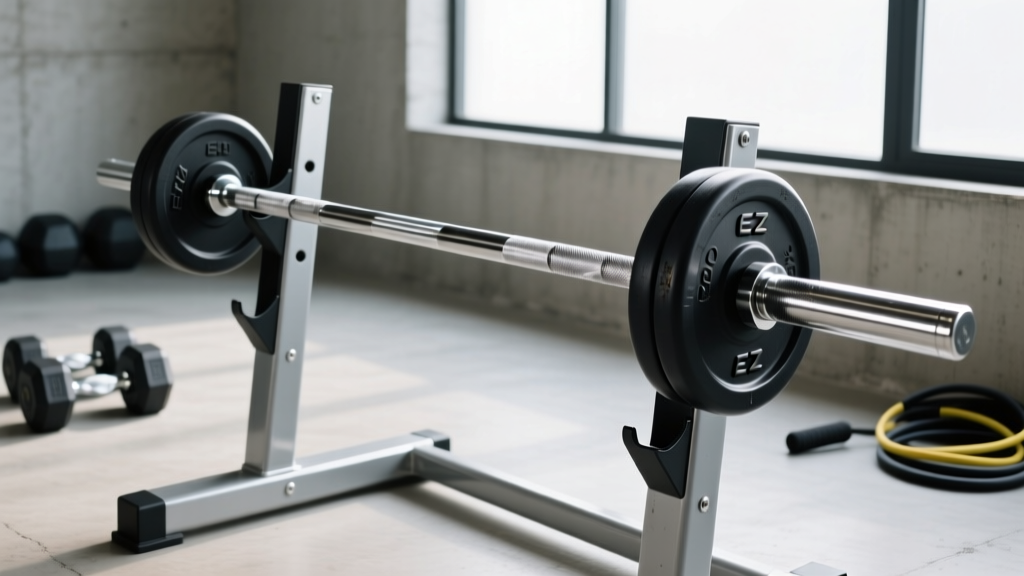
Home Barbell Gym Maintenance: EZ Curl Bar vs Straight Bar Care
Learn how to maintain EZ curl bars and straight bars in your home barbell gym. Discover cleaning routines, rust prevention, and longevity tips for both.

The Hidden Maintenance Differences in Your Home Barbell Gym
Building a comprehensive home barbell gym requires a significant financial investment, and protecting that investment means understanding the unique mechanical and metallurgical needs of your equipment. While most lifters are familiar with basic barbell wiping, the maintenance protocols for a standard Olympic straight bar (like the $295 Rogue Ohio Bar) differ vastly from those of an EZ curl bar (such as the $295 Rogue Curl Bar or the $50 CAP Barbell Super Curl Bar).
Because of their distinct geometries, sleeve constructions, and knurling patterns, these two bars experience wear and tear in completely different ways. In 2026, with home gym equipment being pushed to its limits more than ever, applying a one-size-fits-all cleaning approach is a fast track to degraded knurling, seized sleeves, and premature rust. Here is your expert guide to comparing and executing the longevity care required for both straight bars and EZ curl bars.
Expert Callout: The Chalk TrapGym chalk (magnesium carbonate) is highly hygroscopic. When mixed with sweat, it forms a mildly acidic paste that accelerates oxidation. Because EZ curl bars feature sharp inner-angled bends, this paste pools in the vertices of the bends, making them significantly more prone to localized rust than the uniform shaft of a straight bar.
Anatomy of Wear: Straight Bar vs. EZ Curl Bar
To maintain your equipment, you must first understand how it fails. The structural differences between a 7-foot straight bar and a 47-to-52-inch EZ curl bar dictate their primary failure modes.
1. Knurling Degradation and Skin Oil Accumulation
A standard straight bar features a continuous, uniform knurl pattern (often dual or triple marked). Dead skin, sebum, and chalk are distributed relatively evenly across the 51-inch shaft. An EZ curl bar, however, features segmented knurling interrupted by smooth, angled bends. The edges where the knurling meets the smooth bends act as microscopic scrapers, accumulating dead skin cells much faster. If left unbrushed, this organic matter traps moisture against the steel, leading to pitting corrosion that permanently dulls the knurl's 'bite'.
2. Sleeve and Snap Ring Mechanics
High-quality straight bars utilize bronze bushings or needle bearings, sealed by heavy-duty end caps secured with Allen screws or robust snap rings. EZ curl bars, due to their shorter sleeves and lower weight capacity ratings, frequently rely on internal snap rings and simpler brass or steel bushings. Dropping an EZ curl bar vertically on its sleeve—a common occurrence when loading plates on the floor—can easily dislodge a cheap snap ring, causing the sleeve to slide off the shaft entirely.
Step-by-Step Cleaning Protocols
According to equipment maintenance guidelines outlined by BarBend, regular brushing and oiling are non-negotiable for bare steel, black oxide, and zinc-finished bars. However, the technique varies by bar type.
- The Dry Brush (Weekly): Use a stiff nylon brush (never a wire brush on zinc or bare steel, as it strips the protective coating). For a straight bar, use long, continuous strokes from the collar to the sleeve. For an EZ curl bar, you must use short, circular motions specifically targeting the inner vertices of the bends to dislodge impacted chalk.
- The Wipe Down (Post-Workout): Use a microfiber cloth lightly dampened with water or a non-corrosive disinfectant. Avoid bleach-based or ammonia-based cleaners, which will instantly strip black oxide finishes. Wipe the straight bar in one fluid motion. For the EZ bar, wrap the cloth around the shaft and twist as you pull to ensure you clean the entire circumference of the angled segments.
- Deep Cleaning (Monthly): If you notice white chalk buildup that a dry brush cannot remove, use a plastic putty knife to gently scrape the knurling valleys. Follow up with a 50/50 mix of white vinegar and water to neutralize the alkaline chalk, then dry immediately.
Lubrication and Rust Prevention Matrix
Oiling your barbell shaft displaces moisture and prevents oxidation. The frequency and type of oil depend on your environment and the bar's finish. Below is a comparison matrix for maintaining your home barbell gym inventory in 2026.
| Maintenance Factor | Olympic Straight Bar | EZ Curl Bar |
|---|---|---|
| Recommended Oil | 3-IN-ONE Multi-Purpose Oil or Break-Free CLP ($8-$12) | Mineral Oil or Light Machine Oil (less viscous to prevent pooling in bends) |
| Application Method | Apply to cloth, wipe evenly across the entire 51-inch shaft. | Apply sparingly to a rag; rub into each angled segment individually to avoid excess dripping. |
| Frequency (Humid Climates) | Every 2-3 weeks | Weekly (bends trap ambient moisture more easily) |
| Primary Rust Risk Zone | Where the shaft meets the sleeve (the collar joint) | The inner angles of the bends and the smooth transition zones |
For more detailed insights on selecting the right lubricants for different steel finishes, Garage Gym Reviews offers an excellent breakdown of how stainless steel, Cerakote, and bare steel react to various petroleum-based and synthetic oils.
Sleeve, Bushing, and Snap Ring Longevity
The sleeves are the moving parts of your barbells, and their maintenance is critical for smooth Olympic lifts and controlled eccentric curls.
Straight Bar Sleeve Care
Premium straight bars feature oil-impregnated bronze bushings or sealed needle bearings. To maintain them, stand the bar vertically and apply a few drops of lightweight synthetic barbell oil (like Rogue's proprietary bar oil) directly into the gap between the shaft and the rotating sleeve. Spin the sleeve manually for 30 seconds to work the oil into the bushing. Wipe away any excess to prevent dust attraction.
EZ Curl Bar Sleeve Care
Most EZ curl bars do not have the same internal tolerances as a $1,000 weightlifting bar. They often utilize simple steel-on-steel or brass bushings that require a slightly thicker lubricant, such as white lithium grease. Warning: Never use WD-40 on barbell sleeves. WD-40 is a solvent and a water displacer, not a long-term lubricant. It will strip away existing factory grease and leave your EZ bar sleeves squeaking and grinding within weeks.
Critical Edge Case: If your budget EZ curl bar uses external snap rings to hold the sleeve in place, inspect them monthly. Use a pair of snap ring pliers to ensure they are fully seated in their grooves. A popped snap ring during a heavy skull-crusher is a severe safety hazard unique to lighter specialty bars.
Storage Solutions: Horizontal vs. Vertical Racks
How you store your bars in your home barbell gym directly impacts their lifespan.
- Horizontal Storage (Wall Racks & J-Cups): This is the gold standard for both straight bars and EZ curl bars. Storing them horizontally prevents gravity from pulling oil down into the sleeves and keeps the shaft perfectly straight, preventing micro-bending over years of heavy loading.
- Vertical Storage (Barbell Holders): While vertical storage saves floor space, it is highly detrimental to EZ curl bars. Resting an EZ bar vertically on its sleeve puts continuous downward pressure on the internal snap rings and bushings. Furthermore, any residual oil or moisture on the shaft will slowly migrate downward, pooling inside the sleeve collar and causing internal rust that you cannot see or easily clean.
If you must use a vertical holder, ensure it features a wide, padded base that supports the bar by the shaft rather than the sleeve, and always store the EZ bar with the bent segments facing outward to avoid warping the angles under extreme, uneven weight distributions.
Frequently Asked Questions
Can I use the same wire brush on my straight bar and EZ curl bar?
Only if both bars are made of bare steel or stainless steel. If your straight bar is bare steel but your EZ curl bar has a zinc or black oxide finish (common in budget models), using a wire brush on the EZ bar will strip the protective coating, exposing the raw steel to immediate rust. Always default to a stiff nylon brush for mixed-finish home gyms.
Why is my EZ curl bar rusting only on the bends?
The bends on an EZ bar are often machined after the knurling process, and in lower-tier manufacturing, the protective zinc or chrome plating can be microscopically thinner at the apex and inner vertices of the bends. Combined with the fact that sweat and chalk naturally pool in these crevices, the bends become the primary flashpoints for oxidation.
How often should I fully disassemble my barbell sleeves?
For 95% of home gym owners, never. Disassembling the sleeves of a modern straight bar or EZ curl bar voids most manufacturer warranties and risks damaging the internal snap rings or bearing seals. Stick to external drop-oiling and rigorous shaft cleaning to ensure your equipment outlasts your fitness journey.
More gear to consider
All reviews
Space-Saving Dumbbell Racks: Layouts for the Dumbbell Chop

Best Adjustable Dumbbells for Dumbbell Step Back Lunges (2026)

Beyond the Free Dumbbell: Olympic Barbell Weight and Knurling Guide

How Do You Spell Dumbbell? Barbell Collar Types Guide

200 lb Dumbbells Setup: Adjustable Comparison & Installation
