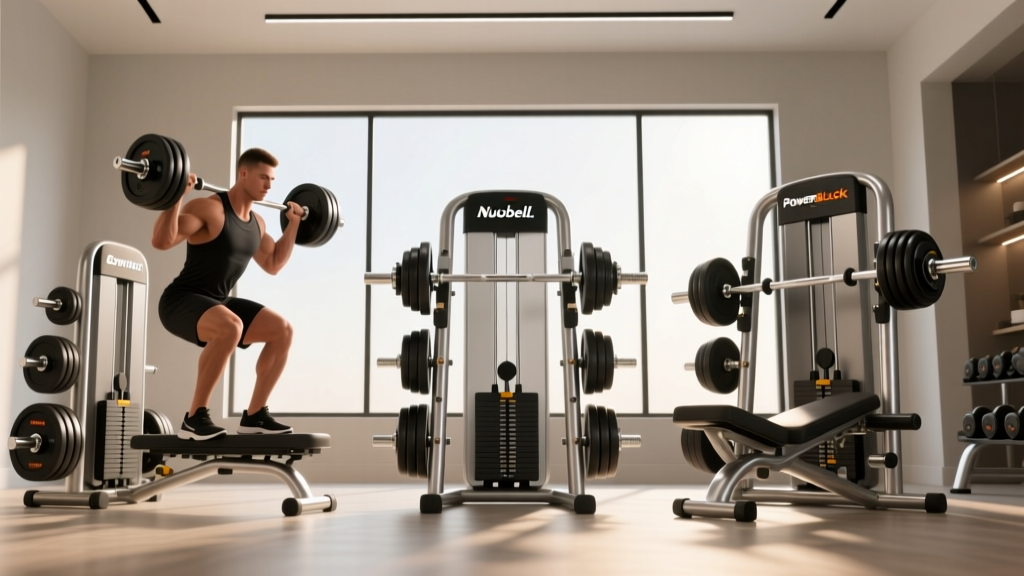
Beyond the Heel Elevated Dumbbell Squat: Olympic Barbell Guide
Master the transition from the heel elevated dumbbell squat to heavy barbell back squats with our guide on Olympic barbell weight and knurling.

The Biomechanical Bridge: Outgrowing the Dumbbell Squat
The heel elevated dumbbell squat is a cornerstone movement for lifters focusing on quad hypertrophy and bypassing ankle dorsiflexion limitations. By placing your heels on a wedge, a slant block, or 10-pound iron plates, you artificially increase ankle range of motion, allowing for a deeply upright torso and maximum knee flexion. However, as your leg strength progresses into the 2026 training year, you will inevitably hit a bottleneck. Holding 100-pound dumbbells in each hand shifts the limiting factor from your quadriceps to your grip strength, core stabilization, and shoulder endurance.
To continue progressing, you must transition to axial loading via the Olympic barbell. But moving from anterior-loaded dumbbells to a barbell on your back requires a fundamental shift in equipment. A barbell designed for the bench press or Olympic snatches will slip off your traps and bend under heavy squat loads. This beginner-friendly, step-by-step guide will walk you through exactly how to choose an Olympic barbell based on weight, tensile strength, and knurling to ensure your squat progression continues seamlessly.
Form Translation Tip: If you rely on the heel elevated dumbbell squat to manage poor ankle mobility, do not abandon the heel elevation when switching to a barbell. Invest in a pair of dedicated weightlifting shoes with a 0.75-inch raised TPU heel (such as the Reebok Legacy Lifter III or Nike Romaleos 4) to replicate the exact tibial angle and upright torso mechanics you are accustomed to.Step 1: Selecting the Right Barbell Weight and Shaft Diameter
When upgrading from dumbbells, the physical dimensions of the barbell dictate how the weight feels on your back and in your hands. Olympic barbells generally come in two standard weights: the 20kg (44 lb) men's bar and the 15kg (33 lb) women's bar. For dedicated squatting, the 20kg bar is the gold standard due to its thicker shaft and higher load capacity.
Shaft Diameter: The 29mm Standard
The diameter of the barbell shaft drastically alters the 'whip' (flex) and the grip. Olympic weightlifting bars feature a 28mm shaft to allow for maximum whip during the snatch and clean and jerk. However, for squats, a 28mm bar will bounce uncomfortably on your back during the rebound out of the hole. You need a 29mm shaft, which is the standard for powerlifting bars. This thicker diameter provides the rigidity required to stabilize heavy axial loads without oscillating.
Tensile Strength: Avoiding the 'Bent Bar' Trap
Tensile strength, measured in pounds per square inch (PSI), determines how much weight a bar can hold before it permanently bends (takes a set). As you transition to barbell squats and push past 300 pounds, you must pay attention to this metric:
- Under 165,000 PSI: Avoid for heavy squats. These bars will permanently bend if left loaded on a rack or dropped.
- 165,000 - 190,000 PSI: Acceptable for beginners and intermediate lifters squatting under 350 lbs.
- 190,000 - 215,000+ PSI: The elite standard. Required for heavy, low-rep squat cycles.
Step 2: Decoding Knurling Profiles for Heavy Squats
Knurling is the crosshatched pattern machined into the steel shaft. Unlike the smooth handles of rubber hex dumbbells, a barbell relies on knurling to bite into your skin or shirt, preventing the bar from rolling up your neck during a heavy set. According to BarBend's comprehensive knurling guide, the shape of the knurl is just as important as its depth. Here is how the three primary profiles compare:
| Knurl Profile | Shape Description | Aggressiveness | Best Use Case |
|---|---|---|---|
| Volcano | Rim is sharp, but the center is dipped/flat. | High (Grippy but not tearing) | Heavy Squats & Powerlifting |
| Mountain | Comes to a sharp, distinct point at the peak. | Very High (Tears calluses) | Deadlifts (Chalk required) |
| Hill | Rounded, smooth peaks with shallow valleys. | Low to Moderate (Passive) | High-rep conditioning, Multipurpose |
For lifters transitioning from the heel elevated dumbbell squat, a volcano knurl is the optimal choice. It provides enough surface area and bite to grip your t-shirt and traps securely without shredding your hands during high-volume hypertrophy blocks.
Step 3: The Center Knurl Debate
Dumbbells require independent stabilization, meaning your left and right side work in isolation. A barbell unifies the load, but it introduces the risk of the bar sliding laterally across your back. This is where the center knurl comes into play.
The center knurl is a band of knurling in the exact middle of the shaft. The International Powerlifting Federation (IPF) mandates a center knurl for competition. If you are performing low-bar squats (where the bar rests across the posterior deltoids and the spine of the scapula), a center knurl is non-negotiable. It acts as a tactile anchor, biting into your shirt and preventing the bar from rolling up your neck when you lean forward out of the hole. If you strictly perform high-bar squats (resting on the upper traps), a center knurl is less critical, but still highly recommended for heavy sets.
Step 4: 2026 Barbell Recommendations for Squat Transitioners
Based on current market pricing, tensile strength, and knurling profiles, here are the top three Olympic barbells for lifters upgrading their squat game this year.
1. The Gold Standard: Rogue Ohio Power Bar (Stainless Steel)
- Price: ~$455.00
- Tensile Strength: 205,000 PSI
- Shaft Diameter: 29mm
- Knurling: Aggressive Volcano with a prominent center knurl.
- The Verdict: As detailed in the Rogue Fitness Ohio Power Bar specifications, this is the benchmark for powerlifting. The stainless steel shaft resists corrosion without the need for chrome plating, which can dull knurling over time. It is stiff, unforgiving, and will not slip during heavy low-bar squats.
2. The Best Value: Rep Fitness PR-4000 Power Bar
- Price: ~$329.00
- Tensile Strength: 200,000 PSI
- Shaft Diameter: 29mm
- Knurling: Deep Volcano knurl with IPF-compliant center knurl.
- The Verdict: Rep Fitness has dominated the mid-tier market. The PR-4000 offers a knurl that is nearly as aggressive as the Rogue OPB but at a significantly lower price point. It features dual knurl marks (both IWF and IPF), making it a versatile choice if you also plan to bench press.
3. The Budget Beginner Pick: Bells of Steel Olympic Barbell
- Price: ~$249.00
- Tensile Strength: 190,000 PSI
- Shaft Diameter: 28.5mm (Hybrid)
- Knurling: Moderate Volcano/Hill hybrid with center knurl.
- The Verdict: If you are just stepping away from 50-pound dumbbells and need a reliable bar to learn axial loading mechanics, this hybrid bar offers a great entry point. The slightly thinner 28.5mm shaft is forgiving on smaller hands, while the 190k PSI rating is more than sufficient for lifters squatting under 315 lbs.
Frequently Asked Questions: Squat Progression
Do I still need to elevate my heels when barbell squatting?
It depends on your anatomy. If the heel elevated dumbbell squat was necessary to prevent your lower back from rounding (butt wink) at the bottom of the movement, you will likely need to wear Olympic weightlifting shoes with a raised heel when barbell squatting. Flat-soled shoes like Converse or Vans will replicate the mechanics of a flat-footed dumbbell squat, which may expose the same mobility restrictions.
Can I use an Olympic weightlifting bar for squats?
While you physically can, it is not recommended. Weightlifting bars (28mm shaft, 165k-185k PSI) are designed to bend and absorb the shock of a dropped clean. When placed on your back for a heavy squat, this 'whip' creates an unstable, bouncy feeling that can throw off your balance and compromise your spinal positioning.
How do I clean the knurling on my new barbell?
Dead skin, chalk, and sweat will pack into the volcano knurling over time, reducing its grip. Once a month, use a stiff nylon brush (never a wire brush, which can damage the steel or strip zinc coatings) and a light spray of 3-in-One oil or mineral oil to scrub out the debris. Wipe it down with a microfiber cloth to maintain the aggressive bite required for heavy squats.
Transitioning from the heel elevated dumbbell squat to the barbell back squat is a massive milestone in your lifting career. By prioritizing a 29mm shaft, 200k+ PSI tensile strength, and a volcano knurl profile, you will secure a piece of equipment that supports your leg development for decades to come. For more foundational gear advice, consult BarBend's barbell buying guide to ensure your rack and bench match your new barbell specifications.
More gear to consider
All reviews
Space-Saving Kettlebell Guide & Beginner Dumbbell Workout Women Need
Bumper Plate vs Iron Plate Layouts & Pool Dumbbells Exercises Zones

Bumper Plate vs Iron Plate Guide & Top Pec Workouts With Dumbbells

Budget Dumbbell Racks for Your Shadow Box With Dumbbells Routine

Loadable Dumbbell Care & 5lb Dumbbell Exercises for Recovery