
Great Arm Workouts With Dumbbells: 2026 Adjustable Gear Mistakes
Discover how to execute great arm workouts with dumbbells by avoiding common adjustable gear mistakes. 2026 troubleshooting guide & model comparison.

The home gym landscape in 2026 is dominated by space-saving, high-tech fitness equipment, with adjustable dumbbells sitting at the absolute center of the market. However, when programming great arm workouts with dumbbells, most lifters focus exclusively on volume, tempo, and exercise selection while entirely ignoring the mechanical limitations of their gear. Arm isolation movements—specifically bicep curls, tricep extensions, and forearm supination exercises—place unique, asymmetrical torque profiles on dumbbell handles and selector mechanisms.
If you want to execute great arm workouts with dumbbells without risking joint strain or destroying a $500 piece of equipment, you must understand the intersection of biomechanics and adjustable gear engineering. This guide breaks down the most common mistakes lifters make when using adjustable dumbbells for arm training, provides a 2026 comparison matrix of top models, and offers actionable troubleshooting steps to save your gains and your wallet.
The Biomechanical Clash: Adjustable Dumbbells vs. Arm Isolation
According to the American Council on Exercise (ACE), maximizing bicep brachii activation during a curl requires full wrist supination at the peak of the concentric phase. With traditional hex dumbbells, this is seamless. With adjustable dumbbells, however, aggressive supination under heavy loads (40+ lbs) introduces severe rotational torque to the handle and the internal selector mechanism.
"The moment arm created by a 50-pound adjustable dumbbell during a supinated bicep curl places lateral stress on the selector dials and retention pins—components often made of high-density plastics or thin steel that are not designed for rotational shear force."
Furthermore, the National Strength and Conditioning Association (NSCA) emphasizes that proper wrist extension is critical during overhead tricep extensions to protect the elbow joint. Many adjustable dumbbells feature bulky, oversized handles or restrictive cage designs that physically block natural wrist mechanics, forcing lifters into compromised, injury-prone positions.
Top 3 Adjustable Dumbbell Mistakes During Arm Training
1. Aggressive Supination Stripping Internal Gears
The Mistake: Lifters using dial-based adjustable dumbbells (like the Bowflex SelectTech series) often snap their wrists into full supination at the top of a heavy bicep curl. This rotational force transfers down the knurled handle directly into the plastic alignment gears inside the dial housing.
The Failure Mode: Over time, this torque strips the plastic teeth inside the selector dial. You will know this has happened when the dial turns, but the weight plates do not disengage, or worse, a plate slips off the peg mid-rep.
The Fix: If you are training heavy biceps (above 45 lbs per hand), slow your supination tempo. Alternatively, switch to a pin-selector or slide-lock adjustable dumbbell (like Nuobell or PowerBlock) which relies on solid steel shear pins rather than plastic rotational gears to secure the plates.
2. Ignoring Handle Geometry for Triceps
The Mistake: Using caged adjustable dumbbells for skullcrushers and overhead tricep extensions. Models like the PowerBlock Elite EXP feature a rectangular, welded-steel cage surrounding the handle.
The Failure Mode: The cage physically restricts natural wrist flexion and extension. During an overhead tricep extension, the cage digs into the forearm, forcing the lifter to flare their elbows outward (valgus stress) to compensate, drastically reducing tricep isolation and increasing elbow tendonitis risk.
The Fix: Reserve caged adjustable dumbbells for neutral-grip hammer curls and presses. For overhead arm isolation, utilize adjustable dumbbells with traditional, unencumbered cylindrical handles, such as the MX55 or Nuobell 80.
3. The 'Drop' Reflex on Failed Reps
The Mistake: Reaching muscular failure on a heavy set of tricep floor presses or seated curls and dropping the dumbbells to the floor or rubber mat from a height of 12 to 24 inches.
The Failure Mode: Unlike solid cast-iron dumbbells, adjustable dumbbells are complex mechanical assemblies. Dropping a Bowflex 1090 will shatter the ABS plastic dial housing. Dropping a Nuobell will bend the internal steel retention pin, rendering the adjustment mechanism permanently jammed.
The Fix: Implement strict 'controlled descent' protocols. If you are training to failure on arm isolation exercises, use a spotter, perform the exercise seated with your elbows braced on your knees, or utilize floor-based variations where the dumbbells are never more than 4 inches from the ground.
2026 Adjustable Dumbbell Comparison Matrix for Arm Training
Not all adjustable dumbbells are created equal when it comes to the nuanced demands of arm isolation. Below is our 2026 testing data focusing specifically on arm-training suitability, based on handle geometry, torque tolerance, and drop-durability.
| Model (2026) | Handle Type | Max Weight | Arm Training Suitability | Price (Est.) |
|---|---|---|---|---|
| Bowflex SelectTech 1090 | Cylindrical, Knurled | 90 lbs | Moderate (High torque risk on dials during supination) | $449 |
| PowerBlock Elite EXP | Caged, Rectangular | 70 lbs | Low (Cage restricts wrist extension for triceps) | $369 |
| Nuobell 80 LB | Traditional Knurled | 80 lbs | High (Natural feel, but zero drop tolerance) | $399 |
| MX55 Adjustable | Cylindrical, Smooth | 55 lbs | Very High (Excellent wrist clearance, slide-lock safety) | $499 |
Data compiled referencing BarBend's Adjustable Dumbbell Testing methodologies and updated 2026 retail pricing.
💡 Gear Tip: The Neoprene Grip Hack
If you are stuck with a caged adjustable dumbbell but need to perform overhead tricep extensions, purchase a set of thick, slip-on neoprene dumbbell grips (approx. $15-$20). Sliding these over the handle and the lower rungs of the cage creates a padded buffer that prevents the steel cage from biting into your forearms, allowing for a slightly better range of motion during tricep isolation.
Troubleshooting Guide: Fixing Your Form and Your Gear
Even with perfect technique, adjustable dumbbells require maintenance to survive the rigors of heavy arm training. Here is how to troubleshoot common mechanical hiccups that ruin workout flow.
- Sticking Selector Dials: If your dial-based dumbbells are clicking but not catching, metallic dust and sweat have likely built up in the gear track. Fix: Do NOT use WD-40, which attracts more grime. Use a dry graphite powder lubricant sprayed sparingly into the dial gap, then rotate the dial through all weight increments to distribute it.
- Rattling Plates During Curls: Rattling occurs when the retention mechanism loosens, creating micro-movements that distract from the mind-muscle connection. Fix: For slide-lock models, ensure the locking collar is seated flush. For pin models, check the O-rings on the selector pin; if they are flattened or torn, replace them with standard 3/4-inch rubber O-rings from a hardware store to restore tension.
- Asymmetrical Weight Distribution: Some adjustable dumbbells add length to the handle as weight increases (e.g., Bowflex). This changes the center of mass, making heavy hammer curls feel unwieldy. Fix: Choke your grip slightly toward the heavier end of the handle to re-center the moment arm over your wrist joint.
Frequently Asked Questions
Can I perform heavy skullcrushers with adjustable dumbbells?
Yes, but only with traditional-handled models like the Nuobell or MX55. Caged models will restrict your wrist movement, and dial-based models risk internal gear damage if the dumbbell is accidentally tapped against the floor or your forehead during the eccentric descent.
Why do my forearms fatigue before my biceps when using adjustable dumbbells?
Many adjustable dumbbells have thicker handle diameters (up to 1.5 inches) compared to standard dumbbells (1.1 inches) to accommodate the internal locking mechanisms. This thicker grip demands higher forearm flexor activation. If this ruins your great arm workouts with dumbbells, use lifting straps for your pulling movements to save grip strength, or focus on wrist-curl variations to bring up your forearm endurance.
Is it safe to use adjustable dumbbells for fast-paced arm circuits?
No. High-tempo circuits (like drop-sets or speed curls) increase the risk of the selector mechanism disengaging due to centrifugal force and sudden directional changes. Adjustable dumbbells are engineered for controlled, deliberate tempo training. For high-speed arm circuits, traditional fixed-weight dumbbells remain the gold standard.
More gear to consider
All reviews
Dumbbell Sumo Squat Muscles Worked & Best Loadable Handles 2026
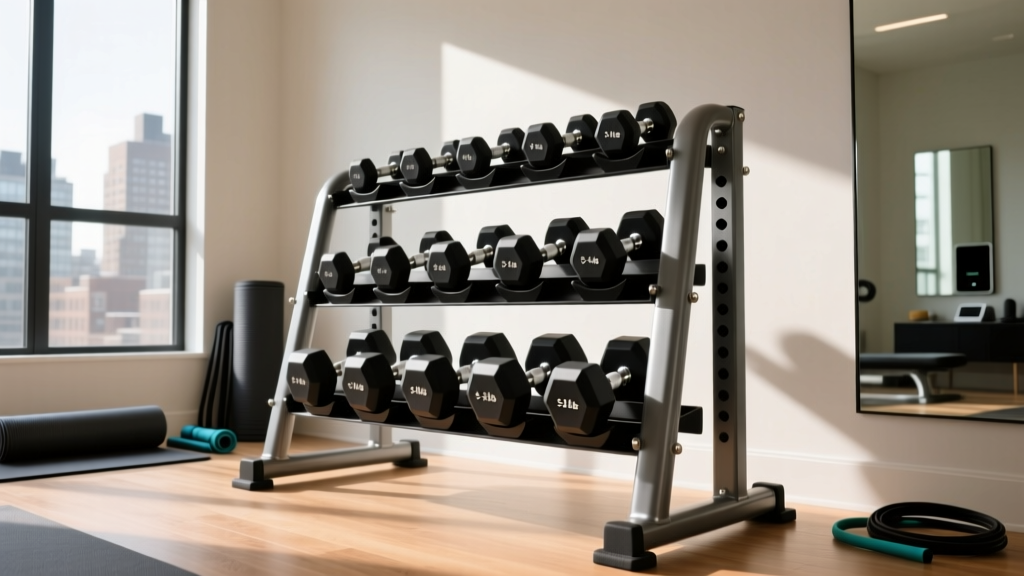
Top Dumbbell Racks 2026: Safe Storage When Using Dumbbells for Abs

2026 Bumper Plate vs Iron Plate Trends & Dumbbell Rows Machine

Budget Dumbbell Racks for a Dumbbell Bench Press Alternative

Power Rack vs Squat Rack vs Stand for Trojan Dumbbell 200 Bench
