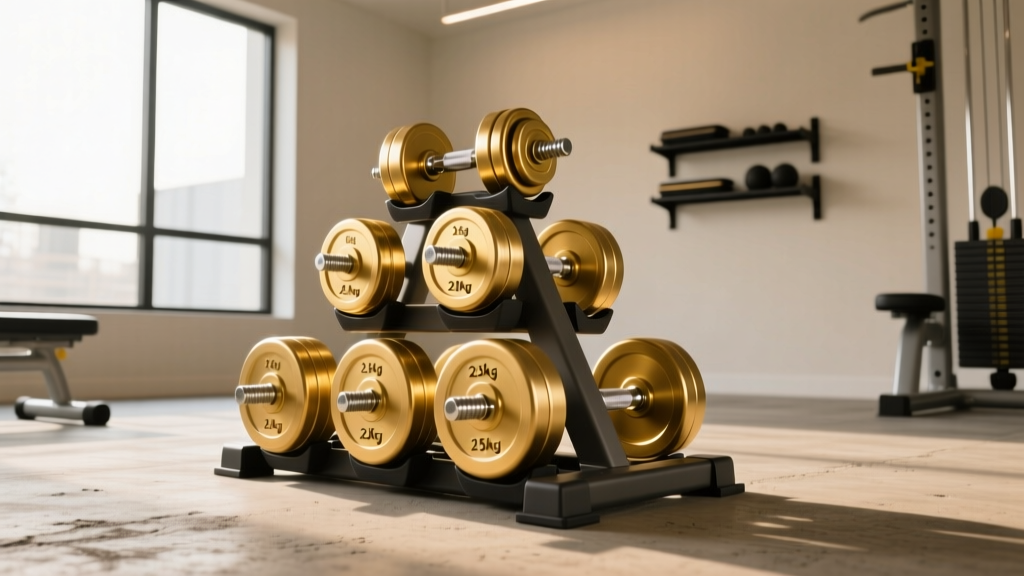
The Golden Dumbbell Setup: Loadable Plates for Small Gyms
Discover the golden dumbbell setup for compact home gyms. Learn how loadable dumbbell handles and interchangeable plates maximize space and budget.

The 'Golden Dumbbell' Philosophy for Compact Spaces
In the realm of high-end home gym architecture and space optimization, the 'golden dumbbell' is not a literal gold-plated weight. Rather, it is an industry term used by boutique gym designers to describe the ultimate intersection of premium tactile feedback, aesthetic durability, and extreme spatial efficiency. As urban living spaces shrink and garage gyms become more multi-purpose in 2026, the traditional method of buying fixed-weight dumbbells has become a spatial liability.
A standard 5-to-50-pound fixed hex dumbbell set requires a massive A-frame rack, dominates your floor plan, and represents a significant financial sunk cost. The solution embraced by elite strength coaches and space-conscious lifters is the loadable dumbbell system with interchangeable plates. By utilizing premium loadable handles and precision-machined plates, you can replicate the utility of a commercial dumbbell wall in a footprint smaller than a standard office chair.
Spatial Math: Fixed vs. Loadable Systems
- Fixed 5-50lb Set (40 pairs): Requires a 3-tier A-frame rack (approx. 48' W x 24' D). Takes up 8 sq. ft. of floor space plus 36' of clearance for user access. Total weight: 1,100 lbs. Average cost: $800 - $1,200.
- The Golden Dumbbell Loadable Setup: Two 15-inch loadable handles + 220 lbs of calibrated steel and fractional plates stored on a vertical tree. Footprint: 17' x 17' (2 sq. ft.). Total weight: 230 lbs. Average cost: $350 - $450.
Selecting the Core: Loadable Handle Specifications
The foundation of this space-saving layout is the loadable handle. Not all handles are created equal, and choosing the wrong model will lead to biomechanical inefficiencies and physical discomfort. According to grip and ergonomic guidelines referenced by the National Strength and Conditioning Association (NSCA), optimal grip diameter for dynamic dumbbell movements falls between 1.1 inches and 1.25 inches.
Sleeve Rotation and Knurling Depth
The most common failure mode in budget loadable dumbbells is sleeve galling. When performing dynamic movements like snatches, lateral raises, or chest flies, the inertia of the weight plates forces the sleeve to rotate. If the handle lacks high-quality bronze bushings or needle bearings, the sleeve binds. This rotational torque transfers directly into the knurling, aggressively tearing the calluses on your palms.
Premium options like the Rogue Fitness DB-15 Loadable Dumbbell Handles solve this with machined steel sleeves and a 1.1-inch grip diameter, closely mimicking the feel of a high-end Olympic barbell. Priced around $145 per pair, they feature a 15-inch loadable sleeve, allowing you to stack up to 120 pounds per hand using standard steel plates. For lifters with larger hands, the Titan Fitness 2-inch Loadable Handles ($99/pair) offer a thicker 1.26-inch grip, though they sacrifice some sleeve length, capping out around 85 pounds per hand.
Plate Selection: Interchangeable Footprints
The true magic of the golden dumbbell layout lies in plate selection. Standard 2-inch Olympic bumper plates are 17.7 inches in diameter. While excellent for barbells, stacking multiple 45-pound bumpers onto a dumbbell handle creates an unwieldy, oversized implement that clashes with your shins during Romanian Deadlifts or prevents proper depth during renegade rows.
| Plate Type | Diameter | Spatial Impact & Use Case |
|---|---|---|
| Standard Bumper (45lb) | 17.7 inches | High bulk. Limits range of motion on floor presses. Best for heavy RDLs. |
| Calibrated Steel (10lb-25lb) | 8.5 - 14 inches | Low bulk. High density. Ideal for maximizing loadable sleeve space. |
| Fractional / Change Plates | 4 - 6 inches | Micro-loading (0.25lb - 2.5lb). Essential for upper-body isolation. |
In 2026, the standard for compact home gyms has shifted heavily toward machined aluminum fractional plates and thin calibrated steel discs. As noted by equipment testing experts at Garage Gym Reviews, utilizing a mix of 2.5lb, 5lb, and 10lb steel plates allows for precise 2.5-pound micro-loading increments without eating up the physical real estate on the dumbbell sleeve. This ensures the dumbbell remains compact enough for tight spaces while offering the progressive overload necessary for hypertrophy.
The Collar Conundrum: Spin-Lock vs. Spring Clamp
Interchangeable plates are only as good as the collar securing them. Traditional threaded spin-lock collars are secure but introduce a massive friction point into your workout: changing weights takes 45 to 60 seconds per dumbbell, completely destroying your rest intervals during drop sets or supersets.
Modern space-optimized setups utilize heavy-duty spring clamps or lock-jaw collars. While standard barbell spring clamps can slip on shorter dumbbell sleeves during high-velocity movements, specialized lock-jaw collars with a cam-lever mechanism grip the sleeve lip securely. Budget an extra $30-$40 for a pair of premium cam-lock collars to maintain the fluid pacing of a commercial gym session.
Layout Blueprint: Storing the Interchangeable System
Achieving the golden dumbbell layout requires rethinking how you store your weights. Horizontal plate racks and traditional dumbbell shelves are obsolete for this setup. Instead, you must utilize verticality.
Design Rule: Keep your plate tree within a 36-inch radius of your adjustable bench. This creates a 'strike zone' where you can load, lift, and rack without taking more than two steps, preserving energy and keeping the gym footprint contained.
Invest in a 3-tier or 4-tier vertical plate tree. A high-quality steel tree with a 17-inch by 17-inch base can hold up to 300 pounds of steel and fractional plates while occupying less than 2 square feet of floor space. Place the tree at the head of your bench. Store the empty loadable handles on a small wall-mounted hook rack directly above the tree, keeping them off the floor and protecting the knurling from dust and moisture.
Troubleshooting Common Loadable Dumbbell Failures
- Plate Rattle: Cast iron plates often have inconsistent center hole diameters, leading to annoying clanking during lateral raises. Fix: Use machined steel or urethane-coated plates with precise 2-inch center holes, or wrap a thin layer of athletic tape around the sleeve if using older iron plates.
- Asymmetrical Loading: Loading a 32.5 lb dumbbell requires precision. Fix: Always load plates symmetrically and use a digital luggage scale to verify the exact weight of each dumbbell before heavy unilateral sets like Bulgarian split squats.
- Sleeve Lip Wear: Repeatedly slamming spring collars onto the sleeve can wear down the zinc coating, leading to rust. Fix: Apply a light coat of 3-in-One oil or mineral oil to the sleeves once a month to preserve the finish and ensure smooth collar sliding.
Frequently Asked Questions
Can I use standard 1-inch plates on Olympic loadable handles?
No. Olympic loadable handles feature 2-inch (50mm) sleeves designed specifically for Olympic plates. Attempting to use 1-inch standard plates will result in a dangerous, unstable fit. If you already own a collection of 1-inch plates, you must purchase 1-inch specific loadable handles, though these are increasingly rare in premium fitness markets due to the superior durability of the 2-inch Olympic standard.
How do I prevent the dumbbell from rolling away on uneven floors?
Loadable dumbbells with round steel plates will roll on uneven surfaces, unlike hex rubber dumbbells. To solve this in a space-optimized layout, invest in interlocking EVA foam floor mats. The slight texture and grip of the foam will prevent round steel plates from rolling, while also protecting your subfloor from dropped weights.
Is a loadable setup better than adjustable dumbbells like Nuobell or PowerBlock?
It depends on your spatial and tactile priorities. Adjustable dumbbells (like the Nuobell 80lb set) offer faster weight changes via a dial mechanism but are bulky, fragile if dropped, and cost upwards of $400-$500. The 'golden dumbbell' loadable setup is vastly more durable, can be dropped safely during heavy failure sets, and allows you to swap out handles for different grip diameters, making it the superior choice for serious lifters prioritizing longevity and commercial-grade feel over dial-adjustment speed.
More gear to consider
All reviews
Beyond a 200 Pound Dumbbell Set: Barbell Weight & Knurling Mistakes

Deadlift Alternative With Dumbbells vs Kettlebells: 2026 Guide

EZ vs Straight Bar Care: Longevity & Dumbbell Curl Technique Form

Best Adjustable Sets for Chest Exercises Using Dumbbells (2026)

Bumper vs Iron Plates: 2026 Trends & Dumbbell Chest Press Analytics
