Goblet Squat vs Dumbbell Squat: Bumper vs Iron Plate Budget
Analyze the 2026 cost-per-pound of bumper vs iron plates, and how budget impacts loadable routines like the goblet squat vs dumbbell squat.

The 2026 Cost-Per-Pound Reality: Bumper vs. Iron Plates
Building a comprehensive home gym requires strict capital allocation, and no single equipment category consumes your budget faster than weight plates. As of early 2026, global supply chain stabilizations and fluctuations in raw material costs have distinctly separated the pricing tiers of cast iron and rubber bumper plates. When evaluating your budget, you must look beyond the sticker price and analyze the cost-per-pound, weight tolerance, and long-term depreciation of the materials.
According to BarBend's equipment analysis, the choice between iron and bumpers is rarely just about aesthetics; it is a fundamental decision regarding floor protection, acoustic dampening, and exercise versatility. Below is a breakdown of the current market rates for a standard 260-pound plate set (two 45s, two 35s, two 25s, two 15s, two 10s, and two 5s).
| Plate Material | Avg. Price Per Pound | 260lb Set Cost (Approx.) | Weight Tolerance |
|---|---|---|---|
| Standard Cast Iron | $1.30 - $1.60 | $338 - $416 | +/- 3% to 5% |
| Machined Steel / Urethane Coated | $2.50 - $3.20 | $650 - $832 | +/- 1% |
| Economy Recycled Rubber Bumper | $1.80 - $2.20 | $468 - $572 | +/- 2% |
| Virgin Rubber Competition Bumper | $3.50 - $5.00+ | $910 - $1,300+ | +/- 10 grams |
For the budget-conscious lifter, standard cast iron remains the undisputed king of value. However, the raw numbers do not account for the hidden costs of floor repairs or the biomechanical limitations imposed by plate thickness during specific movements.
Biomechanics and Clearance: The Loadable Dumbbell Dilemma
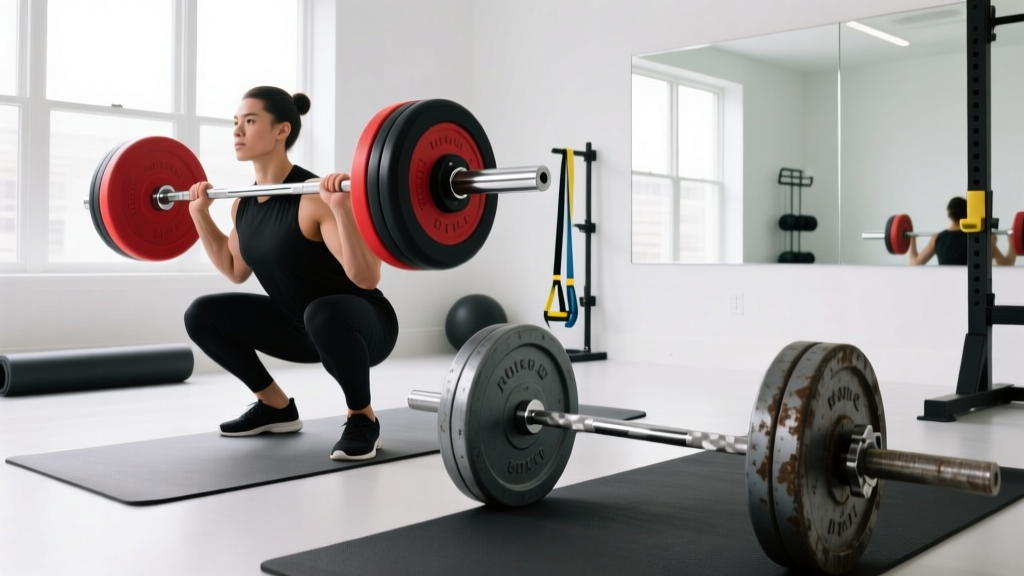
When programming lower-body hypertrophy and mobility work, many lifters constantly weigh the goblet squat vs dumbbell squat to target the quads and core. The goblet squat utilizes a single kettlebell or dumbbell held at the chest, promoting an upright torso and deep hip flexion. The dumbbell squat, conversely, involves holding a heavy dumbbell in each hand at your sides, which heavily taxes the grip and allows for greater absolute loading.
If you are utilizing Olympic loadable dumbbell handles (such as the Rogue Loadable Dumbbell Handle or Titan Fitness Olympic Handles) to perform dumbbell squats, the physical dimensions of your plates become a critical limiting factor. This is where the bumper vs. iron debate directly impacts your training mechanics:
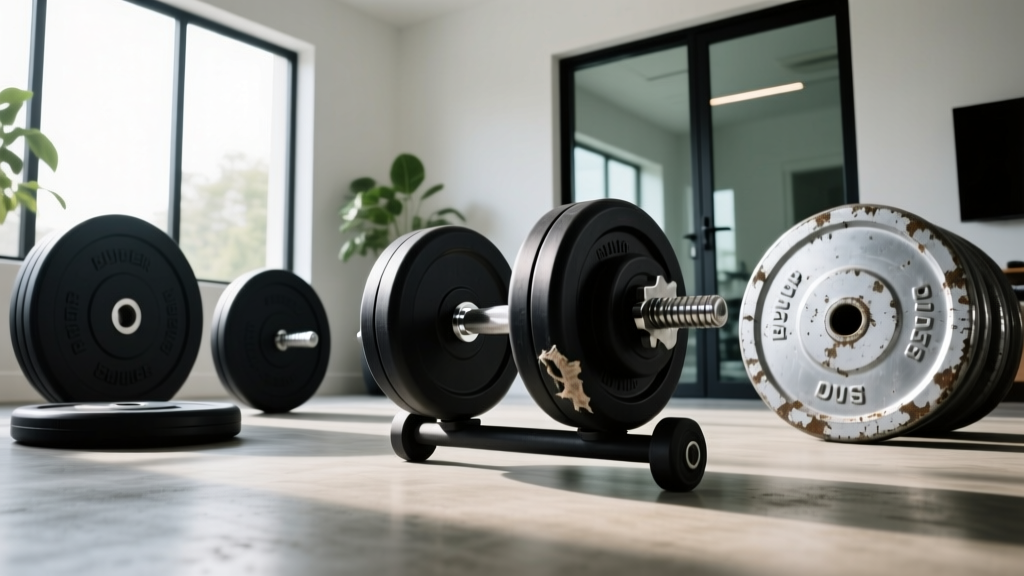
- The Bumper Plate Restriction: A standard 10-pound economy bumper plate is approximately 4.1 inches thick and maintains the full 17.7-inch diameter of a 45-pound plate. If you load these onto a dumbbell handle with a 6.5-inch sleeve, the sheer width of the plates will cause the dumbbell to strike the floor prematurely during a deep dumbbell squat, artificially restricting your range of motion.
- The Iron Plate Advantage: A 10-pound cast iron plate is typically only 1.1 inches thick with a much smaller diameter (around 9 inches). This allows you to load 50+ pounds per hand on a loadable dumbbell while maintaining maximum floor clearance, enabling a full-depth dumbbell squat that mirrors the depth you would achieve in a goblet squat.
Therefore, if your budget is heavily allocated toward bumper plates for Olympic lifting drops, you may inadvertently compromise your ability to perform deep, heavy dumbbell squats with loadable handles unless you purchase specialized, smaller-diameter steel change plates.
Environmental Degradation and Hidden Costs
A true value analysis must factor in the environment where the equipment will live. Rogue Fitness engineers their Echo Bumpers with a specific durometer rating to withstand repeated drops, but environmental factors can accelerate the degradation of both rubber and iron.
Garage Gym Climate Warning
Humidity & Iron: In unclimate-controlled garages in humid regions (e.g., the US Southeast), cast iron plates will oxidize rapidly. The cost of purchasing naval jelly, wire brushes, and rust-inhibitor sprays over a 5-year period can add $50-$100 to your maintenance budget, not to mention the time cost.
Cold & Rubber: Recycled rubber bumpers become brittle in freezing temperatures. If you drop a 45-pound recycled bumper onto a concrete floor in a 30°F garage, the risk of the plate cracking or the steel center insert blowing out increases exponentially.
Common Failure Modes by Material
- Insert Blowout (Bumpers): Cheaper bumpers use flat steel inserts glued into the rubber. Over time, the adhesive fails, and the insert pushes through the rubber during a drop. Premium bumpers use hooked or flanged steel inserts that mechanically lock into the rubber matrix.
- Taco-ing (Bumpers): Thin 10lb and 15lb bumpers are notorious for bending like a taco when dropped alone on a barbell. Once the internal steel webbing warps, the plate will never sit flush on the floor again.
- Paint Chipping & Rust (Iron): Enamel-coated cast iron chips when plates are slammed together, exposing the raw iron to moisture. Machined steel plates with zinc or chrome plating resist this but come at a 100% premium in cost.
The 5-Year ROI Matrix
To determine which plate type yields the best return on investment, we must align the material properties with your primary training modalities. As noted by Titan Fitness's plate specifications, the application dictates the value.
"Value in fitness equipment is not defined by the lowest initial cost, but by the cost-per-use over the lifespan of the gear without requiring replacement or facility repair."
| Training Style | Recommended Plate Type | ROI Justification |
|---|---|---|
| Olympic Weightlifting (Snatch, C&J) | Virgin Rubber Bumpers | Protects platforms and bars from high-velocity drops; mandatory for safety and equipment longevity. |
| Powerlifting (Squat, Bench, Deadlift) | Cast Iron / Machined Steel | Thinner profile allows for more weight on the sleeve; no bounce when deadlifting; highly cost-effective. |
| CrossFit / High-Rep Metcons | Economy Recycled Bumpers | Provides necessary drop protection at a mid-tier price point, though they will degrade faster and smell of rubber initially. |
| Bodybuilding / Loadable Dumbbells | Cast Iron / Steel | Maximizes sleeve space for higher loads; essential for exercises like dumbbell squats where floor clearance is vital. |
Strategic Budget Allocation Framework
If you are outfitting a home gym from scratch in 2026 with a strict $1,000 budget dedicated solely to weight plates, do not buy exclusively one or the other. The smartest financial strategy is a hybrid allocation model:
- Step 1: Secure the Heavy Iron (40% of Budget). Purchase cast iron 45lb and 35lb plates. These plates rarely leave the barbell during heavy squats and deadlifts, meaning they won't be dropped from overhead. Iron provides the most cost-effective way to build your base loading.
- Step 2: Invest in Bumper Change Plates (35% of Budget). Buy 10lb, 15lb, and 25lb virgin or high-grade recycled bumpers. These are the plates that will be loaded on the bar when you are learning Olympic lifts, doing touch-and-go deadlifts, or performing floor-based accessory work where dropping is imminent.
- Step 3: Allocate for Accessories (25% of Budget). Use the remaining funds to purchase fractional steel change plates (1.25lb, 2.5lb) and a quality plate tree. Fractional plates are essential for micro-loading, and a plate tree prevents the warping and edge-degradation that occurs when heavy bumpers and iron plates are stacked haphazardly on the floor.
By understanding the biomechanical constraints of plate thickness on movements like the dumbbell squat, and balancing the environmental risks against raw material costs, you can build a plate arsenal that maximizes both your training potential and your financial efficiency.
More gear to consider
All reviews
Olympic Barbell Guide: Knurling & Dumbbell Back Exercises Without Bench

EZ Bar vs Straight Bar: Upgrading a Quick Arm Workout With Dumbbells

Barbell Collar and Clamp Types Comparison: Dumbbell Bracelet Weight

How to Build Muscle Using Dumbbells: Standard vs Olympic Plates Guide

Setup Guide: Bicep Workout With Dumbbells Using Neoprene