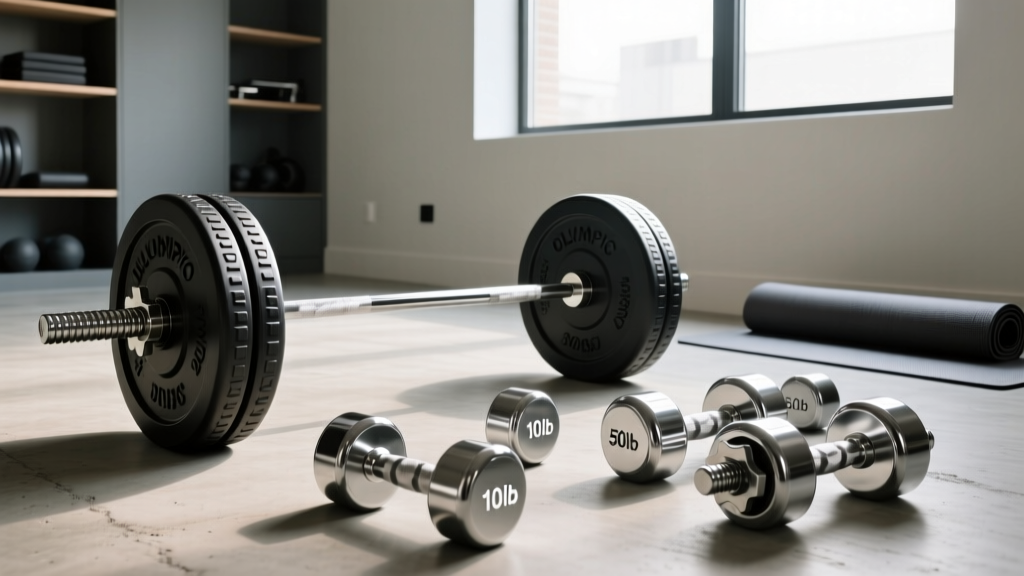
How to Gain Muscle Using Dumbbells vs. Olympic Barbells: Weight & Knurling Guide
Master how to gain muscle using dumbbells and Olympic barbells. Compare free weights, barbell knurling types, shaft weights, and top 2026 picks.

The Hypertrophy Ceiling: Dumbbells vs. Olympic Barbells
When researching how to gain muscle using dumbbells, most lifters rightfully focus on adjustable sets like Nuobell or PowerBlock Pro. Dumbbells excel at unilateral training, correcting muscle imbalances, and recruiting stabilizer muscles. However, as you progress into intermediate and advanced hypertrophy phases, you will inevitably hit a mechanical tension ceiling. According to a comprehensive dose-response study on resistance training volume published in the National Institutes of Health (NCBI), maximizing mechanical tension through progressive overload is the primary driver of muscle protein synthesis.
Most commercial adjustable dumbbells cap out at 80 to 90 pounds per hand. Once your pectorals and quadriceps can handle more than that for 8-12 repetitions, you must transition to Olympic barbells to safely load the spine and central nervous system. This guide bridges the gap between dumbbell training and serious barbell work, focusing specifically on Olympic barbell weight standards, shaft diameters, and the critical science of knurling to help you build your ultimate 2026 home gym.
Quick Transition Framework
- Use Dumbbells For: Isolation movements (lateral raises, bicep curls), unilateral deficit work (Bulgarian split squats), and joint-friendly pressing.
- Use Barbells For: Heavy compound progressive overload (squats, deadlifts, bench press, barbell rows) where grip and absolute load dictate hypertrophy.
Decoding Olympic Barbell Weight and Shaft Dimensions
Before analyzing knurling patterns, you must understand the foundational weight and dimension standards set by organizations like the International Weightlifting Federation (IWF). While 'Olympic' simply refers to the 2-inch (50mm) rotating sleeves, the shaft weight and diameter drastically alter the bar's whip, stiffness, and grip comfort.
The 20kg Men's Standard vs. 15kg Women's Standard
A standard men's Olympic barbell weighs exactly 20kg (44.09 lbs) and features a 28mm to 29mm shaft. A women's Olympic bar weighs 15kg (33.07 lbs) with a 25mm shaft. For pure hypertrophy and powerbuilding, the 20kg bar is the gold standard due to its higher tensile strength and ability to support massive plate loads without excessive bending (whip).
Shaft Diameter: The Grip Factor
- 28.0mm (Olympic Weightlifting): Maximizes barbell 'whip' for cleans and snatches. Too flexible for heavy hypertrophy squats.
- 28.5mm (Powerbuilding/Multipurpose): The sweet spot for muscle gain. Thick enough to remain stiff under 300+ lb squats, but thin enough to grip comfortably during high-volume Romanian deadlifts.
- 29.0mm (Powerlifting): Extremely stiff. Ideal for heavy bench presses and low-rep squats, but can cause hand fatigue during high-rep hypertrophy sets.
The Science of Grip: Knurling Profiles Explained
Knurling is the cross-hatched machining on the steel shaft designed to increase friction. If you are transitioning from the smooth, ergonomic handles of rubber hex dumbbells to raw steel, knurling choice will dictate your training consistency. A bar that tears your calluses will ruin your weekly training volume; a bar that is too smooth will slip during heavy sweat-inducing back squats.
According to the BarBend Barbell Knurling Guide, machining creates three distinct topographical profiles:
1. Hill Knurling (Passive)
The machine cuts shallow, rounded peaks. The result is a smooth, almost polished feel. Best for: High-rep Olympic lifting and beginners. Worst for: Heavy deadlifts without chalk.
2. Mountain Knurling (Aggressive)
The machine leaves sharp, jagged peaks. This acts like a cheese grater on the skin. Best for: Max-effort powerlifting singles. Worst for: Hypertrophy training (8-12 rep ranges), as it will quickly tear calluses and limit weekly volume.
3. Volcano Knurling (The Hypertrophy Gold Standard)
The machine cuts deep craters with sharp, concentric rims. This provides immense surface-area grip without sharp peaks that dig into the palm. Best for: High-volume muscle building, heavy rows, and stiff-leg deadlifts.
2026 Barbell Comparison Matrix: Top Picks for Muscle Gain
Below is a data-driven comparison of the top three 28.5mm multipurpose/power barbells dominating the home gym market in 2026. These models specifically bridge the gap between heavy loading and high-rep hypertrophy tolerance.
| Model | Tensile Strength | Knurl Profile | 2026 MSRP | Hypertrophy Rating |
|---|---|---|---|---|
| Rogue Ohio Bar (Power) | 190,000 PSI | Volcano (Deep) | $295.00 | 9.2 / 10 |
| Rep Fitness Excalibur | 190,000 PSI | Volcano (Stainless) | $349.00 | 9.5 / 10 |
| Kabuki NG Power Bar | 250,000 PSI | Mountain (Aggressive) | $369.00 | 8.5 / 10 |
Bushings vs. Bearings: What Matters for Muscle Gain?
When lifters transition from dumbbells to barbells, they often overlook the internal sleeve mechanics. The sleeves (where the weight plates load) must rotate independently of the shaft. If they don't, the rotational inertia of a 200lb barbell will violently twist your wrists during a front squat or bench press.
Bronze Bushings (The Hypertrophy Choice)
Bushings are solid rings of machined bronze that provide a slow, controlled, and highly durable spin. Because hypertrophy training involves slow eccentrics and controlled presses (unlike the explosive dropping of a clean and jerk), bushings provide the exact level of stability required. They are also significantly cheaper and require zero maintenance.
Needle Bearings (The Olympic Choice)
Needle bearings use tiny steel rollers to create a frictionless, lightning-fast spin. While excellent for Olympic weightlifting, they are overkill for bodybuilding and can actually feel 'loose' or unstable during heavy, slow-tempo bench presses. Furthermore, bearing bars typically cost $150 to $200 more than bushing bars.
'For 95% of lifters focused on aesthetics and muscle gain, a high-quality bronze bushing bar with a volcano knurl will outperform and outlast a bearing bar, while saving enough money to buy a premium set of urethane bumper plates.'
Final Verdict: Building Your 2026 Free Weight Arsenal
Knowing how to gain muscle using dumbbells is only half the battle. Dumbbells are irreplaceable for joint health, stabilizer recruitment, and isolation work. However, to build a dense, muscular physique, you must progressively overload the central nervous system with heavy, stable barbell compounds.
When purchasing your first Olympic barbell for hypertrophy, prioritize a 28.5mm shaft diameter for optimal grip comfort during high-rep sets, a tensile strength of at least 190,000 PSI to prevent permanent bending, and a volcano knurl profile to maximize friction without destroying your hands. Pair this with a sturdy power rack and a set of calibrated steel plates, and you will possess a complete, uncompromising muscle-building system for decades to come.
More gear to consider
All reviews
Space-Saving Loadable Dumbbells for an At Home Upper Body Workout
Dumbbell Man Stud Care: Rubber Hex vs Urethane Longevity
65 Pound Dumbbells in 2026: Neoprene vs. Rubber Hex Showdown
Optimizing Space: Kettlebell Guide & Bicep Tricep Dumbbell Exercises
Good Mornings with Dumbbells: 2026 Adjustable Dumbbell Comparison
