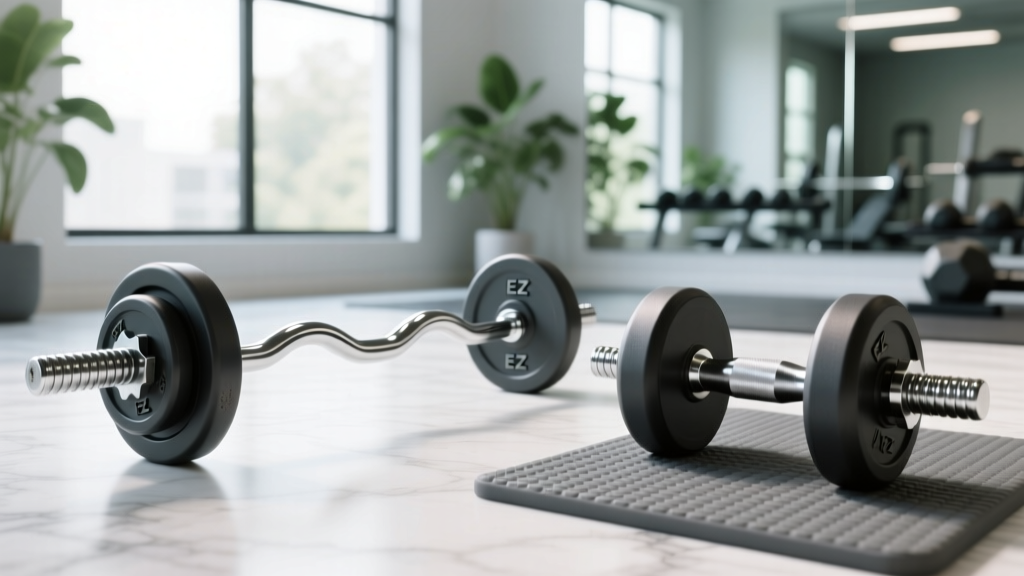
EZ Curl Bar vs Straight Bar & Front Loaded Dumbbell Squats
Compare EZ curl bar vs straight bar mechanics and master front loaded dumbbell squats with our 2026 expert gear picks and biomechanics guide.

The Minimalist Home Gym: Strategic Tool Selection
Building a commercial-grade home gym in 2026 doesn't require a $5,000 investment; it requires strategic tool selection. When space and budget are at a premium, lifters often debate the necessity of specialized bars versus versatile free weights. Two of the most heavily debated topics in home gym design are upper-body isolation mechanics—specifically the EZ curl bar vs straight bar debate—and lower-body compound movements, where front loaded dumbbell squats are increasingly replacing traditional barbell front squats for joint longevity and accessibility.
This expert guide breaks down the biomechanics, metallurgy, and real-world application of these tools, providing specific gear recommendations and execution frameworks to maximize hypertrophy while minimizing joint degradation.
The Upper Body Dilemma: EZ Curl Bar vs Straight Bar
The primary difference between an EZ curl bar and a straight barbell lies in the angle of the grip and its subsequent effect on the radioulnar joint. A standard Olympic straight bar forces the wrists and forearms into complete supination (palms facing directly up). While this position theoretically maximizes the short-head activation of the biceps brachii, it places severe valgus stress on the medial epicondyle of the elbow and demands extreme wrist extension.
Conversely, the EZ curl bar introduces cambered angles—typically featuring 45-degree and 30-degree bends. This semi-supinated grip aligns more naturally with the carrying angle of the arm, significantly reducing torque on the wrists and elbows. According to biomechanical analyses cataloged by EXRX EZ Bar Curl Biomechanics, the slight pronation shift inherent in the EZ bar's inner grips transfers a greater percentage of the load to the brachialis and brachioradialis muscles, promoting overall arm thickness rather than just peak height.
Biomechanical Comparison Matrix
| Variable | Straight Barbell | EZ Curl Bar (Outer Grip) | EZ Curl Bar (Inner Grip) |
|---|---|---|---|
| Wrist Angle | Full Supination (180°) | Slight Supination (~160°) | Neutral / Semi-Pronated (~135°) |
| Elbow Joint Stress | High (Valgus Torque) | Moderate | Low |
| Primary Muscle Bias | Biceps Brachii (Short Head) | Biceps Brachii (Balanced) | Brachialis & Brachioradialis |
| Max Load Capacity | Highest | High | Moderate |
2026 Gear Review: Top Bars for Biceps
Not all curl bars are created equal. The metallurgy and knurling patterns dictate the bar's lifespan and your grip security. Here are our top hands-on picks for 2026:
- Rogue Curl Bar ($245): Featuring a 195,000 PSI tensile strength steel shaft and a 28mm diameter, this is the gold standard. The hard chrome finish resists corrosion, and the knurling is aggressive enough for heavy sets without tearing calluses.
- Rep Fitness EZ Curl Bar ($145): A phenomenal mid-tier option with a 110,000 PSI rating. It includes a unique multi-grip design that offers a neutral hammer-curl option, making it a 2-in-1 tool for arm development.
- Titan Fitness 47" Super Curl Bar ($130): If you prefer a straight bar but want versatility, this bar offers a thicker 50mm grip diameter option, which is excellent for building forearm flexor strength and grip endurance.
Lower Body Power: Why Front Loaded Dumbbell Squats Win
While the barbell front squat is a staple for quad development, it demands extreme wrist mobility for the clean grip and significant lat flexibility for the cross-arm grip. For many lifters, especially those over 30 or those with desk-job posture, these mobility requirements lead to compensatory lumbar flexion and wrist impingement.
This is where front loaded dumbbell squats become the superior choice. By holding a pair of dumbbells in a neutral grip at shoulder height, you maintain the anterior shift in the center of mass (COM). This anterior COM forces the thoracic spine to remain extended and heavily biases the quadriceps, exactly like a barbell front squat, but entirely bypasses the wrist and elbow mobility restrictions.
Expert Insight: The Clavicle PinchWhen selecting adjustable dumbbells for front loaded dumbbell squats, the physical shape of the block matters immensely. The PowerBlock Elite USA ($399/pair) features a rectangular cage design that notoriously digs into the clavicle and anterior deltoid when racked at the shoulders. Conversely, the Nuobell 80 ($449/pair) mimics the cylindrical profile of a traditional hex dumbbell, resting comfortably on the front deltoid shelf without causing bruising or joint impingement during heavy squat sets.
Step-by-Step Execution & Failure Modes
Proper execution of the front loaded dumbbell squat requires strict postural control. As noted in the Stronger By Science Squat Guide, anteriorly loaded squats are limited more by upper back strength than raw leg power.
- The Clean: Swing or clean the dumbbells to your shoulders. Do not curl them into position, as this pre-fatigues the biceps.
- The Rack: Keep the dumbbells in a neutral grip (palms facing each other). Tuck your elbows tightly against your ribcage to create a "shelf" with your anterior deltoids.
- The Descent: Initiate the movement by breaking at the knees and hips simultaneously. Descend until your hip crease drops below your knee joint (approx. 120 degrees of knee flexion).
- The Ascent: Drive through the mid-foot, keeping the chest proud. Imagine pushing your upper back into the ceiling to prevent thoracic rounding.
Troubleshooting Common Failure Modes
If you are struggling with this movement, you are likely experiencing one of two edge cases:
- The "Butt Wink" (Lumbar Flexion): If your pelvis tucks under at the bottom of the squat, you lack ankle dorsiflexion. Solution: Elevate your heels on 5lb or 10lb bumper plates. This artificial heel elevation allows for deeper knee tracking without compromising spinal neutrality.
- Elbow Flare and Dumbbell Slip: If your elbows drift outward, the dumbbells will slide off your shoulders. Solution: Strengthen your serratus anterior with scapular push-ups and focus on actively squeezing your lats to keep the humerus pinned to your torso.
Programming Your 2026 Routine
To integrate these tools effectively, pair them in an Upper/Lower or Push/Pull/Legs split. Here is a highly effective hypertrophy-focused superset that leverages both the EZ bar and front loaded dumbbells:
A1. Front Loaded Dumbbell Squats: 4 sets of 8-10 reps (RIR 2). Focus on a 3-second eccentric descent.
A2. EZ Bar Strict Curls: 4 sets of 10-12 reps (RIR 1). Use the inner cambered grip to save the wrists for heavy pulling movements later in the week.
By utilizing the EZ curl bar for arm isolation and relying on front loaded dumbbell squats for lower body development, you preserve joint health while stimulating maximum muscle fiber recruitment. For a deeper dive into squat variations and muscle activation, refer to the EXRX Dumbbell Front Squat Mechanics database. Invest in high-PSI steel and ergonomically designed dumbbells, and your home gym will rival any commercial facility in both safety and results.
More gear to consider
All reviews
Swap Standing Rows with Dumbbells: Kettlebell Buying & Care Guide

Power Rack vs Squat Rack vs Stand: Dumbbell Tricep Kickbacks Guide
Best Neoprene Dumbbells for Arm Exercises at Home (2026)

Dumbbell Workout Plan for Women: Barbell Collar Troubleshooting

Rubber Hex vs Urethane: Space Hacks & Forearm Exercises with Dumbbells
