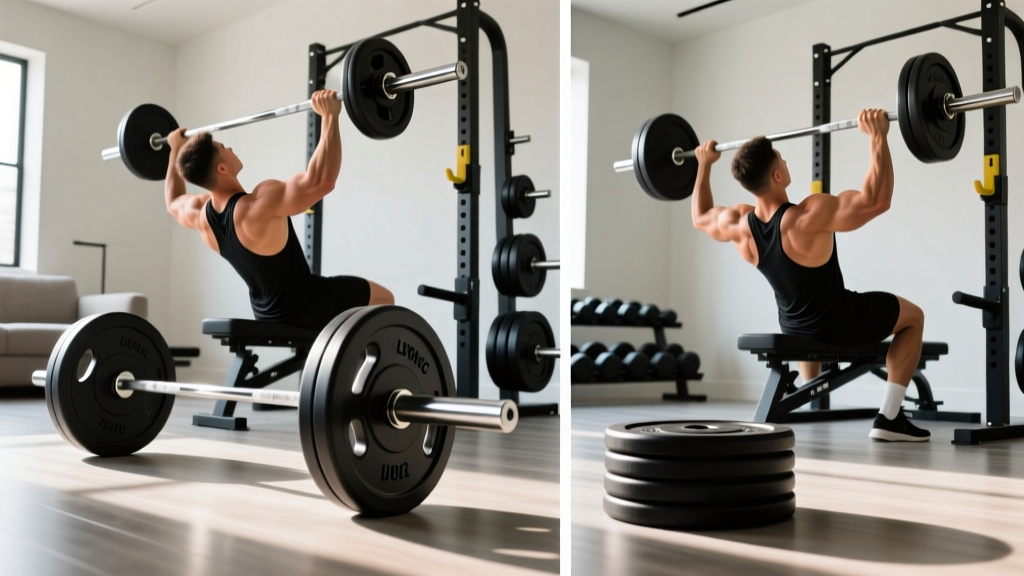
Fix Your Reverse Dumbbell Row: Olympic vs Standard Plate Errors
Troubleshoot your reverse dumbbell row by fixing common Olympic vs standard weight plate mistakes, loading errors, and form breakdowns in your home gym.

The reverse dumbbell row is a cornerstone exercise for mid-back development, targeting the rhomboids, middle trapezius, and lats with a deep stretch and powerful contraction. However, for home gym athletes utilizing plate-loaded dumbbell handles, this movement is frequently sabotaged by a hidden culprit: equipment mismatch. Specifically, the confusion and improper application of Olympic versus standard weight plates. If your reverse dumbbell row feels unstable, your wrists are aching, or your collars are slipping mid-rep, you are likely dealing with a plate-to-handle incompatibility issue. In this 2026 troubleshooting guide, we break down the exact biomechanical and mechanical failures caused by mixing up Olympic and standard plates, and how to fix your setup for optimal hypertrophy.
The Core Equipment Mismatch: Olympic vs. Standard Plates
Before troubleshooting your lifting mechanics, we must address the hardware. The fitness equipment market is split between two primary plate standards, and using the wrong plates on the wrong handles drastically alters the physics of your row.
| Feature | Standard Weight Plates | Olympic Weight Plates |
|---|---|---|
| Center Hole Diameter | 1 inch (25.4mm) | 2 inches (50.8mm) |
| Typical 45lb Plate Thickness | 2.5 to 3.5 inches (Cast Iron) | 1.5 to 2.2 inches (Urethane/Rubber) |
| Max Load on 14-inch Handle | ~65 lbs (before crowding) | N/A (Will not fit) |
| Max Load on 17-inch Olympic Handle | N/A (Hole too small) | 120+ lbs (with proper collars) |
| Average Cost Per Pound (2026) | $1.20 - $1.50 | $1.80 - $2.50 |
As highlighted in comprehensive equipment analyses by BarBend, standard plates are often the default for beginners due to their lower price point and inclusion in budget home gym packages. However, their physical dimensions create severe limitations for unilateral pulling movements.
How Plate Choice Wrecks Your Reverse Dumbbell Row
When you perform a reverse dumbbell row, the path of your elbow and the retraction of your scapula require a stable, compact, and balanced implement. Here is how the wrong plate choice destroys your mechanics.
Mistake 1: Torque and Wrist Strain from Thick Standard Plates
Standard cast iron plates are notoriously thick. To load a standard 1-inch dumbbell handle to 50 pounds, you might need a 25lb plate and two 10lb plates on each side. Because the sleeves on standard handles are typically only 6 to 7 inches long, the plates end up stacked wide. This forces your grip wider than intended and shifts the center of gravity away from your hand's natural pivot point. According to biomechanics databases like ExRx.net, the dumbbell row requires strict stabilization of the wrist and elbow; a wide, unbalanced load introduces rotational torque that forces your wrist into ulnar or radial deviation, leading to premature forearm fatigue before your lats are fully stimulated.
Mistake 2: Sleeve Crowding and Collar Failures
Standard handles rely on cheap spring collars. When you stack thick standard plates to the very edge of a 14-inch handle to achieve heavy rowing weights, there is barely enough sleeve left to secure the collar. Mid-rep, as you drive your elbow toward the ceiling during the concentric phase of the reverse dumbbell row, the plates shift. The spring collar loses tension, the plates slide, and your center of mass shifts violently. This is a primary cause of lower back tweaks during bent-over rows.
WARNING: The Adapter TrapNever use plastic or metal bushing adapters to fit 2-inch Olympic plates onto a 1-inch standard dumbbell handle for heavy rows. The adapters introduce 'slop' (micro-movements) between the plate and the sleeve. During the eccentric lowering phase of the row, this slop causes the plates to wobble, destroying your mind-muscle connection and risking a dropped weight on your foot or bench.
Step-by-Step Troubleshooting Guide
If your reverse dumbbell row feels 'off' today, run through this diagnostic checklist to isolate whether the issue is your form or your plate configuration.
- Check the Sleeve Gap: With your plates loaded, measure the gap between the outer plate and the end of the sleeve. If you have less than 1 inch of clearance for your collar, your standard handle is overloaded. Fix: Drop the weight by 10% and focus on a 3-second eccentric tempo to maintain hypertrophy stimulus without compromising safety.
- Assess the Wrist Angle: At the bottom of the row (full stretch), look at your wrist. If it is bent inward to compensate for the wide distribution of thick standard plates, your grip width is compromised. Fix: Switch to an Olympic loadable dumbbell handle which accommodates thinner, denser urethane Olympic plates, keeping the weight compact.
- Test the Collar Lock: Give the loaded dumbbell a firm horizontal shake. If you hear clanking, your standard spring collars are failing. Fix: Upgrade to OS Pro Lock jaw collars (for standard) or aluminum clamp collars (for Olympic) to eliminate plate shift.
Upgrading Your Setup: When to Ditch Standard Plates
If you are serious about progressive overload on back movements, 2026 is the year to transition your dumbbell work to Olympic-compatible gear. Implementing tools like the Rogue Loadable Dumbbell Handles allows you to utilize the same high-quality, thin-profile urethane Olympic plates you use on your barbell.
While Olympic loadable handles and plates require a higher upfront investment (roughly $150 for a pair of handles and $250+ for a starter set of Olympic plates), the return on investment is immense. The compact nature of Olympic plates allows you to load up to 100+ pounds per hand on a 17-inch sleeve without the dumbbell exceeding 16 inches in total length. This keeps the center of gravity perfectly aligned with your palm, allowing for flawless scapular retraction during the reverse dumbbell row.
'The best back workouts are built on stability. If you are fighting your equipment to keep the weight balanced during a row, your central nervous system is prioritizing joint protection over muscle fiber recruitment. Compact, Olympic-loaded implements solve this instantly.' — Home Gym Strength & Conditioning Consensus, 2025
Frequently Asked Questions
Can I use standard plates on an Olympic barbell or dumbbell handle?
No. Standard plates have a 1-inch center hole, while Olympic sleeves are 2 inches (50mm) in diameter. Standard plates simply will not slide onto Olympic equipment. Conversely, you can use Olympic plates on standard equipment only if you use a specialized 2-to-1 inch sleeve adapter, though this is highly discouraged for dynamic movements like the reverse dumbbell row due to the introduction of rotational instability.
Why does my reverse dumbbell row feel uneven even when both dumbbells are loaded to the same weight?
This is almost always caused by mixed plate thicknesses on standard handles. If your left dumbbell is loaded with two 25lb cast iron plates, and your right dumbbell is loaded with one 45lb plate and a 5lb plate, the physical length and center of gravity of the two dumbbells will be completely different. Your body will compensate by altering the pulling angle on one side, leading to asymmetric lat development and potential shoulder impingement. Always mirror the exact plate denominations on both handles.
Are bumper plates good for dumbbell rows?
Standard rubber bumper plates are generally terrible for plate-loaded dumbbell rows. A 45lb bumper plate is 2.5 to 3 inches thick and has a massive 17.7-inch diameter. Loading even one bumper plate per side on a dumbbell handle makes the implement so wide and bulky that the plates will hit your torso or the bench before you can achieve a full range of motion on the row. Stick to machined steel or thin urethane Olympic plates for dumbbell applications.
More gear to consider
All reviews
Bumper vs Iron Plates: 2026 Trends & Lateral Dumbbell Raises Form
Rubber vs Urethane Care for Your 30 Min Full Body Dumbbell Workout
Bumper vs Iron Plates & Standing Abs Workout with Dumbbells

Power Rack vs Squat Rack vs Squat Stand: 50 kg Dumbbell Guide

Best Dumbbell Racks for the Overhead Dumbbell Raise: 2026 Value Guide
