Fierce 5 Dumbbell Routine: Cast Iron vs Competition Kettlebells
Optimize your home gym layout for the Fierce 5 dumbbell routine. Compare cast iron vs competition kettlebells for space, storage, and exercise swaps.

Adapting the Fierce 5 Dumbbell Routine for Small Spaces
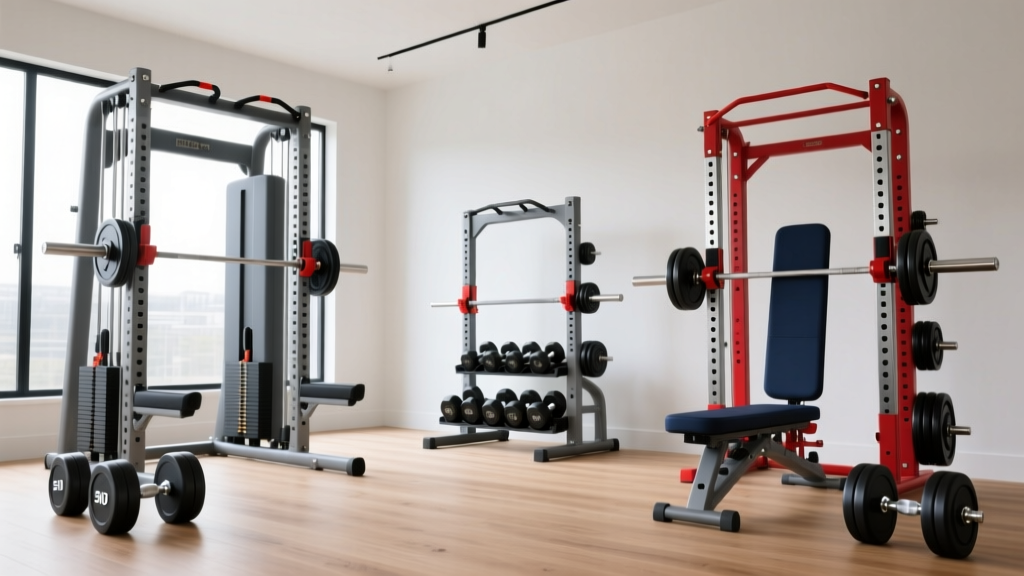
The Fierce 5 dumbbell routine remains one of the most effective linear progression programs for building foundational strength and hypertrophy. However, executing the traditional dumbbell variant in a compact apartment or small garage gym presents a severe spatial challenge. A standard 5-to-50 lb rubber hex dumbbell set requires a 3-tier A-frame rack measuring roughly 48 inches wide by 24 inches deep, consuming over 8 square feet of prime floor space and costing upwards of $850 in 2026.
For home gym owners prioritizing space optimization and layout efficiency, swapping dumbbells for kettlebells is a strategic masterstroke. A curated 3-kettlebell set (16kg, 20kg, 24kg) can be stored on a single-tier 24-inch wide rack, reducing the storage footprint by nearly 60%. But this raises a critical equipment question: should you invest in traditional cast iron bells or standardized competition kettlebells to execute the Fierce 5 movements? This guide breaks down the spatial, biomechanical, and financial realities of both options.
Cast Iron vs. Competition: The Space & Layout Breakdown
Before redesigning your workout zone, it is essential to understand how the physical geometry of these two kettlebell types impacts your floor plan and exercise mechanics. According to equipment specifications from Rogue Fitness, cast iron bells vary in dimension based on weight, whereas competition bells maintain a uniform chassis regardless of the load.
| Feature | Cast Iron (e.g., Rep Fitness KB-CT) | Competition (e.g., Kettlebell Kings Steel) | Space & Layout Impact |
|---|---|---|---|
| Dimensions (H x W) | Variable (e.g., 16kg is ~230mm x 170mm) | Uniform (280mm x 210mm across all weights) | Uniform sizing allows for perfectly aligned, flush storage on tiered racks. |
| Handle Diameter | Thicker (33mm - 38mm depending on weight) | Standardized 35mm | Competition handles offer predictable grip clearance for double-bell Fierce 5 presses. |
| Horn Window Size | Compact, decreases relative to bell size on lighter weights | Large, standardized window | Larger windows prevent wrist crushing during the 'rack position' for squats and presses. |
| 2026 Avg. Price | $1.50 - $1.90 per lb | $2.80 - $3.50 per lb | Cast iron is more budget-friendly, freeing up capital for space-saving wall racks. |
Cast Iron Kettlebells: The Compact Corner Layout
Cast iron kettlebells are dense, compact, and ideal for tight corner layouts. Because the physical size of the bell scales with its weight, a 16kg and 20kg cast iron pair will nestle closely together on a small tiered shelf. For the Fierce 5 dumbbell routine, cast iron is exceptionally well-suited for single-bell movements like the KB Goblet Squat and Single-Arm KB Rows. The compact body of a cast iron bell rests comfortably against the sternum during goblet holds, whereas a bulky 24kg competition bell can interfere with breathing mechanics and elbow tuck.
Layout Tip: If utilizing cast iron, mount a heavy-duty wall bracket (rated for 150+ lbs) at waist height. This eliminates the floor rack entirely, reclaiming 100% of the footprint for your lifting zone.
Competition Kettlebells: The Uniform Rack Strategy
Competition kettlebells are constructed from steel and feature identical dimensions regardless of weight. This uniformity is a dream for organizational layouts. You can build or buy a symmetrical, flush-mounted storage system without worrying about awkward gaps or overhangs. More importantly, the standardized 35mm handle and wide horn window make competition bells vastly superior for Double Kettlebell Front Squats and Double KB Overhead Presses—two critical swaps for the Fierce 5 accessory and main lifts.
Expert Insight: The Rack Position ClearanceWhen performing double kettlebell front squats (a common substitute for the Fierce 5 DB Goblet Squat to increase load), the bells must rest in the 'rack position' against your forearms and chest. According to technique guidelines emphasized by StrongFirst, a narrow horn window (common in lighter cast iron bells) will crush your wrists and restrict your ribcage expansion. Competition bells provide the necessary geometric clearance to breathe and brace safely under heavy loads.
Movement-by-Movement: Fierce 5 Swaps & Spatial Requirements
Transitioning from dumbbells to kettlebells alters the spatial envelope required for each lift. Dumbbells allow for a neutral grip and a wide stance, while kettlebells require specific clearance for the bell's body to swing or rack. Here is how to map the Fierce 5 dumbbell routine to your optimized layout.
- Flat DB Bench Press → Double KB Floor Press: Spatial Need: 6x4 ft mat area. Without a bench, you eliminate a massive piece of furniture from your gym. The floor press limits range of motion slightly but heavily taxes the triceps and chest. Competition bells are preferred here to avoid the horns digging into your forearms at the bottom of the press.
- DB Bent-Over Row → Single-Arm KB Row: Spatial Need: 3x3 ft footprint. Use a sturdy chair or the edge of a sofa for bracing. Cast iron bells excel here, as the thicker handle builds immense grip strength, and the compact head allows for a deep stretch at the bottom of the movement without hitting the floor. Reference the ExRx biomechanics database for proper spinal alignment during unilateral hinged rows.
- DB Overhead Press → Double KB Strict Press: Spatial Need: 4x4 ft standing zone. This is where competition kettlebells shine. The 35mm handle allows for a secure grip, and the uniform window ensures your wrists remain neutral when starting from the rack position. Ensure your ceiling height allows for full lockout (minimum 8 ft clearance recommended).
- DB Romanian Deadlift (RDL) → Dual KB RDL: Spatial Need: 4x3 ft footprint. Hold one bell in each hand. Because kettlebell handles sit lower than the center of mass compared to dumbbells, you will need to hinge slightly deeper to achieve the same hamstring stretch. Cast iron is perfectly adequate and more cost-effective for heavy RDLs.
Designing Your 36-Square-Foot Kettlebell Workout Zone
To successfully run a modified Fierce 5 routine, you do not need a massive garage. A highly optimized 6-foot by 6-foot (36 sq ft) zone is sufficient if you design the layout with intentionality.
1. The Perimeter Storage Strategy
Never place your kettlebell rack in the center or corners of your active lifting zone. Utilize a 'perimeter storage' approach. Install a 2-tier wall-mounted rack (approx. 24" W x 10" D) at the rear of your 6x6 space. This keeps the bells accessible but entirely out of the swing path for dynamic movements like KB swings or snatches, which are excellent conditioning finishers for the Fierce 5 program.
2. Flooring and Impact Zones
Kettlebells have a smaller, denser base than rubber hex dumbbells. If you drop a 24kg cast iron bell, the point-load impact can crack standard garage concrete or tear cheap vinyl. Invest in a 4x6 ft, 3/4-inch thick vulcanized rubber horse stall mat (typically around $50-$70 in 2026). Place this mat in the exact center of your zone to define your 'active lifting boundary'.
'Space optimization isn't just about buying smaller equipment; it's about defining the negative space. A clearly bordered 4x6 mat psychologically and physically contains your Fierce 5 workout, preventing equipment creep and maintaining a safe swing radius.' — Home Gym Layout Principles, FitGearPulse Editorial Team
Expert Verdict: Which Bell Wins the Space Game?
If your primary goal is to run the Fierce 5 dumbbell routine in a highly restricted space (under 50 sq ft) while maximizing budget efficiency, Cast Iron Kettlebells are the superior choice. Their variable geometry allows for a smaller overall storage footprint, and they are significantly cheaper per pound, allowing you to buy the precise 16kg, 20kg, and 24kg increments needed for linear progression without breaking the bank.
However, if your layout accommodates a dedicated, symmetrical storage rack, and you plan to heavily utilize double-bell movements (like Double KB Presses and Front Squats) to replace barbell main lifts, Competition Kettlebells are non-negotiable. The standardized 35mm handle and wide horn window protect your wrists and ensure consistent biomechanics across all weights, making your small-space gym feel like a professional strength facility.
Final Layout Checklist for 2026
- [ ] Measure ceiling height (ensure 8+ ft for KB overhead presses).
- [ ] Order a 4x6 ft, 3/4" rubber stall mat to define the lifting zone.
- [ ] Select a wall-mounted or low-profile tiered rack (max 18" depth).
- [ ] Purchase a 3-bell starter set (16kg, 20kg, 24kg) to cover 80% of Fierce 5 accessory and main lift requirements.
- [ ] Map out a 3-foot swing radius to ensure no walls or furniture are struck during dynamic movements.
More gear to consider
All reviews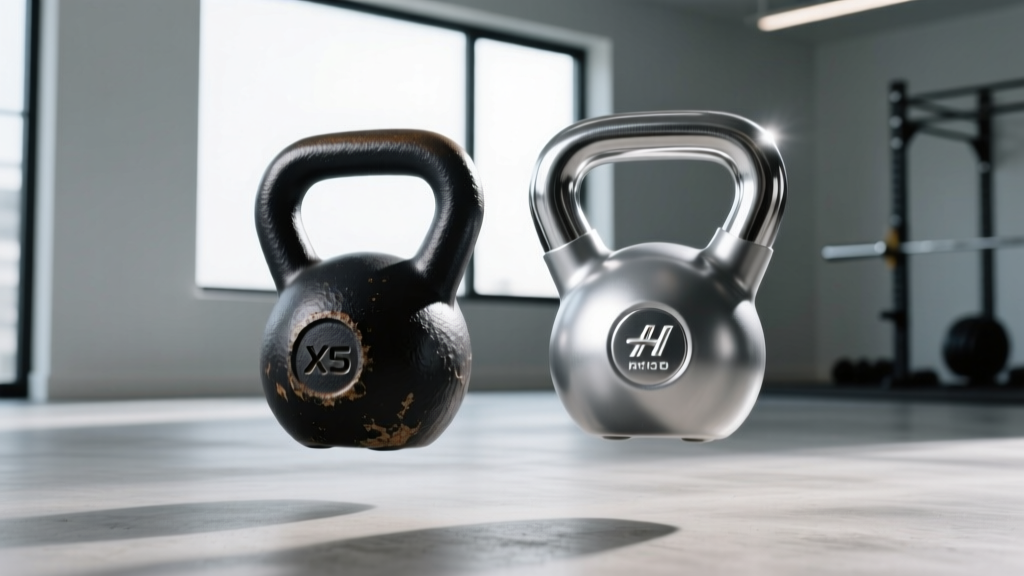
Dumbbell Shoulder Press Alternative: Cast Iron vs Competition Kettlebells

Treadmill or Exercise Bike for Weight Loss: Stationary Bike Care

2026 Rack Trends: Storage and One-Arm Dumbbell Row Muscles Worked

Top Neoprene Dumbbells for Single Dumbbell Rows: 2026 Test

Power Rack vs Squat Rack vs Stand + Dumbbell Exercises for Arms Men