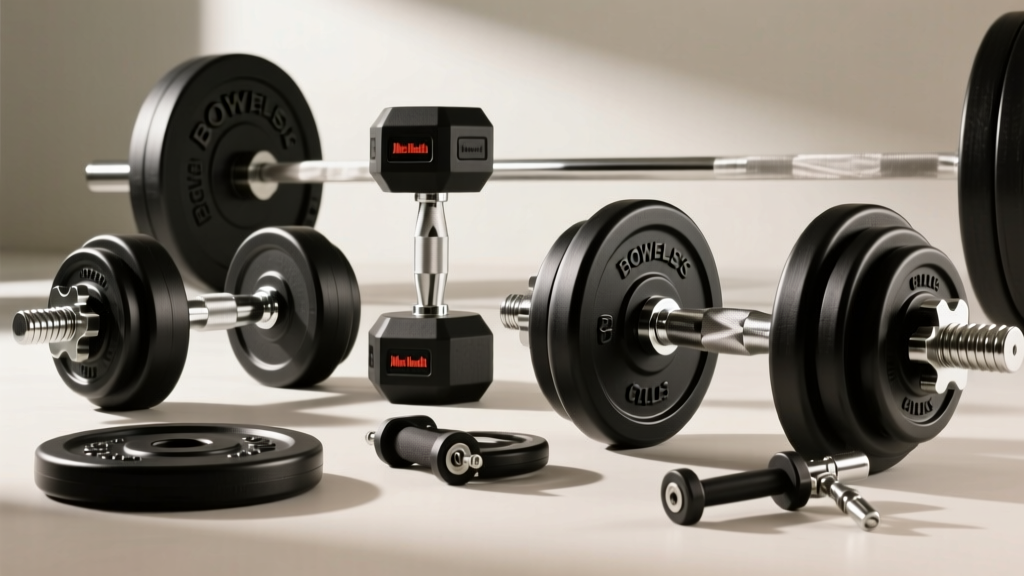
Avoid Fake Bowflex Dumbbells: Barbell Collar and Clamp Guide
Skip dangerous fake Bowflex dumbbells. This beginner guide compares barbell collar and clamp types to keep your home gym barbell setup safe and secure.

When building a home gym on a budget, beginners often search for cheap adjustable weights and inevitably stumble upon listings for fake Bowflex dumbbells. With genuine Bowflex SelectTech 552 sets retailing around $399 to $449 in 2026, the temptation to buy a $90 knock-off on third-party marketplaces is high. However, as a senior equipment reviewer at FitGearPulse, I must be blunt: counterfeit adjustable dumbbells are a severe safety hazard. Rather than risking catastrophic equipment failure, the smartest beginner pivot is investing in a standard Olympic barbell and plate setup. This transition, however, introduces a new critical safety component you must master: barbell collars and clamps.
The Hidden Dangers of Fake Bowflex Dumbbells
To understand why we recommend pivoting to a barbell, you need to understand the engineering gap between genuine adjustable dumbbells and their counterfeit counterparts. Genuine SelectTech dumbbells utilize a complex internal system of steel retention pins, reinforced glass-nylon gears, and dual-dial magnetic selectors.
Counterfeit manufacturers cut corners by using cheap, injection-molded ABS plastic for the internal detents and a single, poorly machined central retention rod. The failure mode is predictable and dangerous. Within three to six weeks of regular use, the plastic gears strip. When you lift the dumbbell, the retention bracket fails to engage the weight stack, causing 10 to 20 pounds of solid iron to detach from the handle mid-rep. If you are performing a dumbbell chest press or shoulder press, this detached plate can fall directly onto your face, sternum, or toes. According to the Consumer Product Safety Commission (CPSC), falling weights and structural equipment failures are leading causes of home gym injuries, accounting for thousands of emergency room visits annually.
💡 The Budget Alternative: Instead of risking injury on fake adjustable dumbbells, invest $180 in a standard 7-foot, 45-lb Olympic barbell with 50mm (2-inch) sleeves, and $100 in basic cast-iron plates. It is infinitely scalable, virtually indestructible, and completely eliminates the risk of internal gear failure.Barbell Collar and Clamp Types Comparison
Once you transition to a barbell, you are responsible for manually securing the weight plates. If you fail to use a collar, plates can slide off the 50mm sleeves during asymmetric lifts (like lunges or single-arm rows), causing the barbell to violently tip and potentially injure you or damage your flooring.
Not all collars are created equal. Below is a deep dive into the primary barbell collar and clamp types available in 2026, analyzed by grip strength, durability, and beginner suitability.
1. Spring Clip Collars (The Traditionalist)
Spring clips are the classic, wire-loop collars you see in commercial gyms. They cost between $5 and $12 a pair. While they are cheap and lightweight, they require significant hand strength to squeeze open. More importantly, the metal springs lose their tension over time. A worn-out spring clip will allow plates to rattle and shift laterally during dynamic movements like power cleans. Verdict: Avoid for heavy or dynamic lifting; acceptable only for light, controlled accessory work.
2. Snap-Clamp / Proloc Collars (The Beginner's Best Friend)
Made from high-density, glass-reinforced nylon, snap-clamp collars (like the popular Rogue HG 2.0 or generic Proloc models) feature a hinge and a snap-lock latch. Priced between $15 and $25, they slide onto the 50mm Olympic sleeve with a satisfying, airtight friction fit. They grip the barbell aggressively enough to withstand dropped barbells during deadlifts, yet they are incredibly easy for beginners to pop on and off with one hand. Verdict: The absolute best starting point for 90% of home gym owners.
3. Lock-Jaw and Lever Collars (The Heavy Duty Option)
Lock-Jaw collars ($25-$35) use a thick, dual-pronged plastic clamp that bites down on the barbell sleeve. Lever collars, such as the aluminum Rogue Monster Lever Collars ($60-$80), use a cam-action lever to create immense clamping force. These are virtually immovable once locked. However, they are bulky, take up more space on the sleeve (which matters if you are loading 500+ lbs of plates), and can be overkill for a beginner just learning the back squat. Verdict: Ideal for advanced powerlifters and Olympic weightlifters, but unnecessary for day-one beginners.
4. Spinlock / Threaded Collars (The Compatibility Trap)
Spinlock collars are heavy iron or plastic nuts that screw onto the threaded ends of a barbell. Critical Warning: These only work on cheap 'Standard' barbells with 1-inch (25mm) threaded sleeves. They will not fit a proper 50mm Olympic barbell. Furthermore, threading and unthreading them takes 30-45 seconds per side, making supersetting and drop-sets incredibly frustrating. Verdict: Avoid entirely. Buy an Olympic barbell and use snap-clamps instead.
| Collar Type | Avg. Price (2026) | Grip Security | Ease of Use | Best Application |
|---|---|---|---|---|
| Spring Clip | $5 - $12 | Low | Difficult | Light isolation work |
| Snap-Clamp (Proloc) | $15 - $25 | High | Very Easy | General fitness, CrossFit, Beginners |
| Lock-Jaw / Lever | $30 - $80 | Extreme | Moderate | Heavy powerlifting, Olympic drops |
| Spinlock (Threaded) | $10 - $20 | High | Very Slow | 1-inch Standard bars (Not Recommended) |
Step-by-Step: How to Properly Secure Your Barbell Load
Buying the right collar (we recommend starting with a pair of 50mm Snap-Clamps from a reputable brand like Rogue Fitness or Titan Fitness) is only half the battle. You must use them correctly to prevent lateral plate shift. Follow this step-by-step protocol every time you load your barbell.
- Load Symmetrically: Always load plates evenly on both the left and right sleeves. If you are adding 45 lbs, put a 45-lb plate on the left, then a 45-lb plate on the right. Never load one side completely while the other is empty, as the barbell will flip off the J-hooks.
- Push Plates Flush: Slide your plates all the way down the 50mm sleeve until the innermost plate is resting completely flush against the barbell's machined steel shoulder (the lip where the sleeve meets the shaft).
- Align the Collar: Take your snap-clamp or lever collar and slide it onto the sleeve. Ensure the collar is pushed tightly against the outermost weight plate. There should be zero visible gap or 'daylight' between the plate and the collar.
- Engage the Lock: Snap the latch shut or pull the lever down. You should hear an audible click or feel the cam lock bite into the steel sleeve. The collar should not be able to spin freely around the bar.
- Perform the 'Shake Test': Before lifting, stand the barbell upright on one end (if using bumper plates) or gently shake the sleeve with your hand. If you hear the iron plates clanking together, the collar is too loose. Remove it, push it tighter against the plates, and re-lock.
Final Thoughts: Invest in Safety, Not Shortcuts
The allure of fake Bowflex dumbbells is entirely based on price, but the cost of a severe injury or a ruined home gym floor far outweighs the initial savings. By pivoting to a standard Olympic barbell and mastering the use of high-quality snap-clamp collars, you are building a foundation that will last a lifetime. A $20 pair of reinforced nylon collars provides the peace of mind you need to focus on what actually matters: progressive overload, proper form, and achieving your fitness goals safely in 2026 and beyond.
More gear to consider
All reviews
Hex vs Urethane Dumbbell Care & Decline Dumbbell Press Muscles Worked

Cast Iron vs Competition Kettlebells vs Dumbbell Only Shoulder Workout
Bumper Plate vs Iron Plate: Setup for Bent-Over Dumbbell Rows

Rubber Hex vs Urethane: Budgeting Your Arm Workout With Dumbbells

Kettlebell Care: Cast Iron vs Competition & Dumbbell Workout for Core
