Single Arm Dumbbell Triceps Extensions & Barbell Collar Clamp Guide
Compare barbell collar and clamp types to prevent plate slippage. A troubleshooting guide for safe, heavy lifting and seamless drop sets in 2026.

The Stability Paradigm: From Isolation to Bilateral Loading
When programming a high-volume arm day, lifters frequently superset heavy barbell skull crushers with single arm dumbbell triceps extensions to fully exhaust the lateral and long heads of the triceps brachii. While single arm dumbbell triceps extensions rely entirely on your own joint stability and core bracing to prevent the weight from drifting, moving to a barbell introduces a critical mechanical variable: equipment security. A loose hex dumbbell handle might just annoy you, but a shifting barbell plate during a heavy French press can result in catastrophic wrist or facial injuries.
Despite this, the barbell collar remains the most neglected piece of equipment in the free weights category. In 2026, the market is flooded with varying clamp mechanisms, materials, and tolerances. This troubleshooting guide and comparison matrix will break down the exact failure modes of different barbell collar and clamp types, ensuring your equipment is as stable as your mind-muscle connection.
The 4 Primary Barbell Collar & Clamp Types
Not all collars are created equal. The internal lining, clamping mechanism, and material composition dictate how well a collar resists lateral force during dynamic movements or heavy drop sets.
1. Spring Collars (The Budget Hazard)
Constructed from 3mm to 4mm galvanized spring steel, these are the ubiquitous collars found in commercial gyms. They operate via simple compression tension. While they are cheap (typically $5 to $12 a pair) and require zero learning curve, they are fundamentally flawed for heavy loading. The primary failure mode is metal fatigue; after roughly 500 to 800 repetitions of being stretched over a 50mm sleeve, the steel loses its tensile memory, resulting in a collar that slides off if the barbell is tilted past a 30-degree angle.
2. Clamp-Style Collars (The Modern Standard)
Clamp collars utilize a dual-lever or single-latch system to compress an internal thermoplastic polyurethane (TPU) or rubber lining against the barbell sleeve. The Rogue Fitness AH-1 Collar is a prime example of this category, utilizing a glass-filled nylon body and a patented cam-lock design. Priced between $28 and $45, these collars generate over 120 lbs of lateral clamping force. They are the gold standard for powerlifters and CrossFit athletes who need rapid changes during drop sets but cannot compromise on safety.
3. Spinlock Collars (The Threaded Relic)
Spinlock collars require the barbell sleeve to be threaded. The collar screws onto the sleeve, compressing a star-shaped washer against the plates. While they offer immense lateral security and are virtually impossible to shake loose, they are a massive bottleneck for workout pacing. Threading a spinlock collar on and off takes 15 to 25 seconds per side. If you are running a high-volume arm day superset—pairing heavy skull crushers with single arm dumbbell triceps extensions—you need collars that can be removed and reapplied in under three seconds. Spinlocks fail the pacing test entirely.
4. Lever & Quick-Release Collars (The Premium Tier)
Machined from aerospace-grade aluminum or forged steel, lever collars use a mechanical cam-action to lock onto the sleeve. Brands like Eleiko and Wright Fitness produce collars in the $85 to $135 range that feature precision-milled inner diameters. These are designed specifically for calibrated steel plates and competition barbells where sleeve tolerances are strictly 50.0mm. They offer the highest lateral hold force but can be overly aggressive on cheaper, poorly machined barbell sleeves, sometimes leaving deep gouges in the chrome or zinc coating.
Comparison Matrix: 2026 Collar Specifications
| Collar Type | Mechanism | Avg. Price (2026) | Lateral Hold Force | Drop-Set Viability | Best Use Case |
|---|---|---|---|---|---|
| Spring | Steel Compression | $5 - $12 | Low (15-25 lbs) | Poor | Light isolation, warm-ups |
| Clamp (TPU) | Cam-Lock / Latch | $28 - $45 | High (100-140 lbs) | Excellent | Powerlifting, CrossFit, Hypertrophy |
| Spinlock | Threaded Screw | $15 - $30 | Extreme (200+ lbs) | Terrible | Home gyms, static heavy holds |
| Lever / QR | Metal Cam-Action | $85 - $135 | Very High (150-180 lbs) | Good | Olympic lifting, Competition |
Troubleshooting Common Collar Failures & Mistakes
Even the most expensive clamp collar will fail if the user ignores basic physics and equipment maintenance. According to comprehensive equipment testing outlined in BarBend's Barbell Collar Guide, user error accounts for the vast majority of plate-slippage incidents. Here is how to troubleshoot the most common mistakes.
⚠️ SAFETY WARNING: The Sleeve Tolerance MismatchStandard Olympic barbell sleeves are exactly 50mm in diameter. However, many budget import barbells (often found on Amazon or in older commercial gyms) feature sleeves that measure between 49.2mm and 49.8mm. If you use a rigid aluminum lever collar on a 49.2mm sleeve, the collar will clamp onto empty air, providing zero lateral hold. Always measure your barbell sleeve with digital calipers before purchasing premium metal collars.
Mistake 1: Ignoring the Friction Coefficient
The clamping force of a collar is only half the equation; the other half is friction. Over time, barbell sleeves accumulate a microscopic layer of chalk dust, sweat salts, and oxidized metal. This creates a lubricated surface that drastically reduces the friction coefficient between the TPU lining and the steel sleeve. If your clamp collar is sliding during eccentric skull crushers, the collar isn't necessarily broken—your barbell sleeve is likely contaminated.
Mistake 2: Using Spring Collars for Asymmetrical Loading
Lifters performing landmine rotations, asymmetric presses, or even transitioning rapidly between single arm dumbbell triceps extensions and barbell work often load plates unevenly. Spring collars cannot withstand the lateral shear force generated when a barbell is tilted past 45 degrees. The spring steel simply expands under the gravitational slide of the plates. Always upgrade to a TPU-lined clamp collar for any movement that deviates from a strict horizontal plane.
Mistake 3: TPU Lining Degradation
Thermoplastic polyurethane (TPU) is highly durable, but it is susceptible to degradation from prolonged UV exposure and contact with certain chemical cleaners. If you leave your clamp collars in the trunk of your car or spray them with harsh bleach-based gym cleaners, the TPU will harden and crack. Once the inner lining loses its pliability, it can no longer conform to the microscopic imperfections of the barbell sleeve, resulting in slippage.
Maintenance Protocols for Maximum Security
To ensure your collars perform optimally through years of heavy training cycles, implement the following maintenance protocols:
- Weekly Sleeve Wipe-Down: Use a microfiber cloth dampened with 70% isopropyl alcohol to wipe down the last 6 inches of your barbell sleeves. This removes chalk and skin oils without damaging the zinc or chrome coating.
- Inspect the O-Rings: High-end clamp collars utilize rubber O-rings on the hinge pins. Check these monthly for dry rot or tearing. Replacement O-rings cost pennies and prevent the collar from developing lateral play.
- Avoid Lubricants on Collars: Never apply WD-40 or silicone spray to a squeaky collar hinge. The overspray will inevitably reach the inner TPU lining, rendering the collar completely useless until it can be stripped and deep-cleaned with a degreaser.
"The friction coefficient between your collar's inner lining and the barbell sleeve is just as critical as the clamping force. A $40 clamp on a chalk-caked sleeve will slide just as easily as a $5 spring collar. Treat your sleeve contact points with the same respect you treat your barbell knurling."
— FitGearPulse Equipment Testing Lab, 2026
Final Verdict: Match the Collar to the Training Block
Equipment troubleshooting is rarely about finding one perfect tool; it is about matching the tool to the specific physiological demand of the workout. If your program relies heavily on strict isolation movements and rapid weight adjustments, a high-quality TPU clamp collar is non-negotiable. Reserve the spring collars for light warm-ups, and leave the spinlocks for static home-gym setups. By understanding the mechanical limitations and material science behind your barbell clamps, you ensure that the only thing failing during your set is your muscle tissue, never your equipment.
More gear to consider
All reviews
Cast Iron vs Competition Kettlebell Care & Front Raises GIF

Best Loadable Dumbbells to Master Your Crunch with Dumbbell
Power Rack vs Squat Rack vs Stand: Tungsten Dumbbell Setup
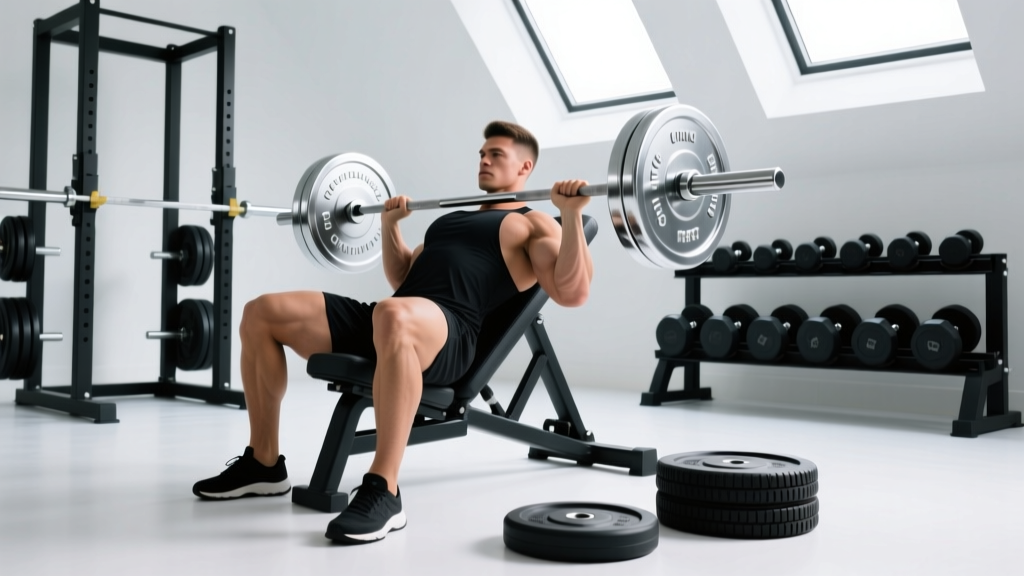
Seated Incline Two Arm Dumbbell Curls: Olympic vs Standard Plate Mistakes

Curl Bar vs Dumbbells: Bicep Gains & Olympic Knurling Guide