EZ Curl Bar vs Straight Bar & Shoulder Training with Dumbbells
Compare the EZ curl bar vs straight bar for bicep isolation, and discover why pairing them with shoulder training with dumbbells builds elite upper bodies.

The Biomechanics of the Curl: EZ vs. Straight Bar
When designing a comprehensive upper-body split, lifters often obsess over pressing volume while treating arm isolation as an afterthought. However, the debate between the EZ curl bar vs straight bar is rooted in deep biomechanical differences that dictate muscle fiber recruitment, joint stress, and long-term tendon health. Before you load up the sleeves, it is critical to understand how the geometry of the barbell alters the kinetic chain of the elbow and wrist joints.
Straight Bar: Peak Supination and Biceps Brachii Focus
The standard Olympic straight bar forces the forearms into full supination (palms facing directly upward). According to exercise biomechanics databases like ExRx, this fully supinated position places the biceps brachii in its most mechanically advantageous line of pull. The biceps brachii is not just an elbow flexor; it is a primary supinator of the forearm. By locking the wrists into a straight, fully supinated position, you maximize the activation of the short and long heads of the biceps.
However, this comes at a cost. The anatomical carrying angle of the human arm naturally wants to angle outward (valgus). Forcing the wrists into a perfectly straight alignment to match a rigid steel bar can create severe torque on the radioulnar joints and the medial epicondyle, frequently leading to golfer's elbow (medial epicondylitis) in heavy lifters over time.
EZ Curl Bar: Joint Preservation and Brachialis Recruitment
The EZ curl bar was engineered specifically to address the joint discomfort caused by straight bars. The cambered shaft features angled grips, typically set between 45 and 55 degrees. This semi-supinated grip aligns much closer to the body's natural carrying angle, drastically reducing valgus stress on the wrists and elbows.
Biomechanically, moving away from full supination slightly reduces the peak mechanical tension on the biceps brachii, shifting a greater percentage of the load onto the brachialis (the muscle sitting underneath the biceps that acts purely as an elbow flexor) and the brachioradialis (the primary forearm flexor). For lifters looking to build overall arm thickness and push through heavy curling plateaus without elbow pain, the EZ bar is often the superior tool.
| Biomechanical Variable | Straight Olympic Bar | Olympic EZ Curl Bar |
|---|---|---|
| Wrist Position | Full Supination (180°) | Semi-Supinated (45°-55°) |
| Primary Muscle Focus | Biceps Brachii (Peak Contraction) | Brachialis & Brachioradialis |
| Joint Stress (Wrists/Elbows) | High (Valgus Torque) | Low (Natural Carrying Angle) |
| Average Shaft Diameter | 28mm - 29mm | 25mm - 28mm |
| Max Load Capacity | 500+ lbs | 300 - 400 lbs (Sleeve dependent) |
2026 Gear Breakdown: Top Picks for the Home Gym
The market for specialty barbells has matured significantly. Here is how the top contenders stack up in 2026 regarding knurling, steel quality, and pricing.
- Rogue Fitness Curl Bar ($295): The gold standard for commercial and high-end home gyms. It features a 25.4mm shaft with Rogue's signature 'volcano' knurling, providing aggressive grip without tearing calluses. The internal bushing system allows for smooth rotation during heavy preacher curls, and the hard chrome finish resists corrosion indefinitely.
- Titan Fitness Olympic EZ Curl Bar ($149): The best budget-to-performance ratio on the market. While the knurling is slightly more passive and the chrome finish requires basic maintenance, the 28mm shaft and robust 350lb weight capacity make it an excellent workhorse for intermediate lifters.
- CAP Barbell Olympic Straight Bar ($45 - $60): If you are committed to the straight bar for strict, heavy bicep work, CAP offers an entry-level 28mm bar. Be warned: the knurling is notoriously sharp, and the lack of internal bearings means the sleeves do not spin freely, which can exacerbate wrist strain during heavy eccentric phases.
The Missing Link: Shoulder Training with Dumbbells
While the barbell debate dominates arm day, your anterior, lateral, and posterior deltoids require a completely different stimulus. This is where dedicated shoulder training with dumbbells becomes non-negotiable for serious hypertrophy and joint longevity.
Many lifters attempt to rely solely on the barbell overhead press (OHP) for shoulder development. While the OHP is a fantastic test of full-body strength and core stability, it is a suboptimal tool for isolated deltoid hypertrophy. The barbell locks your hands into a fixed, pronated position, forcing the humerus to track in a straight vertical line. For lifters with poor thoracic mobility or acromion space limitations, this fixed path frequently leads to shoulder impingement.
Expert Insight: The shoulder is a ball-and-socket joint designed for multi-planar movement. Forcing it into a rigid, fixed-path barbell press limits the natural converging path of the arms and restricts the scapula from freely upwardly rotating on the ribcage.
Why Dumbbells Win for Shoulder Health and Hypertrophy
The American Academy of Orthopaedic Surgeons (AAOS) emphasizes the importance of rotator cuff stabilization and free joint tracking in maintaining shoulder health. When you transition to shoulder training with dumbbells, you unlock three critical advantages:
- Converging Press Path: Dumbbells allow you to press up and slightly inward, matching the natural fiber orientation of the anterior deltoid and clavicular pec, resulting in a much stronger peak contraction at the top of the movement.
- Unilateral Stabilization: Each arm must independently stabilize the load, forcing the rotator cuff musculature (supraspinatus, infraspinatus, teres minor, subscapularis) to work overtime to keep the humeral head centered in the glenoid fossa.
- Grip Variability: You can seamlessly transition from a pronated grip (front delt focus) to a neutral grip (hammer press) to spare the AC joint and target the triceps and upper chest more heavily.
For home gym owners, investing in a high-quality adjustable set like the Nuobell 80lb Adjustable Dumbbells ($499/pair) or PowerBlock Elite USA ($429/pair) provides the exact micro-loading increments needed to progressively overload the deltoids without the massive footprint of a full dumbbell rack.
Programming: The Ultimate Arm & Shoulder Matrix
How do you combine the barbell isolation work with dumbbell shoulder mechanics into a single, cohesive session? Here is a 2026-tested hypertrophy block designed to maximize blood flow while protecting the connective tissue.
The Golden Triangle Routine:- Seated DB Shoulder Press (Neutral Grip): 3 sets x 8-10 reps. (Focus on the converging path and deep stretch at the bottom).
- Standing EZ Bar Curl (Outer Grips): 3 sets x 10-12 reps. (Keep elbows pinned to the ribs; let the semi-supinated grip save your wrists).
- DB Lateral Raises (Cuffed/Cable alternative if available): 4 sets x 12-15 reps. (Lead with the elbow to isolate the medial delt).
- Straight Bar Strict Curl (Light Load): 2 sets x 12-15 reps. (Use the straight bar only for the pump work at the end of the workout when the joints are fully lubricated and the ego is checked).
Frequently Asked Questions
Can I use an EZ curl bar for overhead presses?
While physically possible, it is highly discouraged. The angled grips of the EZ bar force the shoulders into an awkward degree of internal/external rotation depending on which grip you choose. This compromises the stability of the shoulder joint under heavy overhead loads and drastically increases the risk of a rotator cuff strain. Stick to dumbbells or a proper log/football bar for overhead work.
Which bar is better for lifters with tennis elbow?
If you suffer from lateral epicondylitis (tennis elbow), the straight bar is generally the worst offender due to the extreme stretch and supination torque placed on the forearm extensors. The EZ curl bar, particularly using the innermost, most neutral grips, will significantly reduce forearm extensor activation and allow you to continue training biceps pain-free.
How heavy should I go on dumbbell shoulder presses?
The deltoids respond exceptionally well to time under tension and metabolic stress rather than pure 1-rep max strength. Aim for a weight that allows you to control a 2-second eccentric (lowering) phase and pause for 1 second at the bottom stretch. For most intermediate male lifters, this falls in the range of 50lb to 75lb dumbbells per hand for working sets of 8-12 reps.
More gear to consider
All reviews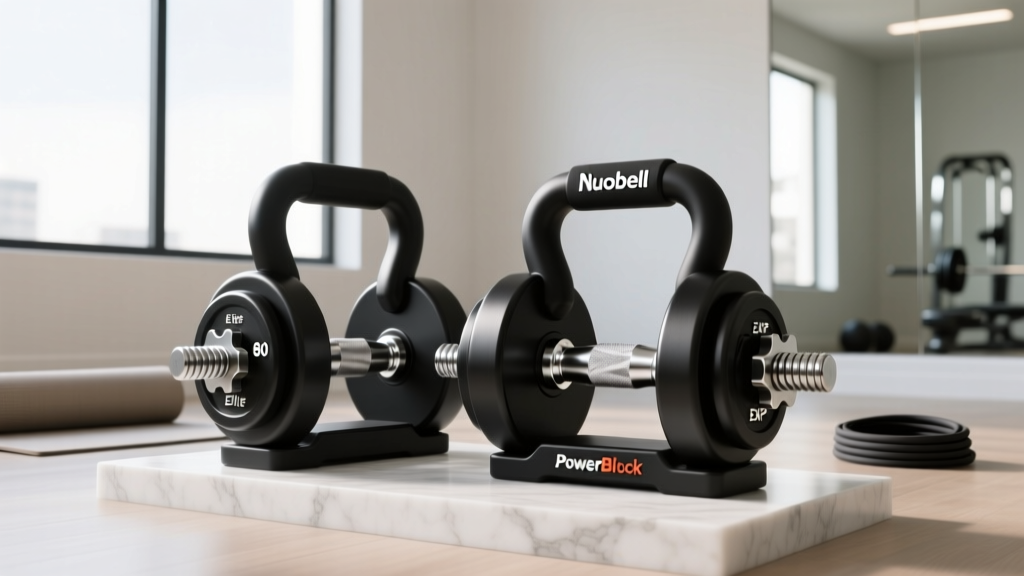
Best Adjustable Dumbbells for a Heavy Trap Dumbbell Workout (2026)

Olympic vs Standard Plates Guide: Dumbbell Press Works What Muscles?
Barbell Collar Comparison & Dumbbell Overhead Press Machine Setup
Cast Iron vs Competition Kettlebells vs Back and Biceps Workout Dumbbells
What Is a Dumbbell Row Using Loadable Plates? 2026 Market Trends