EZ Curl Bar vs Straight Bar Care & Dumbbell Raises Chest Tips
Compare EZ curl bar vs straight bar longevity. Learn maintenance care, rust prevention, and when to swap to dumbbell raises chest variations.

Structural Integrity: The Metallurgy of EZ Curl vs. Straight Bars
When evaluating free weight equipment for a home gym or commercial facility, the debate between an EZ curl bar and a straight barbell usually centers on wrist ergonomics and bicep activation. However, from a maintenance and longevity perspective, the structural differences between these two implements dictate entirely different care protocols, failure modes, and lifespan expectancies.
A standard Olympic straight bar is a continuous, solid shaft of spring steel, typically boasting a tensile strength between 190,000 and 215,000 PSI. Because there are no geometric interruptions in the shaft, stress is distributed evenly during heavy loading. Conversely, an EZ curl bar features multiple angled bends designed to alter grip mechanics. In metallurgy, these bends act as stress concentrators (or stress risers). Under heavy, repetitive loads, micro-fractures can initiate at the apex of these bends if the steel quality is subpar.
Premium manufacturers like Rogue Fitness address this by machining their Rogue Rackable Curl Bar from a single, solid piece of high-grade steel, completely eliminating weak welded joints. Budget EZ bars, however, often feature welded sleeves and lower-yield steel (under 120,000 PSI), making them highly susceptible to snapping at the bend or shearing at the sleeve weld during heavy preacher curls or skull crushers.
The Maintenance Matrix: Keeping Your Bars Rust-Free
Proper barbell maintenance is not just about aesthetics; it is about preserving the mechanical tolerances of the sleeves and the aggressive 'bite' of the knurling. According to BarBend's comprehensive barbell maintenance guide, environmental humidity and human sweat are the primary catalysts for oxidation.
Expert Tip: The Knurling Preservation RuleNever use a stainless steel wire brush on black oxide, bare steel, or zinc-plated barbells. The wire brush will strip the protective coating, exposing raw steel to immediate oxidation. Always use a stiff nylon brush paired with a light application of 3-IN-ONE oil to lift chalk and dead skin from the knurl grooves without damaging the finish.
Sleeve and Bushing Lubrication
Straight Olympic bars designed for Olympic weightlifting utilize needle bearings to allow the sleeves to spin rapidly during the snatch and clean. EZ curl bars, intended for slower, controlled hypertrophy movements, almost exclusively rely on bronze or brass bushings. Bushings require a different maintenance approach than bearings. While bearings need low-viscosity oils, bushings require higher-viscosity lubricants like WD-40 Specialist White Lithium Grease to maintain a smooth, friction-free rotation and prevent the dreaded 'sleeve squeak'.
Failure Modes and Edge Cases
Understanding how your equipment is most likely to fail allows you to perform preventative inspections. Below is a comparison of the structural vulnerabilities and expected lifespans across different barbell tiers.
| Feature | High-End Straight Bar | Premium EZ Curl Bar | Budget EZ Curl Bar |
|---|---|---|---|
| Tensile Strength | 190k - 215k PSI | 150k - 190k PSI | < 120k PSI |
| Sleeve Construction | Machined / Press-fit | Machined Solid Steel | Welded Joint |
| Rotational Mechanism | Needle Bearings | Bronze Bushings | Brass/Plastic Bushings |
| Primary Failure Point | End cap ejection / Snap ring failure | Bushing wear / Shaft bend | Weld shear at sleeve |
| Expected Lifespan | 10+ Years (Lifetime) | 5-8 Years | 1-2 Years |
Joint Health and Equipment Preservation: The Dumbbell Pivot
Equipment maintenance isn't just about the steel; it's about managing the biomechanical load on the lifter when equipment begins to degrade or when joint fatigue sets in. If your EZ curl bar's sleeve seizes due to neglected bushing care, or if you develop medial epicondylitis from repetitive fixed-angle curling, you must pivot your programming to preserve both your joints and your remaining gear.
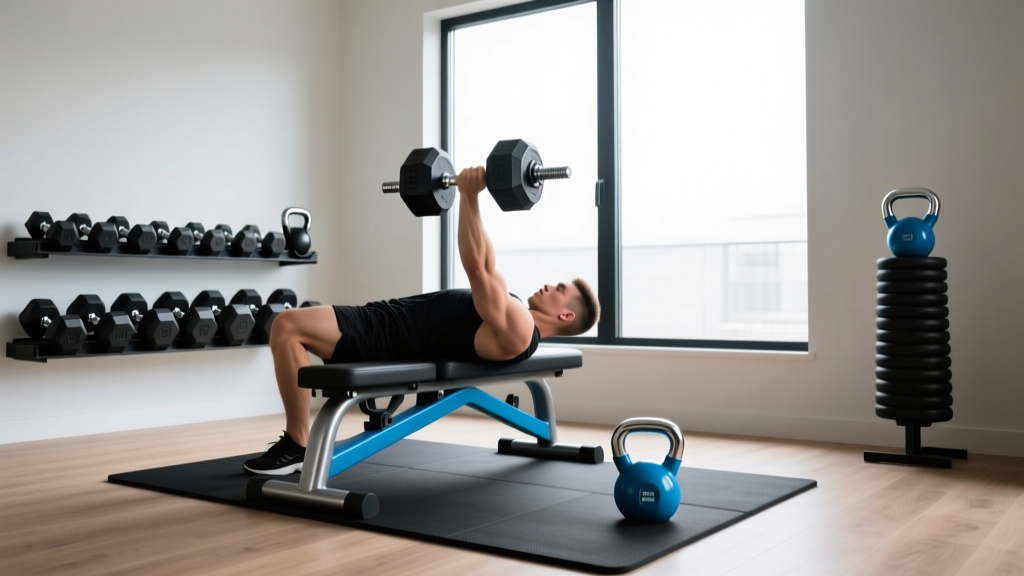
When your primary lifting equipment is sidelined for maintenance, programming must adapt intelligently. Integrating dumbbell raises chest routines and neutral-grip dumbbell curls allows you to bypass wrist supination limits and maintain anterior chain volume while your bars undergo sleeve reconstruction. Dumbbells offer independent rotational freedom, reducing the sheer force on the elbows that a rigid, poorly maintained EZ bar can exacerbate. Furthermore, swapping barbell skull crushers for dumbbell triceps extensions reduces the risk of a catastrophic barbell snap over your face—a rare but real edge case with heavily fatigued, low-tier EZ bars.
Cost vs. Longevity: Refurbishment and Replacement Economics
When a barbell fails, the decision to repair or replace depends on the initial build quality. Here is a breakdown of the real-world costs associated with barbell maintenance and replacement in the current market:
- Bushing/Bearing Replacement: If you have a high-end straight bar (e.g., Eleiko or Uesaka) and the needle bearings seize, sending it back to the manufacturer for a rebuild typically costs between $75 and $150, plus shipping. Attempting a DIY rebuild requires specialized snap-ring pliers and a hydraulic press, risking permanent shaft damage if done incorrectly.
- End Cap and Snap Ring Kits: For bars where the sleeve end cap has popped off due to a broken snap ring, replacement kits (including new O-rings, snap rings, and end caps) cost roughly $15 to $30 from the manufacturer.
- Complete Replacement: If a budget EZ curl bar ($80-$120) snaps at the weld, it is entirely unrepairable and becomes scrap metal. Upgrading to a Titan Fitness Olympic EZ Curl Bar ($150) or the aforementioned Rogue Rackable Curl Bar ($325) represents a one-time capital expenditure that effectively eliminates the risk of weld-shear failure.
Step-by-Step Monthly Maintenance Routine
To maximize the lifespan of both your straight bars and EZ curl bars, implement this 15-minute monthly maintenance protocol:
- Dry Brush the Knurling: Use a stiff nylon brush to vigorously scrub the knurling in multiple directions. This dislodges dried sweat, magnesium carbonate (chalk), and dead skin cells that trap moisture against the steel.
- Apply Solvent/Oil: Apply 3 to 4 drops of 3-IN-ONE oil or a specialized barbell cleaner directly onto the brush (not the bar, to prevent oil from reaching the sleeves and attracting dust). Scrub the knurling again.
- Wipe Down: Use a clean, lint-free microfiber cloth to wipe away the dissolved grime and excess oil. The knurling should feel tacky, not slippery.
- Inspect the Sleeves: Spin the sleeves by hand. They should spin freely and come to a gradual, smooth stop. If they stop abruptly or grind, the internal bushings or bearings are contaminated.
- Lubricate the Bushings (EZ Bars): If your EZ curl bar sleeve squeaks, apply a tiny amount of white lithium grease to the seam where the sleeve meets the shaft, spinning the sleeve to work the grease into the bronze bushing.
- Check the Hardware: Inspect the end caps and snap rings. If you see rust weeping from under the end cap, moisture has breached the sleeve, requiring immediate disassembly and internal cleaning.
Final Thoughts on Equipment Stewardship
The choice between an EZ curl bar and a straight bar extends far beyond the muscle pump. Straight bars offer unparalleled structural longevity and ease of maintenance, while EZ curl bars provide necessary ergonomic relief at the cost of complex stress points and bushing upkeep. By understanding the metallurgy of your equipment, adhering to strict cleaning protocols, and knowing when to pivot to dumbbell variations to spare both your joints and your gear, you ensure that your free weight investment lasts for decades, not just seasons.
More gear to consider
All reviews
2026 Trends: 10 Pound Dumbbell vs Cast Iron & Comp Kettlebells
Point and Recovery Compared: Precision, Performance, and Real-World Tradeoffs in Industrial Weighing Systems

Wrist Dumbbell Exercises and Barbell Collar Clamp Troubleshooting

Barbell Collar Types Compared & Ab Exercises Using Dumbbells
Dumbbell Nan Kilo Moteru? 2026 Adjustable Dumbbell Guide