EZ Curl Bar vs Straight Bar: Layouts and Proper Dumbbell Row Form
Compare EZ curl bar vs straight bar for small home gyms. Discover space-saving storage layouts and master proper dumbbell row form for tight spaces.

The Spatial Reality: Designing a Sub-150 Square Foot Home Gym
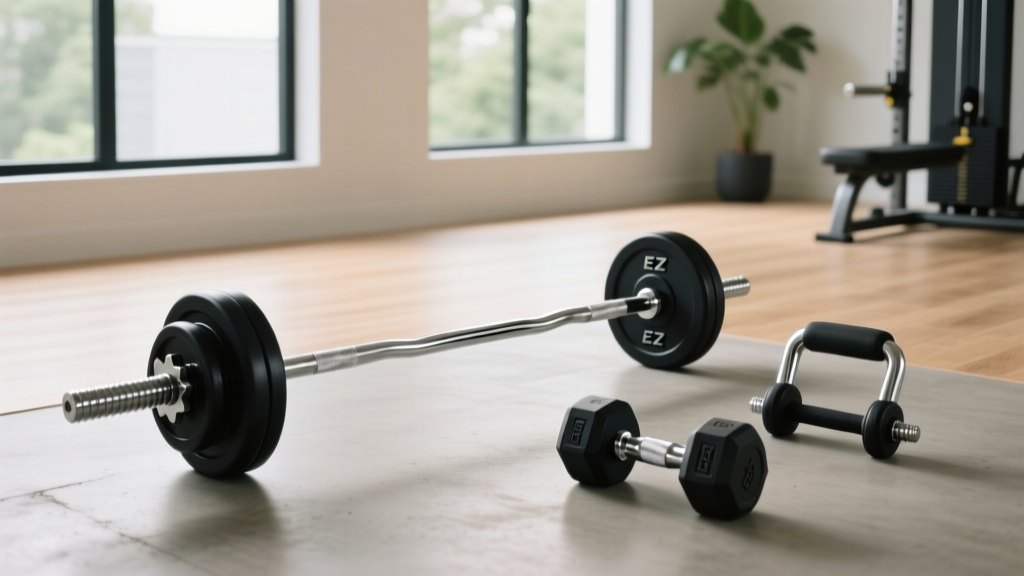
When engineering a compact home gym in a spare bedroom, garage corner, or apartment alcove, every single inch of clearance dictates your equipment roster. The debate between an EZ curl bar vs straight bar is usually framed around bicep activation and wrist ergonomics. However, from a space optimization and layout design perspective, this choice fundamentally alters your gym's functional footprint. If you are working with a 10x10 foot area or smaller, the physical dimensions of your barbells will either unlock versatile training or create a claustrophobic hazard zone.
In this guide, we break down the exact spatial mathematics of Olympic straight bars versus Olympic EZ curl bars, explore vertical and horizontal storage layouts, and reveal how to utilize proper dumbbell row form as the ultimate space-saving back exercise when a barbell setup simply demands too much square footage.
Dimensional Showdown: Clearance and Storage Metrics
To understand the layout implications, we must look beyond the bar's weight and examine the total operational footprint when loaded with standard 45-pound bumper plates (which typically measure 17.7 inches in diameter).
| Metric | Standard Olympic Straight Bar | Olympic EZ Curl Bar |
|---|---|---|
| Bar Length | 86.75 inches (e.g., Rogue Ohio Bar) | 47.5 inches (e.g., Rogue Curl Bar) |
| Loaded Width (w/ 45lb Plates) | ~107 inches (nearly 9 feet) | ~68 inches (5.6 feet) |
| Minimum Safe Room Width | 10 feet (to avoid wall strikes) | 7 feet |
| Horizontal Wall Storage | Requires 7.5 ft of uninterrupted wall | Fits on standard 4 ft wall mounts |
| Average 2026 Market Price | $285 - $325 | $215 - $250 |
The Straight Bar Spatial Drawback
A standard 7-foot barbell requires a minimum of 107 inches of lateral clearance when loaded. If your designated workout space is in a room that is only 8 or 9 feet wide, a straight barbell becomes functionally obsolete for bilateral movements like bent-over barbell rows or deadlifts. You will constantly strike the drywall or drywall anchors with your plates, creating a safety hazard and damaging your property. According to BarBend's equipment analysis, while the straight bar remains the gold standard for heavy compound lifts, its spatial demands make it a poor primary choice for micro-gyms.
The EZ Curl Bar Advantage in Tight Layouts
The EZ curl bar cuts the operational width by nearly 40 inches. This allows lifters in narrow galley-style rooms or apartment gyms to perform curls, skull crushers, and front squats without spatial anxiety. Furthermore, storing an EZ bar horizontally on a wall-mounted rack requires less than 4 feet of wall space, leaving room for mirrors, whiteboards, or vertical dumbbell racks.
The Back-Training Dilemma in Compact Spaces
Here is the primary failure mode of choosing an EZ curl bar to save space: you lose the ability to perform heavy, bilateral bent-over barbell rows. The angled grips of an EZ bar place the wrists in a semi-supinated position that is biomechanically inefficient and potentially injurious for heavy rowing.
If your room width prohibits a straight barbell, and your EZ bar prohibits heavy bilateral rows, how do you build a thick, wide back in a 6x6 foot footprint? The answer lies in transitioning to unilateral dumbbell work. However, traditional bench-supported rows require a 3-foot bench and a 4-foot swing radius. In a space-optimized layout, your bench is likely folded away or pushed flush against a wall.
Space-Saving Gear Tip: As of 2026, adjustable dumbbells like the Nuobell 80 or PowerBlock Elite offer the ultimate spatial hack. A single pair of Nuobells replaces 15 pairs of fixed hex dumbbells, condensing 400 square inches of storage space into just 130 square inches. Pair these with your EZ curl bar for a complete upper-body arsenal that fits in a closet.Mastering Proper Dumbbell Row Form in a Corner Layout
When floor space is at a premium, you must abandon the traditional 3-point bench stance and adopt the staggered-stance (tripod) dumbbell row. This variation allows you to utilize a dead corner of your room, requiring only a 3x3 foot operational footprint. Mastering proper dumbbell row form in this stance requires strict attention to biomechanics to ensure maximum latissimus dorsi and rhomboid activation without a bench.
Step-by-Step Biomechanics for the Staggered Row
- The Base of Support: Stand facing a corner or wall at a 45-degree angle. Step forward with your non-working leg (e.g., left leg if rowing with the right arm). Plant your lead foot flat on the floor, and rest on the toe of your trailing foot. This staggered base prevents hip rotation during the pull.
- The Hinge and Torso Angle: Push your hips back and hinge at the waist until your torso is at a 45 to 60-degree angle relative to the floor. Rest your non-working forearm lightly on your lead thigh or knee for stability. Keep your spine strictly neutral; do not round the thoracic region.
- The Pull Path: This is where most lifters fail. Do not pull the dumbbell straight up toward your armpit. Instead, drive your elbow back and slightly inward, pulling the dumbbell toward your hip pocket. This specific trajectory aligns the resistance with the lower fibers of the lats.
- Scapular Kinematics: At the bottom of the movement, allow the weight to pull your scapula into protraction (a deep stretch). At the top of the pull, drive the scapula into forceful retraction, holding for a one-second isometric pause before the eccentric descent.
For a deeper look into the kinetic chain and muscle activation patterns of this movement, the ExRx biomechanics database remains the gold standard reference for exercise kinesiologists and strength coaches.
Storage Layouts: Maximizing Vertical Real Estate
Once you have selected your barbell and dumbbell arsenal, the physical layout of your storage dictates your daily workout flow. In small spaces, floor-based weight trees are spatial disasters, creating tripping hazards and eating up valuable square footage.
- Vertical Barbell Hangers: If you opt for the straight bar despite the clearance issues, use a vertical barbell hanger anchored to a wall stud. This reduces the bar's storage footprint from 86 inches down to a mere 9-inch circular base on the floor.
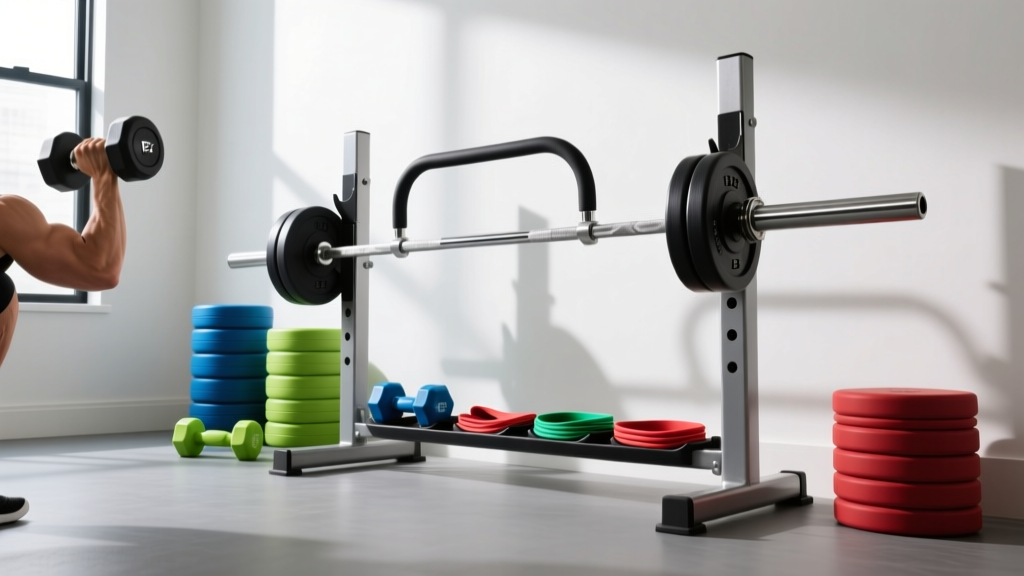
- Wall-Mounted EZ Bar Racks: For the EZ curl bar, utilize a dual-pronged horizontal wall mount placed at chest height. This doubles as a visual display and keeps the bar out of the 'drop zone' where heavy dumbbells are set down.
- Under-Bench Dumbbell Trays: If you use an adjustable flat bench, ensure it features a slide-out dumbbell tray or store your adjustable dumbbells directly beneath the bench frame when folded flat.
'In micro-gym design, the floor is lava. Every piece of equipment must either be in your hands, mounted to a wall, or suspended vertically. Horizontal storage is the enemy of the compact layout.' - Home Gym Layout Principles
Frequently Asked Questions
Can I do deadlifts with an EZ curl bar to save space?
While technically possible with light-to-moderate weights, it is highly discouraged. The angled grips alter the mechanics of the hinge, and the shorter sleeve length limits plate capacity. Furthermore, the knurling on most EZ bars is aggressive and designed for the hands, not the shins, leading to severe skin tearing during the concentric phase of a deadlift.
Are adjustable dumbbells safe for heavy staggered-stance rows?
Yes, provided you invest in high-tier models. According to Garage Gym Reviews adjustable dumbbell roundup, modern selectorized dumbbells utilizing steel-pin locking mechanisms (like the PowerBlock Elite or Ironmaster Quick-Lock) can safely withstand the micro-drops and momentum shifts inherent in heavy unilateral rowing. Avoid cheap dial-adjust models with plastic internal casings for heavy rowing, as the internal gears can strip if the dumbbell is set down too forcefully.
What is the best wall anchor for heavy barbell storage?
Never use standard drywall anchors for barbell storage. A loaded Olympic bar can easily exceed 200 lbs of dynamic force when being un-racked. Always use 3/8-inch lag screws driven directly into the center of a wooden wall stud, or use toggle bolts rated for 300+ lbs if you are mounting to concrete or cinderblock walls.
More gear to consider
All reviews
Cast Iron vs Competition Kettlebells: The Red Dumbbell Trend

Best Neoprene Dumbbells for Incline Dumbbell Flyes (2026)

20 lb Adjustable Dumbbell Review & Troubleshooting Guide

Space-Saving Gym Layout: Kettlebells & Dumbbell Chest and Arm Workout

Power Rack vs Squat Rack vs Stand: Setup for Dumbbell Deadlifts