2026 Trends: Loadable Dumbbells & Stability Ball Dumbbell Chest Press
Explore 2026 trends for loadable dumbbells with interchangeable plates, focusing on safety and biomechanics for the stability ball dumbbell chest press.

The 2026 Market Shift: Why Loadable Dumbbells Are Surging
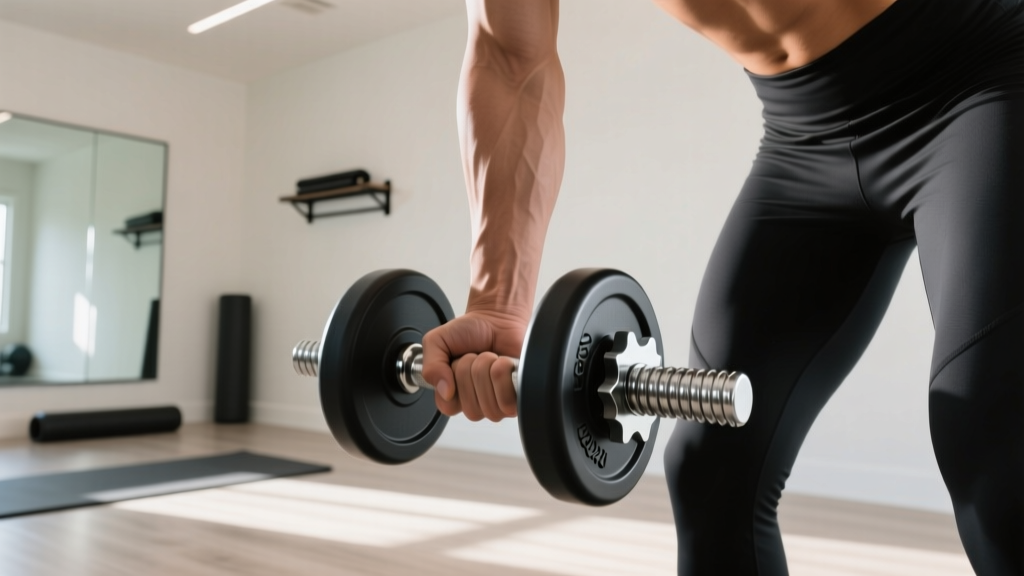
The home fitness equipment market has undergone a significant transformation in 2026, driven by a demand for space-efficient, cost-effective strength training solutions. While fixed-weight rubber hex dumbbells remain a staple in commercial facilities, the residential and boutique studio sectors are heavily pivoting toward the loadable dumbbell with interchangeable plates. This shift is not merely about storage; it is about economic efficiency. With the average cost of fixed dumbbells hovering between $2.50 and $4.00 per pound, a high-quality loadable handle paired with standard iron or urethane plates drops the cost-per-pound to roughly $0.85.
However, as athletes and coaches integrate these modular tools into complex, multi-planar movements, specific biomechanical challenges arise. One of the most demanding and revealing tests of a loadable dumbbell's engineering is the stability ball dumbbell chest press. This movement demands extreme core stabilization, symmetrical weight distribution, and flawless equipment integrity. In this 2026 trend report, we analyze the intersection of loadable dumbbell technology and unstable surface training, providing a comprehensive framework for safe and effective implementation.
Biomechanics of the Stability Ball Dumbbell Chest Press
Performing a chest press on an unstable surface fundamentally alters the kinetic chain. According to research published in the National Institutes of Health, executing a bench press on a stability ball significantly increases the electromyographic (EMG) activation of the core musculature, particularly the rectus abdominis and transverse abdominis, while slightly decreasing the maximal force output of the pectoralis major compared to a stable bench.
When you introduce a loadable dumbbell with interchangeable plates into this equation, the physics become highly nuanced:
- Center of Mass (CoM) Variability: Unlike a fixed dumbbell where the CoM is permanently centered in the palm, a loadable handle's CoM shifts based on the diameter of the plates used. Loading a 10-pound iron plate (small diameter) versus a 10-pound bumper plate (large diameter) changes the rotational inertia of the dumbbell, forcing the rotator cuff to work harder to stabilize the load at the bottom of the eccentric phase.
- Sleeve Rotation and Wrist Torque: High-end loadable dumbbells feature rotating Olympic sleeves. During the stability ball dumbbell chest press, as the lifter naturally pronates or supinates slightly to find a comfortable groove, a rotating sleeve prevents the plates' momentum from transferring torsional stress directly into the lifter's wrists and elbows.
Physics Callout: The Pendulum Effect
When using elongated loadable handles (typically 20+ inches in total length) for the stability ball dumbbell chest press, the plates act as a pendulum at the ends of the lever arm. If the lifter's stabilizing muscles fatigue, the elongated sleeve amplifies the wobble effect, making the movement exponentially more difficult to control than a compact, block-style adjustable dumbbell.
Equipment Matrix: Top Loadable Handles for Unstable Pressing
Not all loadable dumbbells are created equal, especially when subjected to the destabilizing forces of a Swiss ball. Based on 2026 market availability, sleeve tolerances, and knurling depth, here is how the top contenders compare for this specific application.
| Brand & Model | Sleeve Type | Handle Length | 2026 Price (Pair) | Unstable Surface Rating |
|---|---|---|---|---|
| Rogue Loadable Dumbbell Handles | Olympic (Rotating) | 20.5 inches | $290.00 | Excellent (High stability) |
| Titan Fitness Loadable Handles | Olympic (Bushing) | 20.0 inches | $179.00 | Good (Slight sleeve play) |
| CAP Barbell Olympic Handle | Olympic (Static) | 21.0 inches | $85.00 | Poor (High wrist torque) |
As noted by equipment analysts at Garage Gym Reviews, the rotating sleeve mechanism found in premium models like Rogue is not just a luxury; it is a critical safety feature for pressing movements where the wrist angle naturally fluctuates under load.
Critical Failure Modes and Safety Protocols
The stability ball dumbbell chest press carries an inherent risk: if the lifter loses balance, they must safely dump the weights to the floor. When using a loadable dumbbell with interchangeable plates, a catastrophic equipment failure during this dump phase can result in severe injury.
"The greatest risk in unstable surface pressing with modular weights is not the ball bursting, but collar slippage. If a standard spring collar fails at the bottom of the eccentric phase, the plates slide off the sleeve, instantly creating a 100% asymmetrical load that can tear the pectoral tendon or dislocate the shoulder."
— Biomechanics Safety Guidelines, American Council on Exercise (ACE)
Mandatory Collar Systems for 2026
To mitigate the risk of plate migration during the stability ball dumbbell chest press, traditional spring clips are entirely insufficient. You must utilize locking collars that grip the sleeve via mechanical pressure or high-friction polymers.
- Lock-Jaw Pro Dumbbell Collars: Utilizing a jaw-clamp mechanism, these provide approximately 400 lbs of clamping force per collar. They are the gold standard for loadable handles on unstable surfaces.
- Rogue HG 2.0 Collars: Featuring a high-density urethane body and a stainless steel clamping mechanism, these collars absorb the vibration of the plates slamming together during the concentric press, preventing micro-slippage.
- Eleiko Weightlifting Clamps: While expensive, their internal rubber gaskets ensure zero lateral movement, even when the dumbbell is tilted at a 45-degree angle during a stabilizing correction.
Programming Framework for Core-Integrated Hypertrophy
Integrating the loadable dumbbell into your stability ball dumbbell chest press routine requires a shift in programming logic. Because the primary limiting factor is often core stability and shoulder stabilization rather than absolute pectoral strength, traditional 1-rep max (1RM) testing is contraindicated and dangerous.
Recommended 2026 Hypertrophy Protocol
- Rep Range: 8 to 12 repetitions per set.
- Tempo: 3-1-1-0 (3 seconds eccentric, 1 second pause at the bottom to challenge stabilization, 1 second concentric, 0 second pause at the top).
- Rest Periods: 90 to 120 seconds to allow central nervous system (CNS) recovery from the high stabilizer demand.
- Ball Sizing: Ensure the stability ball is properly inflated. When seated, the lifter's hips should be slightly below the knees to create a slight decline, which naturally supports the thoracic spine during the press.
Micro-Loading for Precision Progression
One of the most significant advantages of the loadable dumbbell with interchangeable plates over fixed dumbbells is the ability to micro-load. The stability ball dumbbell chest press is highly sensitive to weight jumps. Moving from a 50 lb to a 55 lb fixed dumbbell (a 10% increase) often breaks the lifter's stabilization mechanics, leading to compensatory arching of the lower back off the ball.
By utilizing fractional plates (e.g., 0.5 lb or 1 lb urethane change plates), lifters can increase the load by just 1 to 2 lbs per week. This granular progression allows the deep stabilizer muscles of the rotator cuff and the core to adapt at the same rate as the prime movers, ensuring long-term, injury-free hypertrophy.
Market Forecast and Final Verdict
As we move deeper into 2026, the market for loadable dumbbells with interchangeable plates will continue to expand, driven by innovations in sleeve tolerances and compact collar designs. For athletes committed to functional, core-integrated training, the stability ball dumbbell chest press remains a premier movement for developing athletic pressing power. However, the efficacy and safety of this exercise are entirely dependent on the quality of the loadable handles and the securing mechanisms used. Investing in premium, rotating-sleeve handles and mechanical locking collars is not optional—it is a biomechanical necessity for anyone serious about unstable surface training.
More gear to consider
All reviews
How Do You Spell Dumbbell? Barbell Collar Types Guide
Power Rack vs Squat Stand for Various Exercises with Dumbbells
Collar Guide: Bench Press & Chest Muscle Exercises with Dumbbells
Beyond a Picture of Dumbbells: Cast Iron vs Competition Kettlebells
2026 Adjustable Dumbbell Review: Standing Single Arm Dumbbell Row