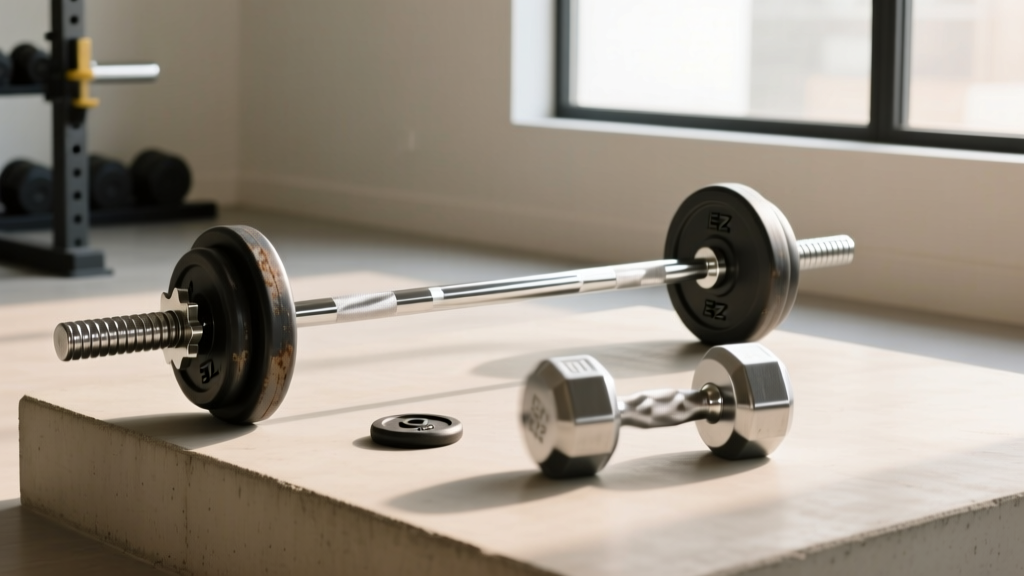
EZ vs Straight Bar Maintenance & One Arm Dumbbell Snatch Tips
Compare EZ curl bar vs straight bar longevity and maintenance. Plus, gear care tips for explosive moves like the one arm dumbbell snatch.

The Metallurgy of Maintenance: EZ Curl Bars vs. Straight Shafts
When evaluating free weight longevity, the structural geometry of your barbells dictates their maintenance schedule. A standard Olympic straight bar, such as the Rogue Ohio Bar (retailing around $345 in 2026), features a continuous 190,000 PSI tensile strength shaft. This uniform geometry distributes mechanical stress evenly during heavy compound lifts. Conversely, an EZ curl bar introduces multiple angled bends into the shaft. While these angles reduce wrist supination strain during curls, they create structural stress risers—specifically at the weld points where the shaft meets the sleeve.
From a maintenance perspective, the increased surface area and crevices of an EZ curl bar make it significantly more susceptible to sweat accumulation and oxidation. Budget EZ bars, like the CAP Barbell Super Curl Bar ($65), often utilize lower-grade chrome plating that micro-fractures under heavy torque, allowing moisture to reach the underlying steel core. Straight bars with premium coatings (like Cerakote or high-quality hard chrome) resist this penetration, but they require their own specialized care routines to maintain sleeve rotation and knurling integrity.
CRITICAL WARNING: Never use WD-40 on barbell sleeves. WD-40 is a solvent and water displacer, not a long-term lubricant. It will strip the factory grease from your bushings and bearings, leading to metal-on-metal grinding and permanent sleeve seizure within weeks.Sleeve Mechanics and Bushing Diagnostics
The sleeve assembly is where straight bars and EZ curl bars diverge most drastically in maintenance needs. High-end straight bars utilize either bronze bushings (for slow, heavy lifts) or needle bearings (for Olympic weightlifting). These components require periodic lubrication to prevent the accumulation of bronze dust—a fine, abrasive particulate that accelerates shaft wear.
EZ curl bars, designed for slower, controlled isolation movements, almost exclusively use basic brass or composite bushings. Because the sleeves are shorter and the load capacity is lower (rarely exceeding 300 lbs safely), the rotational force is minimized. However, the angled shaft of an EZ bar makes vertical storage problematic; gravity causes sleeve grease to pool at the lowest bend, starving the upper bushing of lubrication. Always store EZ curl bars horizontally on a rack to ensure even grease distribution across the sleeve interior.
The Chalk Factor: Explosive Lifts and Gear Stress
Equipment maintenance does not happen in a vacuum; it is directly tied to your programming. When athletes program high-velocity, grip-taxing movements like the one arm dumbbell snatch, the extreme unilateral grip demand necessitates heavy doses of magnesium carbonate chalk. While this chalk saves your grip on the dumbbell, the excess particulate inevitably becomes airborne and settles into the knurling of your nearby straight bars and EZ curl bars.
Chalk is highly hygroscopic—it pulls moisture from the air and traps it against the steel shaft. If you are performing the one arm dumbbell snatch in the same rack zone where your straight bar is stored, you must increase your knurling cleaning frequency. The combination of chalk dust and ambient humidity creates a mildly acidic paste that eats through black zinc and bare steel finishes in a matter of months, leading to irreversible pitting.
Knurling Extraction and Coating Preservation
The knurling pattern acts as a dirt trap. Dead skin, sebum, and chalk compact into the diamond grooves, dulling the grip and accelerating corrosion. The tool you use to clean this knurling must be matched to your bar's specific coating.
| Coating Type | Oxidation Risk | Required Brush | Maintenance Frequency |
|---|---|---|---|
| Bare Steel | Extreme | Stainless Steel Wire | Daily / Post-Workout |
| Black Zinc | High | Nylon / Brass | Weekly |
| Hard Chrome | Low | Brass / Nylon | Bi-Weekly |
| Cerakote (Ceramic) | Minimal | Nylon Only | Monthly |
Using a stainless steel or stiff brass brush on a Cerakote or black zinc straight bar will strip the protective layer, exposing the raw steel beneath. For modern coated bars, a stiff nylon brush combined with a light application of 3-in-One oil is the industry standard for safe, effective knurling extraction.
Step-by-Step Monthly Maintenance Protocol
To maximize the lifespan of both your straight bars and EZ curl bars, implement this standardized monthly maintenance routine. This protocol aligns with the Eleiko official care guidelines for premium gym equipment preservation.
- Surface Wipe: Use a microfiber cloth dampened with a mild, non-abrasive disinfectant (avoid bleach or ammonia-based cleaners, which degrade zinc and chrome) to wipe down the entire shaft and sleeves.
- Knurling Scrub: Apply 4-5 drops of 3-in-One oil directly onto the knurling. Scrub vigorously with a nylon brush in multiple directions to dislodge compacted chalk and skin cells.
- Residue Removal: Wipe the shaft completely dry with a clean microfiber towel. Leaving excess oil on the shaft will attract dust and create a slippery surface for your next lift.
- Sleeve Lubrication: Stand the bar vertically (straight bars only). Apply 2-3 drops of 3-in-One oil or synthetic barbell oil directly into the seam where the sleeve meets the shaft.
- Rotation Cycle: Rotate the sleeve 50 times in each direction to work the oil down into the bushings or bearings. Wipe away any excess oil that seeps out of the seam.
Expert Insight: 'The longevity of a barbell is rarely determined by the weight it lifts, but by the environment it rests in. A $400 Olympic bar left in a 70% humidity garage will degrade faster than a $150 bar kept in a climate-controlled facility.' — Strength & Conditioning Equipment Management Review, 2025.
Storage Environments and Impact Mitigation
Beyond chemical maintenance, physical storage dictates structural longevity. Dropping an EZ curl bar—even with bumper plates—will almost certainly bend the shaft or shatter the internal snap rings, as the angled geometry cannot absorb vertical shockwaves. Straight Olympic bars are engineered for drops, but only when paired with calibrated bumper plates on proper drop pads.
Furthermore, if your programming includes heavy unilateral work like snatches or jerks, ensure your dumbbells and barbells are stored on separate tiers. The urethane coating on premium dumbbells can transfer scuff marks and chemical residues to bare steel barbell shafts if they are haphazardly stacked together on the same rack tier. Maintain a 40-50% relative humidity in your training space, and your free weight investment will easily survive a decade of heavy, chalk-laden use.
More gear to consider
All reviews
Beyond the 30 Min Dumbbell Workout: Barbell Collar Guide

Barbell Collars: Safe Setup for Back Exercises with Dumbbells

Beyond Dumbbell Training for Beginners: Barbell Collars vs Clamps

2026 Market Trends: EZ Curl Bar vs Straight Bar & Dumbbell Bench Press
Barbell Clamp Guide: Why a Dumbbell Drawing is Easy for Workout Logs
