EZ vs Straight Bar: Compact Biceps and Triceps Workout with Dumbbells
Optimize your home gym layout. Compare EZ curl vs straight bar dimensions, storage, and biomechanics to enhance your arm training routine.

The Home Gym Footprint Dilemma: Bars vs. Dumbbells
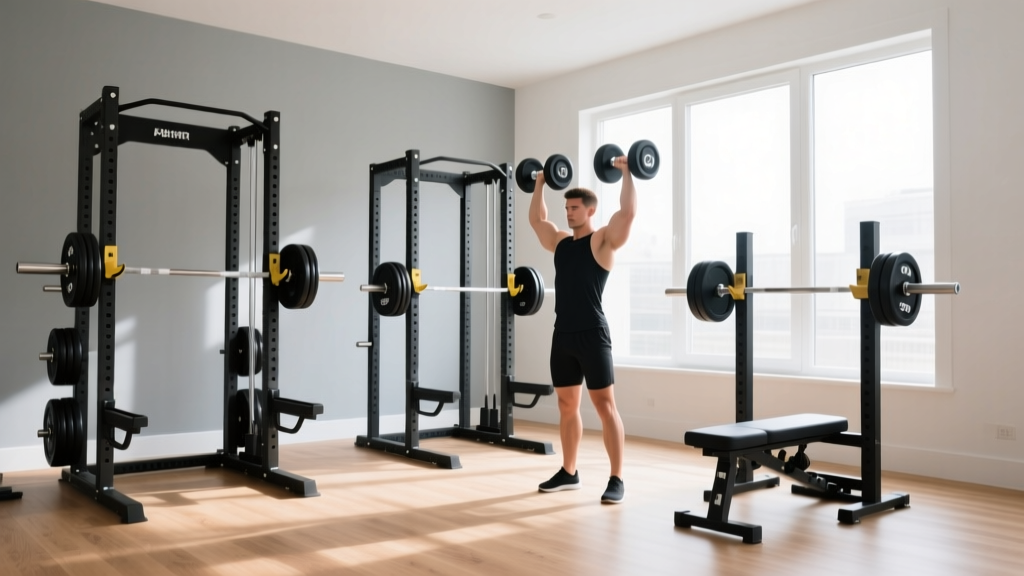
Designing a functional home gym in a limited square footage environment requires meticulous spatial planning. In 2026, the trend of micro-gyms and converted apartment spaces means lifters must maximize every inch of their floor plan. Many athletes build their foundational arm routines around a strict biceps and triceps workout with dumbbells, utilizing space-saving adjustable sets like the Nuobell 80s or PowerBlock Elite EXP. However, to break through hypertrophy plateaus, integrating a barbell is often necessary. This introduces a critical layout challenge: choosing between a standard Olympic straight bar and an EZ curl bar.
While a dedicated biceps and triceps workout with dumbbells offers incredible versatility and requires minimal lateral clearance, adding a barbell fundamentally changes the spatial math of your training zone. The decision between an EZ bar and a straight bar is not just about wrist ergonomics; it is a structural decision that impacts your gym layout, storage solutions, and movement clearance. Below, we break down the exact dimensions, spatial requirements, and layout strategies for integrating these bars into compact training environments.
Dimensional Breakdown: EZ Curl Bar vs. Straight Bar
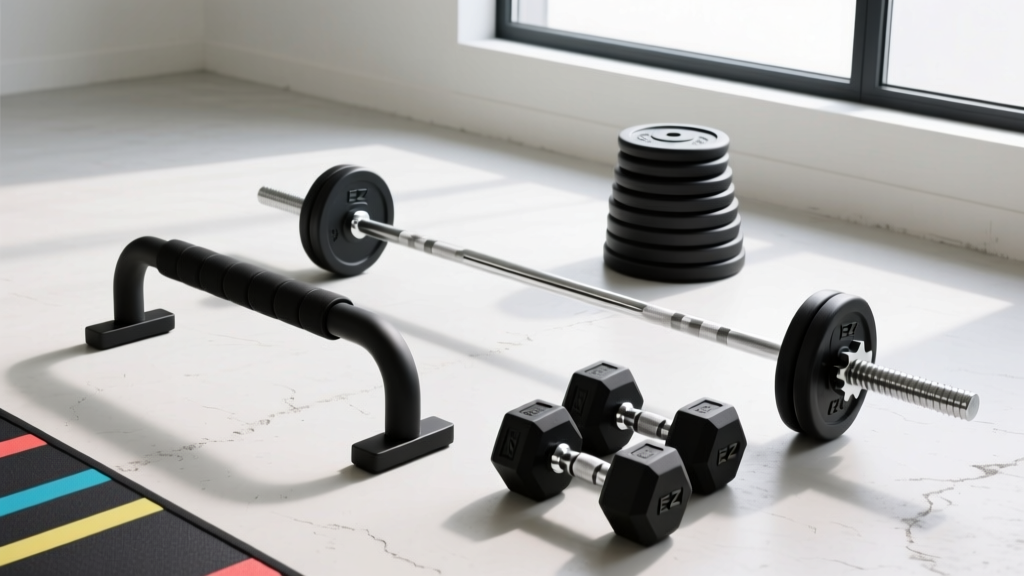
To optimize your gym layout, you must first understand the physical footprint of the equipment. The standard Olympic straight bar is a massive implement compared to the specialized EZ curl bar. Understanding these measurements is vital when planning the clearance needed for your training zone.
| Feature | Standard Olympic Straight Bar | Olympic EZ Curl Bar |
|---|---|---|
| Total Length | 84 to 86 inches (7 ft+) | 47 to 52 inches |
| Shaft Length | 51.5 inches | 25 to 28 inches |
| Sleeve Length | 16.3 inches (per side) | 10 inches (per side) |
| Bar Weight | 44 to 45 lbs (20 kg) | 18 to 25 lbs (varies by brand) |
| Rack Compatibility | Requires 48"+ rack width + overhang | Fits entirely inside standard 48" racks |
The Spatial Reality of the Straight Bar
A standard 7-foot Olympic bar requires a minimum lateral clearance of 90 inches to safely load and unload bumper plates without scraping your drywall. If your power rack is positioned against a wall, you must leave at least 12 inches of clearance on both sides of the rack to slide 45-pound plates onto the sleeves. In a 10x10 foot garage gym, this lateral requirement severely limits where you can place your squat stand or power rack.
The Compact Advantage of the EZ Curl Bar
The EZ curl bar is a spatial game-changer. At roughly 47 inches long, it fits completely inside the 49-inch interior width of standard power racks like the Rogue SML-2 or Titan T3. This means you can perform rack pulls, close-grip bench presses, and skull crushers without the bar sleeves protruding past the uprights. For lifters transitioning from a biceps and triceps workout with dumbbells to barbell isolation work, the EZ bar maintains the 'contained' footprint they are used to.
Layout Design: Integrating Bars into a Dumbbell-Centric Zone
When your primary arm training consists of a biceps and triceps workout with dumbbells, your layout is likely optimized for vertical movement and minimal floor clutter. Introducing a barbell requires dedicated storage solutions that do not impede your primary training zone.
Layout Warning: Vertical Storage ClearancesMany space-conscious lifters opt for vertical barbell storage towers to save wall space. However, a standard 7-foot straight bar stored vertically requires an 86-inch vertical clearance. If your ceiling is a standard 8 feet (96 inches), you only have 10 inches of overhead clearance to lift the bar out of the rack. An EZ curl bar, requiring only 47 to 52 inches of vertical space, can be easily stored on a low-profile horizontal wall mount or tucked under a weight bench, preserving your overhead clearance for pull-up rigs.
Horizontal vs. Vertical Wall Mounts
For the straight bar, a horizontal wall-mounted hanger (such as the Rogue Monster Utility Wall Mount) is mandatory in rooms with standard ceilings. You must mount this at least 40 inches off the ground to allow clearance for loading plates. Conversely, the EZ curl bar can be stored on a simple dual-hook wall bracket placed just 12 inches off the floor, keeping it out of the way of your dumbbell deadlifts and lunges.
Biomechanics Meets Spatial Constraints
According to kinesiology principles outlined by the ExRx exercise directory, grip width and wrist supination drastically alter muscle recruitment and spatial requirements. This is where biomechanics directly intersect with your gym layout.
- Straight Bar Curls (Wide Grip): Requires full supination and a wider grip. Spatially, your elbows will naturally flare slightly, requiring a wider personal footprint. If you are training in a narrow hallway gym or a tight corner setup, the wide elbow flare of a straight bar curl might cause your elbows to clip adjacent walls or equipment racks.
- EZ Bar Curls (Angled Grip): The angled grips place the wrists in a semi-supinated position. Biomechanically, this encourages a tucked-elbow posture. Spatially, this means your movement pattern is highly vertical and contained within the width of your own torso. It is vastly superior for tight, narrow training lanes.
- Triceps Skull Crushers: When performing lying triceps extensions, a straight bar requires significant lateral stabilization. An EZ bar allows you to use the inner angled grips, keeping the weight stacked directly over your elbows, reducing the lateral sway and minimizing the risk of striking a nearby wall or bench frame.
Cost and Space ROI: Which Bar Wins for Small Gyms?
When evaluating the Return on Investment (ROI) for space-constrained gyms, we must look at the cost per square foot of utility. In 2026, premium home gym equipment commands a high price, and buying the wrong bar is a costly spatial mistake.
- The Premium Straight Bar: The Rogue Fitness Ohio Bar costs approximately $245.00. It is a phenomenal multi-purpose bar for squatting and deadlifting, but as a dedicated arm isolation tool in a tiny gym, its 7-foot wingspan makes it an inefficient use of spatial capital.
- The Dedicated EZ Curl Bar: The Titan Fitness Olympic EZ Curl Bar retails for around $139.99. It is highly specialized, incredibly compact, and costs nearly $100 less than a premium straight bar. For lifters who already execute their heavy compound movements on a trap bar or adjustable dumbbells, the EZ bar offers a superior spatial ROI for arm isolation.
- The 'Shorty' Straight Bar Alternative: If you demand a straight bar but lack the 86-inch clearance, consider a 5-foot (60-inch) Olympic straight bar. Brands like CAP Barbell offer 5-foot OB-5 models for under $90. These fit inside standard racks and provide the straight-bar supination required for strict curls without the extreme lateral overhang.
Transitioning Your Routine: Dumbbells to Bars
If your current programming relies heavily on a biceps and triceps workout with dumbbells, you are likely accustomed to the freedom of unilateral movement and the ability to drop weights safely at your sides. Transitioning to a barbell in a small space requires strict spatial discipline.
When swapping Nuobells for an EZ curl bar, ensure your floor matting (typically 3/4-inch horse stall mats) extends at least 3 feet in front of your standing position. Barbell curls often result in 'cheat reps' where the bar swings forward; in a cramped garage gym, this forward swing can easily dent a drywall partition or strike a parked vehicle. The EZ bar's shorter shaft limits the momentum swing, making it a safer choice for rooms where the wall is less than 4 feet behind your starting stance.
Frequently Asked Questions
Can I use an EZ curl bar for heavy compound lifts to save space?
While an EZ curl bar is excellent for close-grip bench presses and rack pulls, it is not rated for heavy back squats or traditional deadlifts. The shorter sleeves limit the number of plates you can load, and the angled shaft makes racking on standard J-cups unstable. Keep your adjustable dumbbells or invest in a specialized short barbell for heavy compounds.
Do EZ curl bars fit on standard wall-mounted barbell racks?
Most standard horizontal wall racks are designed with a 10-inch to 12-inch gap to accommodate the thick shaft and knurling of a 7-foot Olympic bar. An EZ curl bar, which typically features a narrower central shaft and angled bends, will often slide around or sit awkwardly on these wide hooks. For an EZ bar, purchase a specialized narrow-hook wall hanger or use a vertical floor cradle.
Is a biceps and triceps workout with dumbbells better for small apartments?
Strictly from a spatial layout perspective, yes. Adjustable dumbbells eliminate the need for 8-foot lateral clearances, wall-mounted bar racks, and wide loading zones. However, adding a compact 47-inch EZ curl bar to your closet or under-bed storage allows you to introduce constant-tension barbell curls and heavy skull crushers without permanently altering your apartment's layout.
More gear to consider
All reviews
Loadable Dumbbells & The Leg Curl With Dumbbell: 2026 Trends

Olympic Barbell Knurling Guide & Cute Dumbbell Set Setup
Olympic vs Standard Plates: Gym Setup & Dumbbell Bear Crawl

Hammer Curls Cable vs Dumbbell: 2026 Adjustable Set Review

Maximize Exercise Using Dumbbell Workouts: Storage Rack Budget Guide