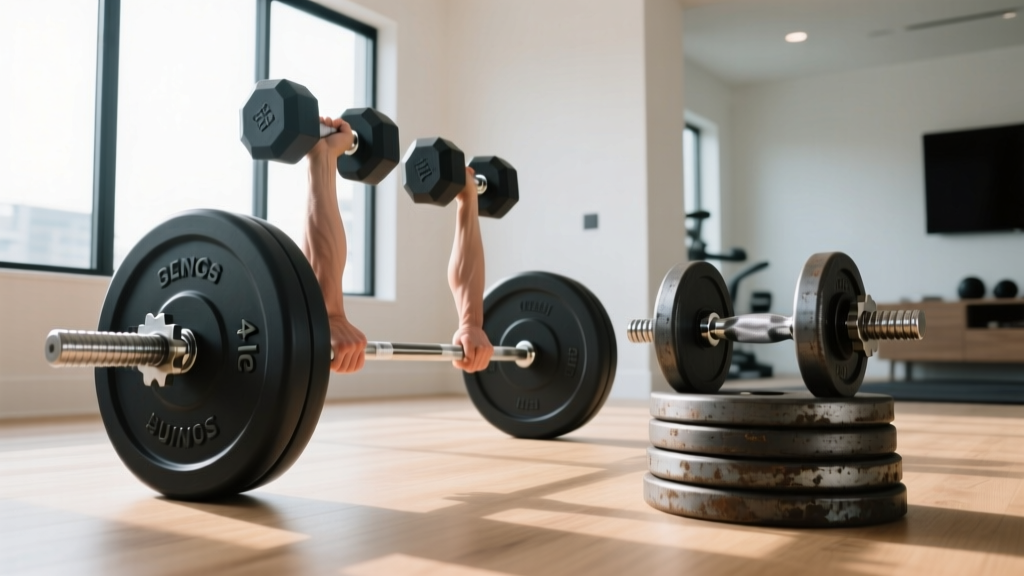
Push Press Exercise Dumbbells: Olympic vs Standard Plate Mistakes
Troubleshoot your overhead power movements. We break down Olympic vs standard plate mistakes when using plate-loaded push press exercise dumbbells.

The Biomechanical Reality of Overhead Power
The push press is a foundational overhead power movement that relies on the seamless transfer of kinetic energy from the lower body, through the core, and into the upper extremities. While the barbell variation is the most common, programming the push press exercise, dumbbells are frequently utilized to correct unilateral strength deficits, improve shoulder stability, and increase the range of motion. However, when lifters attempt the push press exercise dumbbells variation using adjustable, plate-loaded handles rather than fixed hex or urethane dumbbells, the hardware itself becomes a critical variable.
As we navigate the fitness equipment landscape in 2026, the debate between Olympic and standard weight plates extends far beyond simple aesthetics. The type of plate you slide onto your dumbbell handles directly impacts rotational inertia, wrist torque, and catastrophic failure risks during explosive movements. This troubleshooting guide dissects the most common equipment mismatches and provides actionable frameworks to optimize your overhead pressing mechanics.
⚠️ SAFETY ALERT: The explosive 'dip-and-drive' phase of the push press generates significant vertical vibration. Using standard 1-inch spinlock collars with heavy cast-iron plates is a leading cause of mid-rep equipment failure, resulting in severe wrist and facial injuries.Standard vs. Olympic Plates: A Troubleshooter’s Breakdown
To troubleshoot your setup, you must first understand the engineering tolerances of the plates you are loading. Standard plates (designed for 1-inch sleeves) and Olympic plates (designed for 2-inch/50mm sleeves) operate under entirely different manufacturing standards.
| Feature | Standard Plates (1-inch) | Olympic Plates (2-inch) |
|---|---|---|
| Center Hole Diameter | 1 inch (25.4mm) | 2 inches (50.4mm) |
| Weight Tolerance | ± 5% to 10% (Often uncalibrated) | ± 1% to 2% (Calibrated: ±10g) |
| Max Load per Sleeve | ~150 lbs (Limited by spinlock threads) | 500+ lbs (Secured by spring collars) |
| Material & Coating | Basic Cast Iron, Vinyl-dipped | Machined Iron, Rubber, Urethane |
| Average 2026 Market Price | $1.20 - $1.80 per lb | $3.50 - $5.50 per lb |
3 Critical Mistakes When Loading for the Push Press
According to ExRx.net's biomechanical breakdown of the dumbbell push press, the anterior deltoid and triceps brachii act as the primary movers, but the stabilizing muscles of the rotator cuff and wrist flexors are heavily taxed. Equipment imbalances exponentially increase the strain on these stabilizers.
Mistake 1: The Spinlock Squeeze and Wrist Torque
The most common error in home gyms is utilizing 14-inch standard spinlock dumbbell handles loaded with 1-inch cast iron plates for heavy push presses. Standard plates are notoriously thick. To load 50 lbs per hand, you might need to stack multiple 10-lb and 5-lb plates. This creates two massive failure points:
- Altered Moment Arm: The thickness of standard plates pushes the center of mass further away from the handle's center. During the 'rack' position at the shoulders, this wider weight distribution increases rotational inertia, forcing the wrist into extreme extension and placing dangerous torque on the radiocarpal joint.
- Collar Vibration: The explosive drive phase of the push press generates high-frequency vibrations. Standard threaded spinlock nuts, even when tightened with pliers, are prone to backing off under repetitive vertical impact, leading to plates sliding off mid-rep.
Mistake 2: Mixing Calibrated and Cheap Cast Iron
Lifters often mix and match plates from different manufacturers. Because standard plates lack strict manufacturing tolerances, a '25 lb' standard plate from Brand A might actually weigh 23.5 lbs, while Brand B weighs 26.2 lbs. When performing a unilateral movement like the dumbbell push press, a 2-3 lb discrepancy between the left and right hand disrupts the neural drive and spinal alignment during the dip-and-drive phase, increasing the risk of lower back shear forces.
Mistake 3: Ignoring Sleeve Length and Center of Mass
When transitioning to Olympic loadable dumbbell handles (such as the Rogue Loadable Dumbbell Handle or Titan Fitness Olympic Handle), lifters sometimes use full-sized 45 lb Olympic bumper plates. Bumper plates have a universal diameter of 450mm. Loading a 45 lb bumper on each side of a short dumbbell handle creates a massive physical barrier, preventing the dumbbells from coming close together at the top of the pressing movement and severely altering the mechanics of the push press lockout.
"The push press is not just a shoulder exercise; it is a full-body coordination drill. If your equipment forces you to alter your dip depth or drive path to accommodate clunky, oversized plates, you are no longer training the intended movement pattern."
— Biomechanics Coaching Staff, FitGearPulse
Troubleshooting Your Equipment Setup: A Decision Matrix
Use this diagnostic flow to determine if your current plate-and-handle setup is safe and effective for overhead power work.
- Step 1: Check the Collar Mechanism. Are you using threaded spinlocks? Action: Retire them for explosive movements. Upgrade to Olympic handles with snap-clip or spring collars.
- Step 2: Measure the Plate Width. Are you stacking more than three plates per side to reach your target weight? Action: Purchase larger denomination plates (e.g., 25 lb or 45 lb) or switch to fixed urethane dumbbells to reduce sleeve clutter and lateral imbalance.
- Step 3: Verify Weight Symmetry. Put your loaded dumbbells on a digital floor scale. Action: If the variance between left and right is greater than 0.5 lbs, recalibrate your plate selection or invest in precision-machined urethane plates with guaranteed 1% tolerances.
Upgrading Your Arsenal: 2026 Recommendations
If you are serious about the push press exercise dumbbells variation, it is time to move away from standard 1-inch hardware. Here is the optimal upgrade path based on budget and space:
The Budget-Conscious Power Builder
Instead of buying adjustable handles, invest in a set of fixed hex-head rubber dumbbells ranging from 30 to 70 lbs. The compact head design keeps the center of mass tight against the handle, eliminating the wrist torque associated with plate-loaded alternatives. Expect to pay around $2.00 to $2.50 per pound for quality commercial-grade hex sets.
The Advanced Home Gym Athlete
Purchase a pair of Olympic loadable dumbbell handles (approx. $90 - $130 per pair) and pair them with fractional Olympic plates (2.5 lb and 5 lb iron or urethane plates). This allows for micro-loading—a crucial element for progressive overload in overhead pressing—while maintaining the 2-inch sleeve security and tight weight distribution required for safe, explosive dip-and-drive mechanics.
Frequently Asked Questions
Can I use standard vinyl-coated plates for the push press?
Vinyl-coated standard plates are typically filled with cement or sand mixtures, making them incredibly bulky. This extreme thickness pushes the weight far from the handle, ruining your wrist alignment during the rack position. Stick to solid cast iron or urethane.
Why do my wrists hurt during the dumbbell push press?
Wrist pain is often caused by grip placement and equipment balance. If your plate-loaded dumbbells are unevenly loaded, or if the plates are too thick, your wrist is forced into hyperextension to keep the weight over your elbow joint. Ensure your knuckles point toward the ceiling and the weight rests directly over the heel of your palm.
Are bumper plates safe for dumbbell push presses?
Standard 45 lb bumper plates are too wide for dumbbell handles, causing the plates to clash at the top of the movement. However, 'fractional' or 'technique' bumper plates (10 lbs and 15 lbs) are narrower and can be safely used on Olympic dumbbell handles for lighter, high-velocity power work.
More gear to consider
All reviews
Olympic Barbell Buying Guide: Weight, Knurling & Press Muscles Worked

How to Train Back With Dumbbells: Hex vs Urethane Space Guide

Beyond the Twist Dumbbell: Cast Iron vs Competition Kettlebells
Best Adjustable Dumbbells for a Dumbbell Shoulder Workout at Home

Olympic vs Standard Plates for Incline Seated Dumbbell Curls
