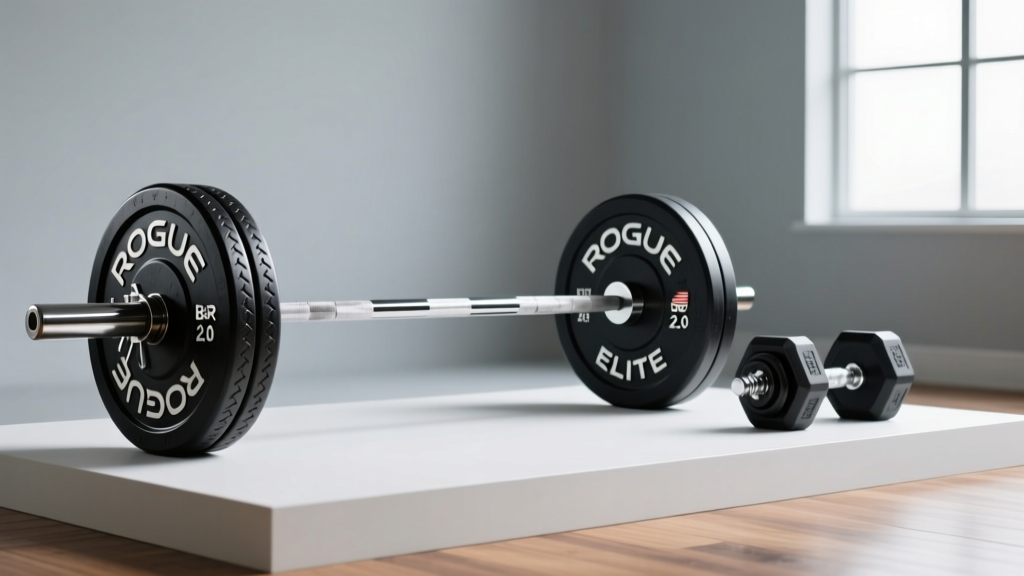
EZ Curl vs Straight Bar & Rubber vs Urethane Dumbbells: 2026 Trends
Analyze 2026 free weight market trends comparing EZ curl bar vs straight bar biomechanics, alongside the commercial shift in rubber vs urethane dumbbells.

Upper Extremity Equipment Procurement: 2026 Market Analysis
As commercial facilities, collegiate weight rooms, and elite home gyms audit their upper-body equipment in 2026, two distinct procurement debates dominate the free weight market: the biomechanical choice between the EZ curl bar vs straight bar, and the material science showdown of rubber vs urethane dumbbells. While social media fitness influencers often reduce these choices to mere aesthetic preferences, facility managers and sports scientists are looking at joint kinematics, polymer degradation rates, and long-term depreciation. This trend report synthesizes hard data to help you make evidence-based purchasing decisions for arm-focused training zones.
The Biomechanics of Arm Training: EZ Curl Bar vs Straight Bar
The straight barbell is a staple of foundational strength, but when isolating the biceps brachii and brachialis, the rigid requirement of full forearm supination introduces significant mechanical friction. According to ExRx.net's kinesiology archives, the biceps brachii functions not only as an elbow flexor but as a primary supinator of the forearm. Forcing the wrists into a fully supinated, locked position with a straight bar places immense valgus stress on the medial epicondyle and the ulnar collateral ligament.
The EZ curl bar was engineered specifically to mitigate this. By introducing 30-degree and 45-degree angled grips, the EZ bar allows for a semi-supinated wrist position. This slight pronation shifts a marginal percentage of the load to the brachioradialis and brachialis, drastically reducing the torque on the wrist joint and the medial elbow. In 2026, the market has seen a massive shift toward specialized Olympic EZ bars that feature aggressive knurling and high-tensile steel shafts, moving away from the cheap, cast-iron, fixed-weight curl bars of the early 2010s.
2026 Barbell Specification Matrix
| Feature | Olympic Straight Bar (Standard) | Premium Olympic EZ Curl Bar (e.g., Rogue / Eleiko) |
|---|---|---|
| Shaft Diameter | 28.5mm - 29mm | 28.5mm - 32mm (Varies by brand) |
| Total Weight | 44 lbs - 45 lbs (20kg) | 25 lbs - 35 lbs (11kg - 16kg) |
| Wrist Angle | 0° (Full Supination) | 30° - 45° (Semi-Supinated) |
| Medial Elbow Stress | High (Risk of Golfer's Elbow) | Low to Moderate |
| Sleeve Rotation | Bushing/Bearing (High Spin) | Bushing (Controlled Spin for Curls) |
Failure Mode Alert: The most common failure point in budget EZ curl bars (under $120) is sleeve rattle and knurling oxidation. Premium 2026 models utilize copper bushings and hard chrome or Cerakote finishes to prevent rust from sweat accumulation in the knurl grooves, extending the lifespan from 3 years to 15+ years.
Polymer Durability: Rubber vs Urethane Dumbbells
While the barbell debate centers on joint health, the dumbbell market is currently defined by a massive migration away from traditional SBR (Styrene-Butadiene Rubber) toward cast polyurethane. When analyzing rubber vs urethane dumbbells from a facility management perspective, the initial capital expenditure is only one variable; the total cost of ownership over a decade tells a vastly different story.
The Chemistry of Free Weight Coatings
Standard rubber dumbbells are typically manufactured using a blend of natural rubber and SBR. While they offer excellent drop-absorption and a low entry price point (averaging $1.20 to $1.60 per pound in 2026), they are highly susceptible to UV degradation and thermal oxidation. Over time, the plasticizers in the rubber migrate to the surface, leaving a greasy residue that attracts dust and degrades the structural integrity of the coating, leading to the infamous 'crumbly' edges seen in older commercial gyms.
Urethane (specifically cast polyurethane elastomer), on the other hand, is a thermoset polymer. According to data referenced in Smooth-On's material selection guide, polyurethanes exhibit superior abrasion resistance, tear strength, and UV stability compared to standard elastomers. Urethane dumbbells are typically poured into precision aluminum molds, resulting in a 92-95 Shore A hardness rating. This makes them significantly denser and more resistant to impact deformation than 85 Shore A rubber.
Warning: VOC Off-Gassing in Indoor Facilities
The most critical hidden cost of rubber dumbbells is Volatile Organic Compound (VOC) off-gassing. SBR rubber releases sulfur dioxide and mercaptans during the curing process. In poorly ventilated home gyms or basement facilities, this 'new tire' odor can persist for 30 to 90 days, causing respiratory irritation. Urethane dumbbells are chemically stable post-curing and emit zero detectable VOCs, making them the mandatory standard for HVAC-conscious commercial spaces in 2026.
Pros and Cons of the Urethane Migration
- Pro: Floor Protection. Urethane does not leave black scuff marks on polyurethane-sealed concrete or rubber flooring.
- Pro: UV Stability. While urethane may experience slight cosmetic yellowing under direct sunlight, it does not crack, chalk, or lose structural cohesion like rubber.
- Pro: Dimensional Accuracy. Urethane molding allows for tighter tolerances, meaning a 50lb dumbbell is exactly 50.0lbs, whereas cheap rubber hex bells can vary by +/- 4%.
- Con: Price Premium. Urethane dumbbells command a steep premium, ranging from $3.80 to $5.50 per pound, representing a 3x to 4x markup over virgin rubber.
- Con: Drop Noise. Due to the higher Shore A hardness, urethane transmits more acoustic energy upon impact than softer rubber, requiring dedicated drop pads in noise-sensitive environments.
2026 Pricing & Procurement Matrix
Based on Q1 2026 wholesale data and direct-to-consumer pricing from top-tier manufacturers, here is the financial breakdown for outfitting a comprehensive arm-training station.
| Equipment Category | Material / Type | 2026 Price Range (USD) | Estimated Lifespan (Commercial Use) |
|---|---|---|---|
| Barbell | Olympic Straight Bar (Bushing) | $180 - $295 | 10 - 15 Years |
| Barbell | Olympic EZ Curl Bar (Premium) | $225 - $340 | 10 - 15 Years |
| Dumbbells (Pair) | Virgin Rubber Hex | $1.20 - $1.60 / lb | 3 - 5 Years (High degradation) |
| Dumbbells (Pair) | Cast Urethane Round | $3.80 - $5.50 / lb | 15+ Years (Near-indestructible) |
Industry analysts tracking gym equipment procurement note a clear bifurcation in the market. As highlighted in the latest IHRSA Global Report, premium commercial franchises are exclusively specifying urethane and specialized ergonomic bars to reduce replacement cycles, while budget and garage gym demographics continue to drive the volume sales of rubber hex bells and standard curl bars.
The 2026 Expert Procurement Framework
How should you allocate your budget when building an upper-body focused zone? Follow this step-by-step decision framework:
- Assess the Environment: If the gym is in a residential space, basement, or shared commercial building with strict HVAC limitations, immediately eliminate SBR rubber from your shortlist. The VOC off-gassing will compromise air quality. Mandate urethane.
- Evaluate the User Base for Joint Health: If the facility caters to Masters athletes (40+), physical therapy clients, or high-volume bodybuilders prone to tendonitis, prioritize the EZ curl bar. The 30-degree grip angle is non-negotiable for preserving the medial epicondyle during high-volume hypertrophy blocks.
- Allocate Budget for Sleeves and Bushings: Do not buy a fixed-weight EZ curl bar. Invest in a 25lb or 35lb Olympic EZ curl bar with bronze bushings. This allows for micro-loading and ensures the sleeves rotate just enough to prevent wrist binding during heavy skull crushers or close-grip presses.
- Pairing the Equipment: For a complete 12-week arm hypertrophy block, utilize the straight bar for heavy, low-rep mechanical tension work (e.g., 4x6 reverse curls), and reserve the EZ curl bar and urethane dumbbells for high-rep metabolic stress and stretch-mediated hypertrophy (e.g., 3x15 incline DB curls and EZ bar spider curls).
'The shift toward urethane and ergonomic barbell shafts in 2026 isn't just about aesthetics; it is a direct response to the rising cost of commercial floor maintenance and the sports science community's deeper understanding of distal bicep tendon loading.' — FitGearPulse Equipment Analysis Team
Final Verdict
The debate over the EZ curl bar vs straight bar is ultimately resolved by the user's wrist mobility and elbow health, with the EZ bar reigning supreme for pure isolation work. Concurrently, the battle of rubber vs urethane dumbbells is a matter of long-term economics and environmental health. While rubber wins the upfront budget war, urethane's zero-VOC profile, superior Shore A hardness, and multi-decade lifespan make it the undisputed champion for any serious 2026 facility audit. Invest in the polymers and ergonomics that protect both the athlete's joints and the facility's bottom line.
More gear to consider
All reviews
How to Exercise Shoulders with Dumbbells: Rack Guide

Power Rack vs Squat Rack: Incline Dumbbell Curl Muscles Worked Guide

Bumper Plate vs Iron Plate: Moving Beyond 3 Day Split Dumbbells

EZ Curl Bar vs Straight Bar: Space & Kettle Dumbbells

EZ Curl Bar vs Straight Bar for Your Dumbbell Home Exercise Program