
EZ Curl Bar vs Straight Bar & Chest Press Machine Dumbbell Alternative
Optimize small gym layouts: EZ curl bar vs straight bar for space, plus the best chest press machine dumbbell alternative to reclaim floor space.

The 2026 Space Optimization Paradigm: Density Over Square Footage
Designing a high-performance home gym in a confined space—whether it is a 150-square-foot garage corner or a compact apartment flex-room—requires ruthless prioritization. The era of dedicating 20 square feet to a single movement pattern is over. Today’s space optimization strategy hinges on equipment density, modular storage, and biomechanical versatility.
In this guide, we tackle two of the most common spatial dilemmas in compact gym design. First, we explore how to successfully implement a chest press machine dumbbell alternative to reclaim massive amounts of floor space. Second, we dive deep into the EZ curl bar vs straight bar debate, analyzing which barbell variant offers the superior footprint-to-utility ratio for your wall racks and storage stands.
The Space-Saving Baseline
According to the American College of Sports Medicine, a well-rounded resistance training program requires multi-joint and single-joint movements. However, achieving this does not require commercial-grade machines. By swapping fixed-path machines for modular free weights, you can reduce your equipment footprint by up to 60% while maintaining identical hypertrophic stimuli.
Reclaiming 16 Square Feet: The Machine Replacement Strategy
A standard plate-loaded or selectorized chest press machine occupies an average footprint of 80 inches by 40 inches (roughly 22 square feet), not including the required clearance for loading plates or entering the seat. Eliminating this monstrosity is step one of small-gym space optimization.
Building the Ultimate Chest Press Machine Dumbbell Alternative
To replicate the stability and progressive overload of a chest press machine without the spatial tax, you need a highly optimized free-weight duo. The most effective chest press machine dumbbell alternative setup for 2026 involves:
- Adjustable Dumbbells (5 to 80 lbs): Models like the Nuobell 80 or PowerBlock Elite EXP replace an entire 15-pair dumbbell rack. A single pair occupies just 1.5 square feet of floor space.
- Heavy-Duty Adjustable FID Bench: A bench with a 15.5-inch height and a 12-inch pad width (such as the Rogue Adjustable Bench 3.0) provides the exact shoulder-blade retraction support of a commercial chest press.
- The Floor Press Bridge: To mimic the machine’s built-in lockout safety, incorporate floor presses. The physical floor acts as a mechanical stop, protecting your rotator cuffs when training to failure without a spotter—a crucial safety feature when ditching the machine’s guided rails.
By adopting this chest press machine dumbbell alternative, you instantly reclaim enough space for a dedicated deadlift zone or a functional rig. But what do you do with the newly freed wall space? You build a streamlined barbell station.
EZ Curl Bar vs Straight Bar: The Dimensional Breakdown
Once your floor space is optimized, your focus shifts to vertical storage and wall-mounted racks. When outfitting your station for upper-body isolation and accessory work, the choice between an EZ curl bar and a standard straight barbell drastically alters your layout requirements.
| Feature | Standard Straight Bar (Olympic) | Olympic EZ Curl Bar |
|---|---|---|
| Total Length | 71 to 73 inches | 47 to 52 inches |
| Weight | 44 to 45 lbs (20 kg) | 15 to 22 lbs (varies by brand) |
| Wall Storage Requirement | 6-foot horizontal mount or vertical floor stand | 24-inch horizontal cradle or standard rack J-hooks |
| Primary Use Case | Heavy compounds, squats, deadlifts, strict curls | Bicep isolation, tricep extensions, upright rows |
| Average Price (2026) | $195 - $295 | $109 - $185 |
The Spatial Advantage of the EZ Bar
If your gym is confined to a narrow alcove or a bedroom corner, the straight bar is a spatial liability. Swinging a 72-inch barbell requires a minimum lateral clearance of 8 feet to avoid striking walls or mirrors. The EZ curl bar, maxing out at roughly 50 inches, allows you to perform standing curls, skull crushers, and upright rows in corridors or tight spaces where a straight bar would literally bounce off the drywall.
Furthermore, wall-mounted storage for a straight bar requires heavy-duty horizontal brackets spanning at least 4 feet to prevent sagging and wall damage. An EZ bar can be stored vertically in a compact floor stand (taking up just a 10x10 inch footprint) or horizontally on standard power rack J-hooks, eliminating the need for dedicated wall drilling.
Biomechanics vs. Storage: Which Bar Belongs on Your Rack?
Space optimization cannot come at the expense of joint health or muscle activation. According to kinesiology data from the ExRx Kinesiology Database, the grip angle fundamentally alters the recruitment of the biceps brachii versus the brachialis and brachioradialis.
The Straight Bar: Maximum Supination, Maximum Stress
A standard straight bar forces your wrists into full supination (palms facing directly up). While this places the biceps brachii in its most mechanically advantageous position for peak contraction, it also places significant valgus stress on the medial epicondyle and the wrist joint. In a small home gym where you might be performing high-volume arm work without the guided ergonomics of a machine, repetitive straight-bar curling frequently leads to medial epicondylitis (golfer’s elbow).
The EZ Bar: The Ergonomic Compromise
The angled grips of the EZ bar place the wrists in roughly 30 to 45 degrees of semi-supination. This slight pronation shifts a portion of the load to the brachialis (the muscle underneath the bicep that pushes it up) and drastically reduces torque on the wrist and elbow joints. For the space-constrained lifter over 30, or anyone dealing with repetitive strain, the EZ bar is the superior daily driver.
Edge Case: The Low-Ceiling Garage Gym
If your home gym has ceilings lower than 8 feet, overhead tricep extensions and seated military presses with a straight bar are virtually impossible. The shorter shaft and lighter weight of the EZ bar make it the undisputed champion for overhead isolation work in low-clearance environments.
Designing the 2026 Compact Free-Weight Zone
How do you integrate your chest press alternative and your chosen barbell into a cohesive layout? Follow this step-by-step spatial blueprint:
- Zone 1: The Pressing Corner (40 sq ft). Place your adjustable FID bench against a wall. Store your adjustable dumbbells directly underneath or on a low-profile tier rack beside it. This serves as your chest press machine dumbbell alternative hub.
- Zone 2: The Vertical Barbell Station (4 sq ft). Instead of a horizontal wall rack, invest in a vertical barbell stand (e.g., the Titan Fitness Vertical Barbell Holder). Store your 71-inch straight bar (for deadlifts/squats) and your 47-inch EZ curl bar side-by-side. Total floor footprint: 24x12 inches.
- Zone 3: The Plate Tree Perimeter. Push a vertical weight tree into the corner. Never use floor-stacked plates in a small gym; they create tripping hazards and consume usable floor space for dynamic movements.
Frequently Asked Questions
Can I use an EZ curl bar for squats and deadlifts?
No. The EZ curl bar’s sleeves are typically shorter (around 7-8 inches) and rated for much lower weight capacities (often maxing out at 150-200 lbs total). Furthermore, the angled grips make racking the bar on your back for squats highly unstable and dangerous. Stick to a standard 71-inch Olympic bar for lower-body compounds.
Is a chest press machine dumbbell alternative as effective for hypertrophy?
Yes. Studies show that muscle hypertrophy is driven by mechanical tension and proximity to failure, not the specific tool used. By utilizing adjustable dumbbells and incorporating techniques like 1.5 reps or slow eccentrics, you can match or exceed the hypertrophic stimulus of a machine while engaging more stabilizer muscles.
What is the best wall mount for an EZ curl bar?
Because an EZ bar is short and relatively light, you do not need heavy-duty horizontal wall brackets. A simple pair of wall-mounted J-hooks (spaced 20 inches apart) or a specialized single-hook barbell cradle is sufficient, saving your drywall from unnecessary heavy-duty lag bolts.
More gear to consider
All reviews
How Heavy Are Dumbbells You Lift Characters vs Real Barbell Weights

EZ Bar vs Straight Bar vs Women's Dumbbell Exercises for Arms

EZ vs Straight Bar Care: Longevity & Skater Squats with Dumbbells
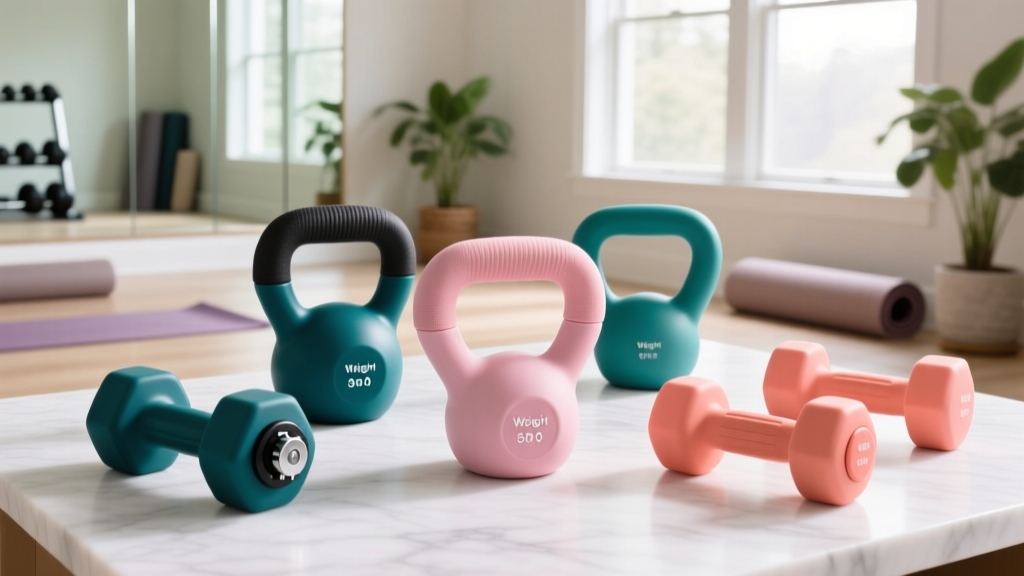
Best Equipment for Dumbbell Workouts for Women Over 50 (2026)
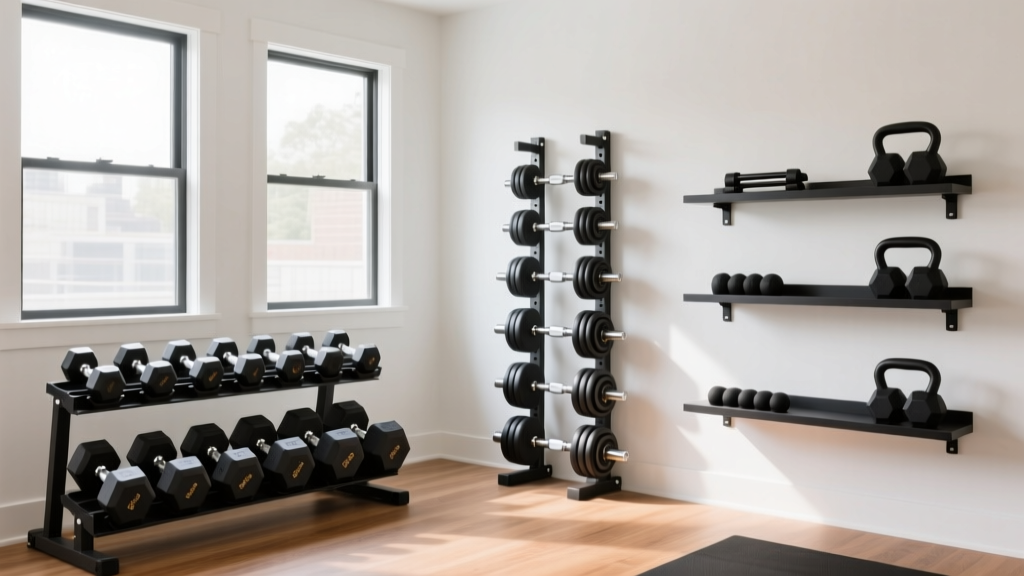
Storage Layouts for Different Types of Dumbbell Workouts
