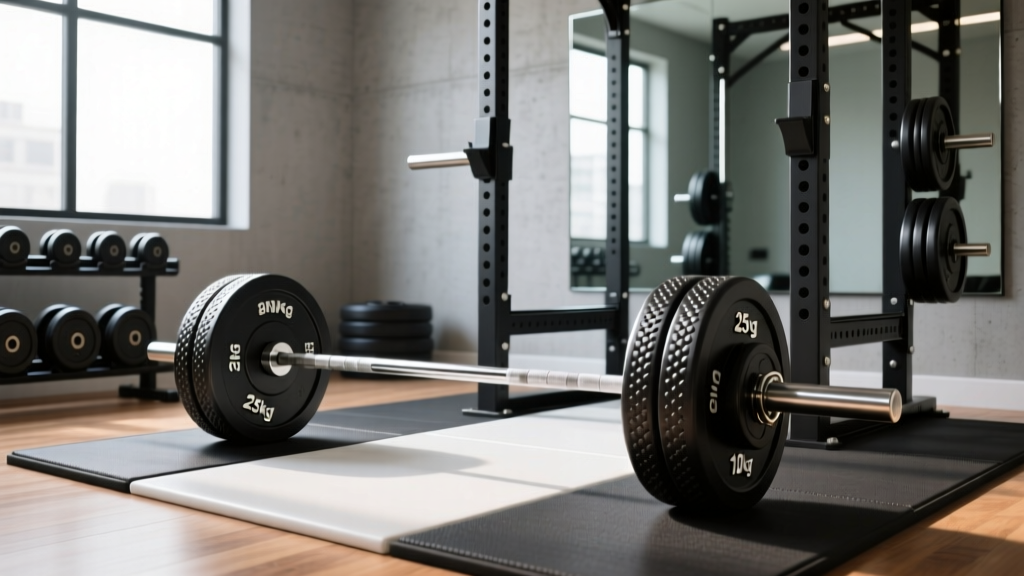
EZ Curl Bar vs Straight Bar & Cap Barbell Dumbbell Set with Rack
We break down the EZ curl bar vs straight bar debate for bicep growth, plus a hands-on review of the Cap Barbell dumbbell set with rack.

The Biomechanics of the Curl: Wrist Torque vs. Bicep Activation
When optimizing an arm day, lifters are immediately confronted with a classic equipment dilemma: the EZ curl bar vs straight bar. While both tools target the elbow flexors, they impose vastly different biomechanical demands on the wrists, elbows, and specific muscle bellies. To build a complete, injury-resistant arm setup in 2026, you must understand these nuances—and more importantly, how to supplement them with unilateral dumbbell work.
According to kinesiology data from the ExRx Kinesiology Directory, the biceps brachii acts primarily as a forearm supinator and elbow flexor. A standard Olympic straight bar forces the wrists into full supination (palms facing directly up). This maximizes the mechanical tension on both the short and long heads of the biceps brachii. However, this position also creates significant ulnar deviation and valgus stress on the wrists and elbows, which frequently leads to medial epicondylitis (golfer's elbow) in heavy lifters.
The EZ curl bar, with its multi-angled cambered shaft, allows for a semi-supinated grip. This slight internal rotation of the radius and ulna drastically reduces joint torque. The trade-off? It shifts a portion of the load away from the biceps brachii and onto the brachialis and brachioradialis.
EMG Activation & Joint Stress Matrix
| Equipment | Grip Position | Primary Mover | Secondary Mover | Wrist/Elbow Stress |
|---|---|---|---|---|
| Straight Barbell | Full Supination | Biceps Brachii (Short/Long) | Brachialis | High (Ulnar Torque) |
| EZ Curl Bar (Inner Grip) | Semi-Supinated (45°) | Biceps Brachii / Brachialis | Brachioradialis | Moderate |
| EZ Curl Bar (Outer Grip) | Neutral-Prone (60°) | Brachioradialis | Brachialis | Low |
| Hex Dumbbells | Variable / Unilateral | Biceps Brachii / Brachialis | Stabilizers | Low (Natural Tracking) |
Straight Bar vs. EZ Bar: Which Should You Own?
If you are forced to choose only one barbell for a home gym, the decision hinges on your injury history and training age. As highlighted in hypertrophy research reviews by Stronger By Science, training a muscle through its full range of motion with high mechanical tension is paramount for growth, but not at the expense of joint integrity.
The Case for the Straight Bar
- Pros: Unmatched peak contraction for the biceps brachii; allows for strict, heavy overload; highly standardized for tracking progressive overload over time.
- Cons: Unforgiving on the wrists; fixed hand placement ignores individual anatomical differences in the carrying angle (cubital angle) of the elbows.
- Best For: Lifters with excellent wrist mobility, no history of elbow tendonitis, and those prioritizing pure biceps peak.
The Case for the EZ Curl Bar
- Pros: Ergonomic grip angles accommodate natural carrying angles; allows for heavy reverse curls and spider curls without wrist impingement; superior for targeting the brachialis (which pushes the biceps up, creating the illusion of a larger arm).
- Cons: Slightly reduces direct biceps brachii activation; the cambered shaft can make racking on standard J-cups slightly awkward if the bar is too short.
- Best For: High-volume arm specialists, older lifters, and anyone managing medial or lateral elbow pain.
Completing the Arm Setup: Cap Barbell Dumbbell Set with Rack Review
While the EZ curl bar vs straight bar debate dominates arm day forums, relying solely on barbells is a critical error. Bilateral barbell curls allow your dominant arm to compensate for your weaker arm, leading to noticeable size and strength asymmetries over time. To fix this, you need unilateral dumbbell work. This brings us to our hands-on review of a home gym staple: the Cap Barbell 150-Pound Hex Dumbbell Set with A-Frame Rack.
Specifications and Build Quality
Cap Barbell has long been the go-to brand for budget-conscious but durable commercial and home gym equipment. The 150 lb hex set (typically ranging from 5 lb to 25 lb pairs in 5 lb increments) is a workhorse. The heads are cast iron with a thick, odor-free rubber coating (or enamel, depending on the specific SKU variant you select). The hexagonal design is non-negotiable for home gyms—it prevents the dumbbells from rolling away between sets, saving your floors and your toes.
The included A-Frame rack is a masterclass in space efficiency. With a footprint of roughly 22 x 22 inches, it utilizes vertical storage, holding up to 150 lbs safely. The steel tubing is powder-coated, and the angled tiers make racking heavy 25s relatively easy on the lower back compared to horizontal tier racks.
Hands-On Pros and Cons
- Pros:
- Value: Priced between $180 and $230 in 2026, it is significantly cheaper than buying individual pairs and a separate rack.
- Knurling: The medium-depth chrome knurling provides excellent grip without tearing calluses during high-rep hammer curls.
- Footprint: The vertical A-frame takes up less than 4 square feet of floor space.
- Cons:
- Rubber Degradation: If placed in a garage gym with direct UV exposure, the rubber coating will eventually dry out and flake after 3-4 years.
- Weight Gaps: The 150 lb set caps out at 25 lb dumbbells. Advanced lifters will quickly outgrow these for heavy chest and back work, though they remain highly relevant for isolation arm movements.
Product specifications and current bundle pricing are referenced from the official Cap Barbell catalog. For arm isolation, a 25 lb dumbbell is more than sufficient for the vast majority of lifters performing strict incline curls and lateral raises.
The Ultimate 2026 Arm Hypertrophy Protocol
To leverage the unique biomechanical profiles of the straight bar, EZ bar, and your Cap Barbell dumbbells, follow this structured arm day protocol. This routine targets all elbow flexors through varying ranges of motion and grip orientations.
- Standing Straight Barbell Curl (Mechanical Tension): 3 sets of 5-8 reps. Use a shoulder-width grip. Focus on a controlled 2-second eccentric (lowering) phase. Do not use momentum.
- EZ Bar Reverse Curl (Brachioradialis Focus): 3 sets of 8-12 reps. Grip the outer, most angled shafts of the EZ bar with a pronated (overhand) grip. This builds the thick muscle of the forearm that ties into the elbow.
- Cap Dumbbell Incline Curl (Long Head Stretch): 3 sets of 10-12 reps. Set a bench to a 45-degree incline. Let the Cap hex dumbbells hang fully behind your torso to stretch the long head of the biceps. Supinate the wrists as you curl upward.
- Cap Dumbbell Cross-Body Hammer Curl (Brachialis Focus): 3 sets of 12-15 reps. Curl the dumbbell across your chest toward the opposite shoulder. The neutral grip heavily recruits the brachialis, pushing the biceps peak higher.
Frequently Asked Questions
Can I build big arms with just the Cap Barbell dumbbell set?
Yes, absolutely. Dumbbells allow for a greater range of motion and unilateral loading, which is superior for fixing imbalances. However, barbells (straight and EZ) allow for greater absolute load and systemic overload, which is why a combined approach yields the fastest hypertrophy.
Is the Cap Barbell A-Frame rack stable enough for 25 lb dumbbells?
Yes. The A-Frame design utilizes a wide, triangular base that lowers the center of gravity. When fully loaded with 150 lbs, it remains stable even when pulling heavy 25s from the top tier, provided it is placed on a level surface.
Why do my wrists hurt on the straight bar but not the EZ bar?
The straight bar locks your radioulnar joint into full supination. If you have a high carrying angle (your forearms naturally angle outward when your arms are at your sides), a straight bar forces your wrists into unnatural ulnar deviation. The EZ bar's angled grips accommodate this natural carrying angle, relieving joint stress.
More gear to consider
All reviews
Why Are Dumbbells So Expensive? Top Neoprene Sets Compared

2026 Dumbbell Rack Trends: Storage for Dumbbell Russian Twists

Power Rack vs Squat Rack vs Stand: Standing Dumbbell Overhead Press

The Dumbbell Tattoo: Loadable Dumbbell Budget Breakdown
Best Racks for Your Dumbbell Only Workout Routine in 2026