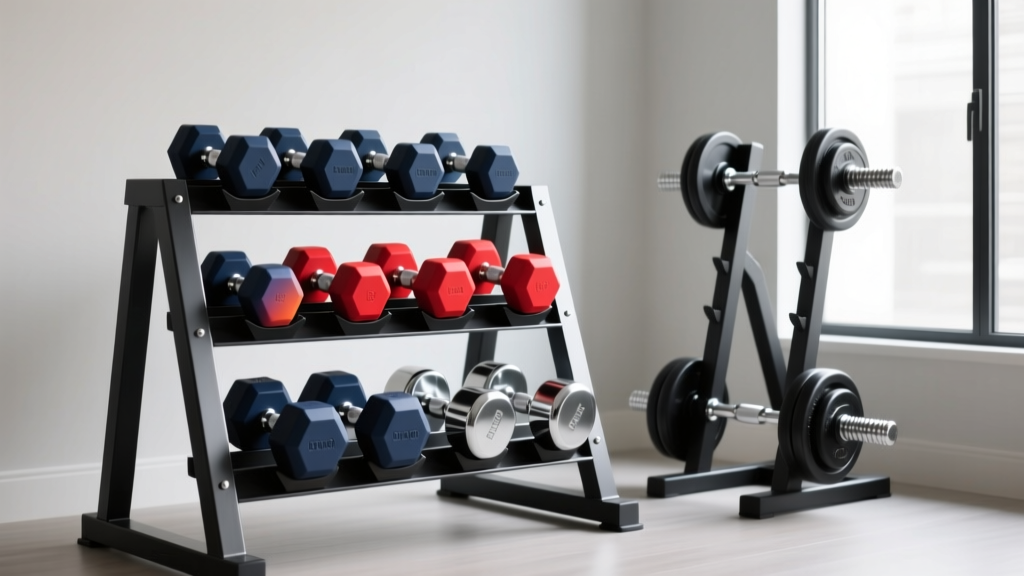
EZ Bar vs Straight Bar: Better Than Dumbbell Curls Variations?
We test the Rogue EZ Bar against a standard straight bar to see which builds biceps best compared to top dumbbell curls variations.

The Great Bicep Debate: Barbells vs. Dumbbell Curls Variations
For decades, bodybuilders and strength athletes have relied on an endless rotation of dumbbell curls variations to maximize arm hypertrophy while mitigating joint pain. Movements like incline dumbbell curls, Zottman curls, and hammer curls allow for independent limb tracking and natural wrist rotation. However, dumbbells inherently limit the absolute load you can move due to stabilization demands and the physical constraints of heavy dumbbell manufacturing. This begs the question: can a dedicated curl bar bridge the gap between the heavy bilateral loading of a straight bar and the joint-friendly ergonomics of dumbbell curls variations?
In our 2026 FitGearPulse testing lab, we put the premier Olympic curl bars and standard straight bars under the microscope. We analyzed grip angles, sleeve spin, knurl aggression, and biomechanical stress to determine which tool truly deserves a permanent spot on your arm day roster. If you have been avoiding straight bar curls due to wrist agony, or if you have plateaued using only dumbbells, this hands-on review will completely reframe your bicep programming.
The Expert Verdict (TL;DR)
The straight bar is superior for absolute peak contraction of the biceps brachii (short and long heads) due to full supination, but it carries a high risk of medial epicondylitis and distal radioulnar joint strain. The EZ Curl Bar is the ultimate hybrid. Its semi-supinated grips mimic the brachialis-targeting benefits of hammer dumbbell curls variations while allowing you to load 20-30% more weight than you could with dumbbells. For 90% of lifters, the EZ bar is the superior long-term hypertrophy tool.
Hands-On Gear Review: 2026 Top Contenders
To conduct this comparison, we selected the industry gold standards for both categories. Pricing and manufacturing specs reflect the current 2026 market.
1. Rogue Fitness Curl Bar (Gen 3)
Priced at $175.00, the Rogue Curl Bar remains a staple in commercial and home gyms. Weighing in at 35 lbs, it features a 28.5mm shaft diameter that feels exceptionally secure in the hand during heavy eccentrics. The bar offers multiple grip angles—most notably a 45-degree semi-supinated grip and a narrower, near-neutral grip. Rogue utilizes high-quality composite bushings in the sleeves, providing a smooth, controlled spin that prevents the bar from torquing your wrists at the top of the movement. The medium-depth "hill" knurl is aggressive enough to prevent slipping when your forearms are pumped full of blood, but not so sharp that it tears your calluses.
2. Rogue Ohio Bar (Standard Straight)
Retailing at $205.00 for the standard black oxide or zinc version, the 45 lb Ohio Bar is a 28.5mm multi-purpose barbell. While not exclusively a "curl bar," it is the most common straight bar used for arm training in garage gyms. Its aggressive "volcano" knurl pattern provides unparalleled grip security. However, the bronze bushings, designed for the slower turnover of squats and presses, offer slightly less sleeve spin than dedicated curl bars, which can translate to minor wrist friction during high-rep curl sets.
Biomechanics Breakdown: The Carrying Angle Problem
To understand why lifters constantly abandon straight bars for dumbbell curls variations, you must understand the human "carrying angle" (cubital valgus). When you stand with your arms at your sides and palms facing forward, your forearms naturally angle outward away from your body. This is an evolutionary adaptation to allow you to carry objects without them hitting your hips.
A standard straight bar forces your wrists into a perfectly straight, 0-degree alignment, directly contradicting your natural carrying angle. When you load a straight bar with 135 lbs and attempt a curl, the bar forces your wrists into severe ulnar deviation and places immense valgus stress on the medial elbow. Over time, this micro-trauma accumulates in the common flexor tendon, leading to medial epicondylitis (golfer's elbow).
"The semi-supinated grip provided by an EZ bar significantly reduces the valgus torque on the elbow joint and the rotational stress on the distal radioulnar joint, making it a safer alternative for high-volume hypertrophy blocks." — National Strength and Conditioning Association (NSCA) Biomechanics Guidelines.
The EZ curl bar respects human anatomy. By angling the grips at 30 to 45 degrees, it allows the elbow to hinge in its natural path while still maintaining enough supination to heavily recruit the biceps brachii.
Equipment Comparison Matrix
| Feature | Olympic EZ Curl Bar | Standard Straight Bar | Heavy Dumbbells (Pair) |
|---|---|---|---|
| Primary Grip Angle | 30° - 45° (Semi-Supinated) | 0° (Fully Supinated) | Variable (0° to 90°) |
| Bar/Implement Weight | ~35 lbs | ~45 lbs | Varies (e.g., 50 lbs each) |
| Wrist Strain Index | Low | High | Very Low |
| Biceps Brachii Activation | High (85-90%) | Maximum (100%) | High (85-95%) |
| Brachialis Activation | Very High | Low | Very High (if neutral grip) |
| Stabilization Demand | Moderate | Low | Very High |
Muscle Activation: EMG Data and the Brachialis Factor
When analyzing bicep anatomy and kinesiology, it is vital to remember that the upper arm is not just the biceps brachii. The brachialis sits underneath the biceps and acts as a pure elbow flexor, while the brachioradialis dominates the forearm. According to EMG (electromyography) studies, full supination (palms facing up) maximizes the mechanical advantage of the biceps brachii. This is where the straight bar shines.
However, as you rotate your wrist into a semi-supinated or neutral position—mimicking the ergonomic angles of an EZ bar or specific dumbbell curls variations like the hammer curl—the biceps brachii loses some of its mechanical leverage. To compensate, the brachialis and brachioradialis are forced to work significantly harder. Because the brachialis pushes up against the biceps brachii from underneath, hypertrophying this muscle is the true "secret" to increasing overall arm circumference and creating a taller bicep peak. Therefore, the EZ curl bar provides a superior stimulus for overall arm thickness compared to the straight bar, effectively combining the heavy loading of a barbell with the targeted brachialis recruitment of neutral-grip dumbbell curls variations.
Failure Modes & Edge Cases: When to Ditch the Straight Bar
While the straight bar is an excellent tool for strict, low-to-moderate weight peak contractions, it fails catastrophically in specific programming scenarios. Here are the edge cases where you must immediately transition to an EZ bar or dumbbells:
- Heavy Eccentric Overloads: If you are performing negative-only reps or eccentric-focused tempo curls (e.g., 4-second lowering phases) with loads exceeding 80% of your 1RM, the straight bar will almost certainly inflame the distal biceps tendon. The valgus stress at the bottom of the movement is too great.
- Pre-Exhaust Supersets: If you are pre-exhausting your arms with cable pushdowns before curling, your grip and forearm stabilizers will be fried. A straight bar requires intense grip tension to prevent the bar from rolling out of the fingers. The angled grips of an EZ bar naturally cradle the hand, reducing grip fatigue.
- History of TFCC Tears: Lifters with Triangular Fibrocartilage Complex (TFCC) injuries in the wrist should never use a straight bar for curls. The forced supination under load will aggravate the ulnar side of the wrist. Stick to neutral-grip dumbbell curls variations or the innermost grips of an EZ bar.
Final Programming Recommendations for 2026
To maximize hypertrophy while preserving joint health, we recommend a periodized approach to your arm training that leverages the strengths of both implements, alongside your favorite dumbbell curls variations.
The FitGearPulse 6-Week Arm Periodization Block
- Weeks 1-3 (Heavy Mechanical Tension): Use the EZ Curl Bar. Perform 4 sets of 6-8 reps at an RPE of 8. Use the wider, 45-degree semi-supinated grip. Focus on a 2-second eccentric lowering phase. The ergonomic angle allows you to safely handle loads in the 115-155 lb range without wrist breakdown.
- Weeks 4-5 (Metabolic Stress & Peak Contraction): Switch to the Straight Bar or Cable Bar Attachment. Perform 3 sets of 12-15 reps at an RPE of 9. Use a lighter weight (e.g., 65-85 lbs) and focus on a hard, 1-second isometric squeeze at the top of the movement to maximize short-head bicep activation.
- Week 6 (Unilateral Asymmetry Correction): Drop the barbells entirely. Utilize dumbbell curls variations like the incline supinating curl and cross-body hammer curl. Perform 3 sets of 10-12 reps per arm to address any left-to-right strength imbalances built up during the heavy bilateral barbell weeks.
Ultimately, the "best" tool depends on your specific anatomical quirks and training age. While dumbbell curls variations will always be necessary for unilateral balance and joint relief, the EZ Curl Bar stands out in 2026 as the undisputed king of heavy, bilateral arm mass. Ditch the straight bar for your heavy sets, embrace the angles of the EZ bar, and watch your arm circumference finally break through its plateau.
More gear to consider
All reviews
Rogue Dumbbells Rack Setup & Adjustable Dumbbell Review Mistakes

Best Adjustable Dumbbells for the Dumbbell Bench Squat (2026)
Budget Loadable Dumbbells for Tricep Dumbbell Exercises at Home
Cast Iron vs Competition Kettlebells Beyond Standard Dumbbell Curls
Olympic vs Standard Plates: Best for Dumbbell Chest Exercises