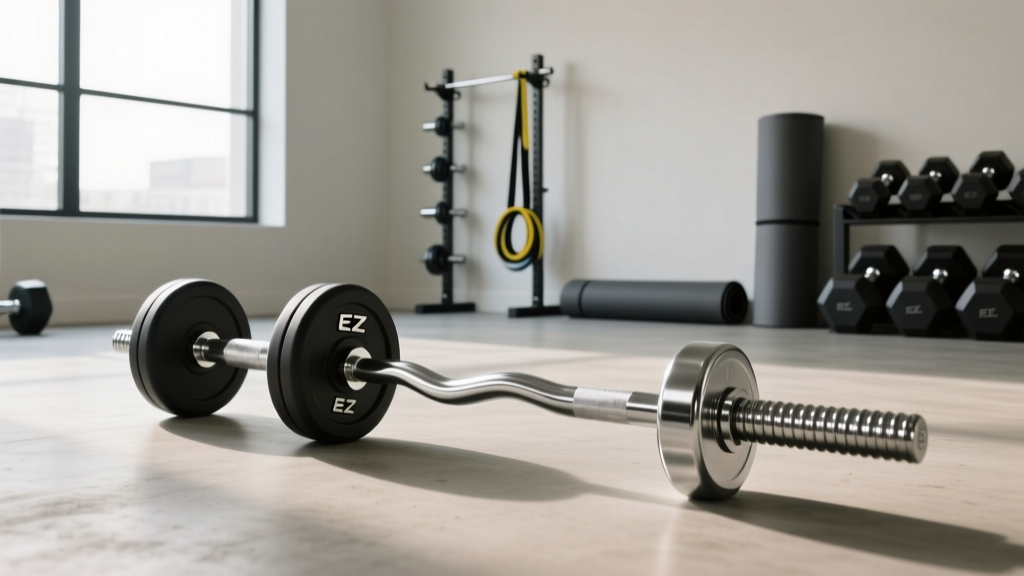
EZ vs Straight Bar Care: Beyond Exercises With Dumbbells Only
Transitioning from exercises with dumbbells only? Compare EZ curl bar vs straight bar maintenance, failure modes, and longevity tips for your home gym.

The Equipment Evolution: Why Barbell Maintenance Demands More
Many home gym owners begin their fitness journey performing exercises with dumbbells only, relying heavily on adjustable selectorized sets like the Nuobell 80lb or PowerBlock Pro. While excellent for foundational hypertrophy, adjustable dumbbells possess a critical limitation: they lack rotating sleeves. When your strength outpaces the 50-to-90-pound ceiling of most adjustable dumbbells, transitioning to dedicated barbells for heavy isolation and compound work becomes mandatory.
However, this upgrade introduces a hidden variable: mechanical maintenance. While a solid cast-iron or urethane dumbbell requires little more than an occasional wipe-down, both EZ curl bars and straight barbells feature complex sleeve assemblies, precision bushings or bearings, and specialized shaft finishes. According to BarBend's comprehensive equipment care guide, neglecting barbell sleeve lubrication and knurling hygiene is the leading cause of premature equipment failure in garage gyms.
⚠️ Critical Warning: The WD-40 Myth
Never use standard WD-40 to lubricate your EZ curl bar or straight bar sleeves. WD-40 is primarily a solvent and water displacer, not a long-term lubricant. It will strip the factory-applied lithium grease from your bronze bushings or needle bearings, leading to metal-on-metal grinding and permanent sleeve seizure within weeks.
Anatomy of Wear: EZ Curl Bar vs. Straight Bar Comparison
Understanding the structural differences between an EZ curl bar (typically 47 inches, 15-35 lbs) and a standard straight bar (72 inches, 44-45 lbs) is essential for targeted longevity protocols. The angled shaft of an EZ bar introduces unique torsional stresses that straight bars simply do not experience.
| Maintenance Metric | EZ Curl Bar (e.g., Rogue Curl Bar) | Straight Bar (e.g., Ohio Power Bar) |
|---|---|---|
| Primary Sleeve Mechanism | Composite or Bronze Bushings | Bronze Bushings or Needle Bearings |
| Torsional Stress Profile | High (Offset grips create lateral shear) | Low (Purely axial loading) |
| Knurling Maintenance | Moderate (Less surface area, shallower knurl) | High (Deep aggressive knurl traps chalk/sweat) |
| Lubrication Frequency | Every 3-4 months | Monthly (for heavy Olympic/Power use) |
| Most Common Failure Mode | Sleeve wobble from degraded inner bushings | Shaft pitting and rust in the knurling valleys |
Deep Dive: EZ Curl Bar Failure Modes and Prevention
When you transition from exercises with dumbbells only to using an EZ curl bar for heavy skull crushers or preacher curls, you are subjecting the bar to asymmetric loading. The 120-degree and 150-degree bends in the shaft create a twisting moment (torque) that transfers directly into the inner sleeve bushings.
The Lateral Shear Problem
Unlike a straight bar where the weight plates pull straight down along the Y-axis, the angled grips of an EZ bar cause the lifter's wrists to apply a slight rotational force. Over time, this lateral shear wears down the composite bushings inside the sleeve. If the bushings degrade, the sleeve develops 'play' (wobble). This wobble compromises the snap rings (C-clips) that hold the sleeve assembly together.
Longevity Fix: To prevent bushing degradation, apply 3 to 4 drops of synthetic bearing oil or 3-in-1 oil to the seam where the sleeve meets the shaft. Stand the bar vertically on its end cap, allowing gravity to pull the oil down into the bushing. Rotate the sleeve 10 times to distribute the lubricant evenly. As of 2026, replacing a seized sleeve on a premium $225 EZ bar requires specialized snap-ring pliers and a hydraulic press; proper oiling prevents this $50+ repair hassle entirely.
Straight Bar Longevity: Mastering Knurling and Finish Care
Straight bars offer unparalleled versatility, but their expansive surface area and deep knurling make them magnets for moisture, dead skin, and magnesium carbonate (gym chalk). The maintenance protocol for a straight bar depends entirely on its shaft finish.
- Bare Steel & Black Oxide (e.g., Texas Power Bar): Offers the best tactile grip but zero rust resistance. In a humid garage gym, flash rust can appear within 48 hours. Requires a light oil coating after every use.
- Hard Chrome (e.g., Eleiko Olympic Bars): Highly rust-resistant but susceptible to 'pitting' if chalk is left impacted in the knurling, which traps moisture against the steel core beneath the chrome layer.
- Cerakote (e.g., Rogue Ohio Bar Cerakote): A ceramic-polymer coating that virtually eliminates shaft rust. Maintenance focus shifts entirely to the sleeve bearings and end-caps.
According to Garage Gym Reviews' equipment care breakdown, using a stainless steel wire brush on hard chrome or Cerakote finishes will cause micro-scratches that compromise the protective layer. Always use a stiff nylon brush to dig chalk out of the knurling valleys.
💡 Pro-Tip: The White Lithium Grease Hack
If your straight bar's knurling feels overly sharp or is accumulating rust in a humid environment, scrub it with a nylon brush and a light spray of white lithium grease. Wipe it down with a microfiber cloth. The grease fills the microscopic valleys of the knurl, repelling water while slightly softening the aggressive 'bite' of the steel without sacrificing grip.
Step-by-Step Monthly Maintenance Protocol
Whether you are maintaining a dedicated straight bar or an EZ curl bar to supplement your former routine of exercises with dumbbells only, implement this 15-minute monthly protocol to guarantee a 10+ year lifespan for your equipment.
- Dry Scrub (Minutes 1-3): Use a stiff nylon brush to scrub the entire shaft, focusing heavily on the knurling. Brush in multiple directions to dislodge embedded chalk and skin cells.
- Solvent Wipe (Minutes 4-6): Lightly spray a microfiber cloth with a mild degreaser or isopropyl alcohol (70% or higher). Wipe down the shaft to remove surface oils and sweat salts. Never spray solvent directly onto the bar, as it can seep into the sleeves and wash out the factory grease.
- Sleeve Lubrication (Minutes 7-10): Stand the bar vertically. Apply 3 drops of 3-in-1 oil or dedicated barbell oil to the sleeve-to-shaft seam. Spin the sleeve manually. Repeat on the opposite end.
- Shaft Protection (Minutes 11-15): For black oxide or bare steel bars, apply a few drops of oil to a clean cloth and rub a micro-thin layer over the shaft. Buff off any excess to prevent a slippery grip during your next workout.
The Cost of Neglect: Repair vs. Replacement Economics
Failing to maintain your barbells results in steep financial penalties. In the current 2026 fitness equipment market, a high-quality American-made straight bar (like the Rogue Ohio Bar) retails between $315 and $395 depending on the finish. A premium EZ curl bar averages $200 to $250.
If the needle bearings in a straight bar seize due to chalk intrusion and lack of oiling, the bar will no longer spin during Olympic lifts, placing dangerous torque on the lifter's wrists. While some manufacturers offer lifetime warranties against bending, wear and tear from improper maintenance is universally excluded. Attempting to rebuild a seized sleeve assembly at home requires buying specialized retaining ring pliers ($25), replacement bushings/bearings ($30-$60), and risking damage to the shaft during disassembly. A 10-minute monthly oiling routine protects your $300+ investment and ensures your equipment outlasts your fitness journey.
Frequently Asked Questions
Can I use the same maintenance routine for adjustable dumbbells and barbells?
No. Adjustable dumbbells (used for exercises with dumbbells only) contain delicate plastic selector pins, magnetic plates, and internal gears. You should never oil adjustable dumbbells, as oil attracts dust that jams the selector mechanism. Dumbbells only require dry dusting and keeping them away from moisture. Barbells, conversely, require active lubrication of their steel sleeve assemblies.
How do I fix an EZ curl bar sleeve that has developed lateral wobble?
Lateral wobble indicates that the internal C-clip (snap ring) has backed out or the bushing has shattered. You must use external snap-ring pliers to remove the end-cap, slide the sleeve off, inspect the bronze bushing for cracking, and re-seat the C-clip into the shaft groove. If the bushing is cracked, you must contact the manufacturer for warranty replacement parts.
Is it safe to store my straight bar or EZ bar vertically in a rack?
Yes, vertical storage is actually beneficial for longevity. Storing the bar vertically in a dedicated barbell holder prevents the shaft from resting on the floor (where it can absorb ambient moisture) and allows any residual oil in the sleeves to coat the entire internal bushing assembly via gravity. Just ensure the storage rack has a UHMW plastic liner to prevent scratching the bar's end-caps.
More gear to consider
All reviews
Gym Mistakes: Seated Dumbbell Flys Form & Olympic vs Standard Plates
Incline Dumbbell Press Targets Which Muscle? Best Adjustable Dumbbells
Olympic vs Standard Plates: Buying Guide & Dumbbell RDL for Glutes

Compact Gym Layouts: Loadable Dumbbells & Dumbbell Toe Taps

EZ Curl Bar vs Straight Bar Care & Dumbbell Goblet Squat Exercise
