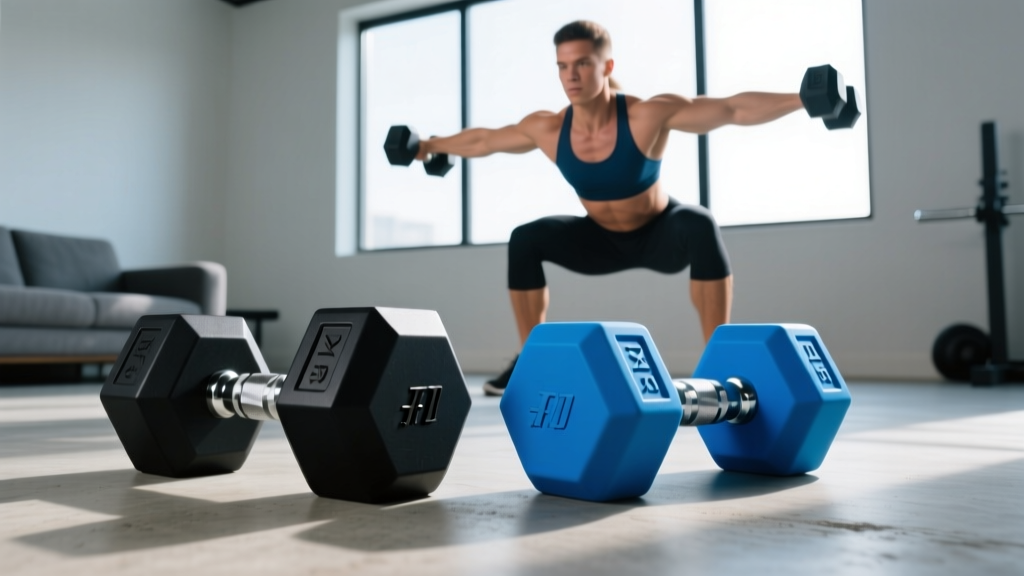
Master Dumbbell Wood Chops at Home with Neoprene Weights
Learn how to perform dumbbell wood chops safely at home. Our beginner step-by-step guide covers form, benefits, and choosing the best neoprene coated dumbbells.

The Missing Link in Home Core Training: Rotational Power
Most home gym routines heavily favor the sagittal plane—think squats, lunges, and crunches. But true functional fitness requires mastering the transverse plane, where rotational and anti-rotational forces live. Enter the dumbbell wood chop, a premier full-body movement that builds explosive core power, improves thoracic mobility, and mimics real-world mechanics like swinging a bat, throwing a punch, or lifting a heavy box into a truck.
For home gym enthusiasts, executing this movement safely and effectively requires the right equipment. While bare iron or vinyl-coated weights have their place, the neoprene coated dumbbell has emerged as the gold standard for home use in 2026. In this step-by-step beginner's guide, we will break down exactly how to perform the dumbbell wood chop, why neoprene is your best asset for this specific exercise, and how to program it for maximum results.
Why Neoprene for Wood Chops?
The wood chop generates significant centrifugal force. If your grip slips, the dumbbell becomes a projectile. Neoprene (a synthetic rubber) provides a matte, slightly porous texture that absorbs sweat and drastically improves grip security compared to glossy vinyl or bare metal. Furthermore, neoprene-coated hex dumbbells will not roll across your living room floor between sets, protecting your hardwood or laminate flooring from dings and scratches.
Selecting the Right Neoprene Dumbbell for Home Use
Before you start chopping, you need to select the appropriate weight. The wood chop is a lever-based movement; holding a weight far from your center of gravity amplifies the resistance. A 15 lb dumbbell will feel significantly heavier at the end of your arms than it does during a bicep curl.
As of early 2026, high-quality neoprene hex dumbbells from reputable brands like CAP Barbell and Yes4All average between $1.50 and $2.20 per pound. Below is a data-driven framework to help you choose your starting weight based on your current fitness level.
| Experience Level | Recommended Weight (per dumbbell) | Estimated 2026 Cost (Pair) | Primary Focus |
|---|---|---|---|
| Absolute Beginner | 5 lbs - 8 lbs | $15 - $30 | Motor control, hip pivoting |
| Novice (Active) | 10 lbs - 15 lbs | $30 - $65 | Core bracing, tempo control |
| Intermediate | 20 lbs - 30 lbs | $70 - $120 | Rotational power, deceleration |
Pro-Tip: Always buy a pair, even though you only hold one dumbbell during the wood chop. Having matched pairs allows you to perform bilateral exercises like goblet squats or dumbbell thrusters on your non-chop training days.
Step-by-Step Guide: The High-to-Low Dumbbell Wood Chop
The high-to-low variation is the most intuitive for beginners, as it mimics the natural biomechanics of swinging an axe. According to ExRx.net's exercise directory, this movement primarily targets the obliques, rectus abdominis, and hip flexors, while engaging the shoulders and back as stabilizers.
Step 1: Establish the Athletic Stance
Stand with your feet slightly wider than shoulder-width apart. Point your toes forward or slightly outward. Maintain a soft bend in your knees—do not lock them out. This wide base provides the necessary stability to handle the rotational torque you are about to generate.
Step 2: The Interlocking Grip
Pick up your neoprene dumbbell. Hold it vertically by the top head (the weighted end), not the handle. Wrap both hands around the top head, overlapping your fingers to create a secure 'V' shape. The textured neoprene coating will grip your palms, preventing the smooth metal handle from slipping through your sweaty hands mid-swing.
Step 3: The Setup and Core Brace
Raise the dumbbell up and across your body, positioning it above your right shoulder. Your arms should be relatively straight but not hyperextended. Rotate your torso to the right, allowing your left heel to naturally lift off the ground. Take a deep breath into your belly and brace your core as if preparing for a punch. The Mayo Clinic's guide to core strength emphasizes that this intra-abdominal pressure is critical for protecting the lumbar spine during rotational loading.
Step 4: The Downward Chop (The Acceleration Phase)
Initiate the movement by pulling the dumbbell diagonally across your body toward your left hip. Do not just use your arms. The power must come from your hips and core. As you pull down, pivot your right foot (squish the bug with your right toes), rotate your right knee inward, and aggressively twist your torso. Your eyes should follow the dumbbell.
Step 5: Deceleration and Reset
Stop the dumbbell just outside your left hip. The ability to forcefully decelerate the weight is where the true anti-rotational core strength is built. Hold the bottom position for one second, then smoothly reverse the motion, returning the weight to the starting position above your right shoulder. Complete all reps on one side before switching to the other.
The 'Squish the Bug' Cue: If your back foot doesn't pivot during the downward chop, you are forcing your lumbar spine to twist beyond its safe anatomical limit. The thoracic spine (upper back) and hips are designed for rotation; the lumbar spine (lower back) is designed for stability. Always pivot the back foot to free up the hips.
Troubleshooting Common Beginner Failure Modes
Even with the best equipment, form breakdowns happen. Here is how to identify and fix the three most common mistakes beginners make when learning the dumbbell wood chop at home.
- Failure Mode 1: Rounding the Lower Back (Lumbar Flexion)
The Cause: Using a weight that is too heavy, causing the core to fail and the spine to round as you reach across your body.
The Fix: Drop the weight by 5 lbs. Focus on keeping your chest proud and your spine neutral. If you cannot maintain a flat back, the weight is too heavy. - Failure Mode 2: The 'T-Rex' Arm Chop
The Cause: Keeping the elbows excessively bent and relying entirely on the shoulder muscles to move the weight, completely bypassing the core.
The Fix: Lock your elbows into a slight, fixed bend. Imagine your arms are simply ropes connecting your torso to the dumbbell. The torso rotation must move the arms, not the other way around. - Failure Mode 3: Gripping the Handle Instead of the Head
The Cause: Habitually grabbing the dumbbell by the handle like a bicep curl.
The Fix: Grabbing the handle changes the lever arm and makes the movement incredibly awkward, placing undue stress on the wrists. Always grip the top neoprene-coated head for a compact, secure hold.
Programming the Wood Chop for Home Workouts
Because the wood chop is a high-neural-drive, explosive movement, it should be performed at the beginning of your workout, right after your dynamic warm-up, while your central nervous system is fresh. Performing these at the end of a workout when your core is fatigued is a recipe for lower back injury.
Beginner Prescription Protocol
- Frequency: 2 times per week (e.g., Tuesday and Saturday).
- Sets: 3 sets per side.
- Repetitions: 8 to 12 controlled reps per side.
- Tempo: 1 second up (acceleration), 1 second pause at the hip (deceleration), 2 seconds returning to the start.
- Rest: 60 to 90 seconds between sets to allow for full ATP replenishment.
Frequently Asked Questions
Can I do wood chops on a carpeted floor?
Yes, but be mindful of your foot pivot. Thick carpet can create friction that prevents your back foot from pivoting smoothly, which transfers dangerous torque to your knee and lower back. If you have thick carpet, wear smooth-soled indoor training shoes or place a small, flat slider (or even a paper plate) under your back heel to ensure a frictionless pivot.
Are neoprene dumbbells toxic or prone to degrading?
Early generations of cheap rubber and neoprene coatings were known for off-gassing strong chemical odors. However, modern 2026 manufacturing standards for reputable brands like CAP Barbell and Yes4All utilize low-VOC, high-density neoprene that is odorless, non-toxic, and highly resistant to UV degradation and sweat corrosion. Simply wipe them down with a damp cloth and mild soap after your workout to maintain the matte grip texture.
Should I do high-to-low or low-to-high chops?
Both are excellent. High-to-low targets the lower obliques and mimics downward striking or pulling. Low-to-high targets the upper obliques, serratus anterior, and mimics lifting or upward swinging (like a golf drive or tennis forehand). As a beginner, master the high-to-low chop first, as the deceleration phase at the hip is generally easier to control than decelerating a heavy weight above your shoulder.
By integrating the dumbbell wood chop into your home routine with a reliable, floor-friendly neoprene dumbbell, you will unlock a new tier of functional core strength, athletic power, and spinal resilience. Start light, prioritize the hip pivot, and let the transverse plane transform your fitness.
More gear to consider
All reviews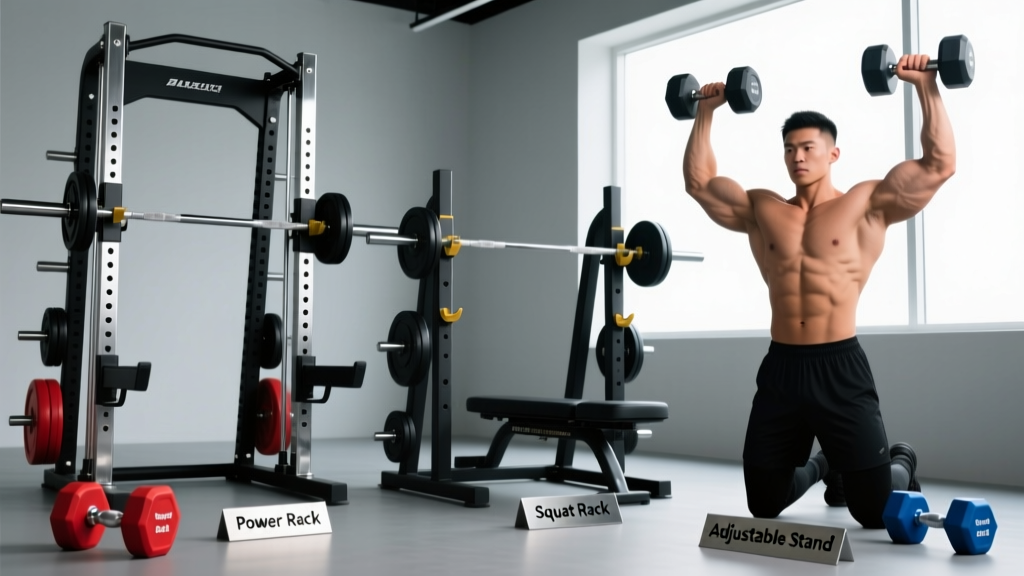
Power vs Squat Rack Setup & What Muscles Do Dumbbell Shoulder Press Work

Rack vs Stand Troubleshooting: Squats and the Dumbbell French Curl
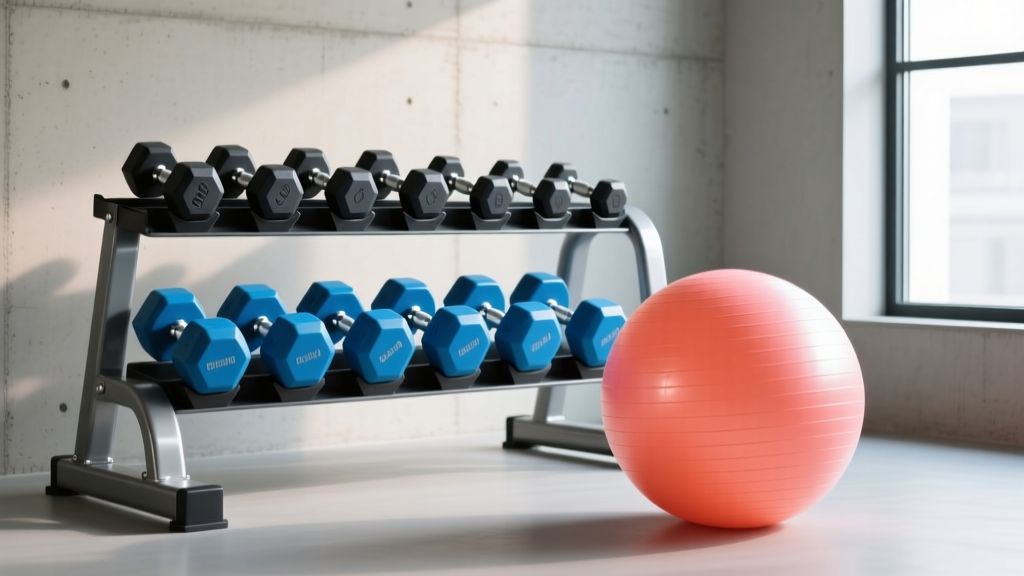
Maintaining Racks for Dumbbell Exercises with Exercise Ball Routines

Rubber Hex vs Urethane: Are 40 lb Dumbbells Worth the Upgrade?

Dumbbell Fly Standing Variations: 2026 Loadable Market Trends