
Beyond Dumbbell Swing Benefits: Rack Storage & Maintenance
Discover how proper dumbbell rack storage and maintenance preserve equipment integrity, ensuring you safely maximize all dumbbell swing benefits.

The Biomechanical Stress of Dumbbell Swings on Equipment
When fitness enthusiasts research dumbbell swing benefits, the focus is usually on posterior chain activation, explosive hip hinge power, and grip endurance. However, from an equipment longevity perspective, the dumbbell swing is one of the most punishing movements you can perform with free weights. According to EXRX.net's biomechanical breakdown of the dumbbell swing, the exercise involves rapid acceleration and deceleration phases, generating immense centrifugal force and micro-vibrations through the implement.
If a dumbbell is stored improperly—such as being tossed onto a concrete floor or left resting on its handle rather than its head—the structural integrity of the tool degrades. A compromised handle-to-head connection or degraded knurling turns a high-velocity ballistic movement into a catastrophic safety hazard. To safely and consistently reap the benefits of this exercise, your storage infrastructure and maintenance protocols must be flawless.
⚠️ SAFETY WARNING: Never perform high-velocity swings with dumbbells that exhibit visible handle wobble, cracked urethane collars, or severe oxidation on the knurling. The G-force generated at the apex of a swing can cause a compromised head to detach, posing a severe strike hazard to the user and bystanders.Critical Failure Modes from Improper Storage
Leaving dumbbells scattered on the floor or using substandard, flimsy shelving units accelerates wear and tear. Here are the specific failure modes caused by poor storage environments:
- Handle Torque and Bending: Storing heavy dumbbells (50+ lbs) resting on their handles rather than their heads places continuous lateral stress on the steel shaft, eventually leading to micro-bends that ruin the balance required for swings.
- Urethane Delamination: Rubber and low-grade urethane coatings degrade rapidly when stored in direct sunlight or damp garages. UV exposure causes ozonolysis, leading to dry rot, flaking, and an uneven surface that ruins grip traction.
- Fastener Back-Out: When dumbbells are carelessly dropped onto a hard metal rack shelf instead of being placed gently, the repeated shockwaves cause the internal hex bolts or threaded collars to back out over time.
Selecting the Right Dumbbell Rack for Longevity
To protect your investment and ensure your gear remains safe for dynamic movements, you need a rack engineered for high static loads and impact resistance. Below is a comparison of the top rack configurations available in 2026 for serious home and commercial gyms.
| Rack Type | Steel Gauge & Build | Capacity & Footprint | Best For / Price Range |
|---|---|---|---|
| 3-Tier Horizontal | 11-Gauge Steel, UHMW Plastic Shelf Liners | 1,000+ lbs; 4-foot width | Full sets (5-50 lbs); $450 - $600 |
| A-Frame Rack | 12-Gauge Steel, Angled Cradles | 800 lbs; Compact 3x2 ft footprint | Space-constrained gyms; $200 - $300 |
| Wall-Mounted Shelves | 7-Gauge Brackets, 2x6 Wood Planks | Depends on wall anchors; Zero floor space | Garage gyms with stud walls; $100 - $150 |
Why Shelf Liners Matter for Dumbbell Swings
When you finish a grueling set of dumbbell swings, your grip is fatigued. The natural instinct is to drop the weights onto the rack. As noted in the Rogue Fitness 3-Tier Dumbbell Rack specifications, premium racks feature UHMW (Ultra-High Molecular Weight) polyethylene liners on the shelves. This dense plastic absorbs the shock of a dropped dumbbell, preventing the steel-on-steel impact that loosens internal fasteners and chips the knurling on the handle ends.
Step-by-Step Maintenance Protocol for Stored Dumbbells
Proper storage is only half the battle. To maintain the aggressive knurling required to keep the dumbbell secure in your sweat-slicked hands during high-rep swing sets, follow this monthly maintenance routine aligned with Rep Fitness's official equipment maintenance guidelines:
- Dry Brush the Knurling: Use a stiff nylon or brass bristle brush to scrub the handle. Chalk and dead skin pack into the knurl valleys, creating a moisture trap that leads to flash rust. Never use a wire wheel on a drill, as this will shave down the knurl peaks and ruin the grip.
- Apply Mineral Oil: Wipe the handle down with a microfiber cloth lightly dampened with mineral oil or a specialized barbell oil. Avoid WD-40, which is a solvent that strips away existing protective oils and attracts dust.
- Inspect the Collar Junction: Grip the handle and attempt to twist the dumbbell head. Any rotational play indicates the internal fastener has backed out.
- Apply Threadlocker (If Applicable): If your dumbbells feature accessible hex bolts at the handle junction, remove the bolt, clean the threads with isopropyl alcohol, and apply a drop of Loctite 243 (Medium Strength). Do not use Loctite 271 (Red/Permanent), as you will never be able to service the dumbbell again without applying a blowtorch to the steel.
Environmental Controls: Humidity and UV Protection
Where you place your dumbbell rack within your gym space dictates the lifespan of the equipment's coating and steel core.
📊 Environmental Thresholds for Free Weights
- Relative Humidity (RH): Maintain your gym space below 50% RH. Bare steel handles and cast iron cores will begin to oxidize within 48 hours in environments exceeding 65% RH.
- UV Index Exposure: Never position a dumbbell rack directly in front of a south-facing window. Standard rubber dumbbells will begin to dry-rot and emit a toxic off-gassing odor within 6 months of direct UV exposure.
- Temperature Swings: Uninsulated garages experience massive day-to-night temperature shifts, causing condensation to form on cold steel dumbbells. If storing in an uninsulated space, use a dehumidifier or apply a thicker coat of paste wax to the handles.
Frequently Asked Questions
Can I store my dumbbells outside on a covered patio?
No. Even on a covered patio, ambient humidity and temperature fluctuations will cause condensation to form on the steel handles. Furthermore, wind-blown dust and debris will scratch urethane coatings and pack into the knurling, accelerating rust and degrading the grip you need for safe dumbbell swings.
Do I need a specialized rack for hex dumbbells versus round dumbbells?
Yes. Hex dumbbells require flat, wide shelving to sit flush and prevent rolling. Round dumbbells (often used for functional movements and swings) require cradled or tiered racks with a slight upward lip or UHMW-lined saddles to prevent them from rolling off the shelf and damaging the floor or the dumbbell's internal threading.
How often should I check the tightness of my rack's structural bolts?
You should perform a full torque check on your rack's structural bolts every 6 months. The micro-vibrations from dropping heavy dumbbells onto the rack during fatiguing swing sets can slowly loosen the carriage bolts that hold the rack frame together. Keep a socket wrench in your gym and snug all structural hardware annually.
More gear to consider
All reviews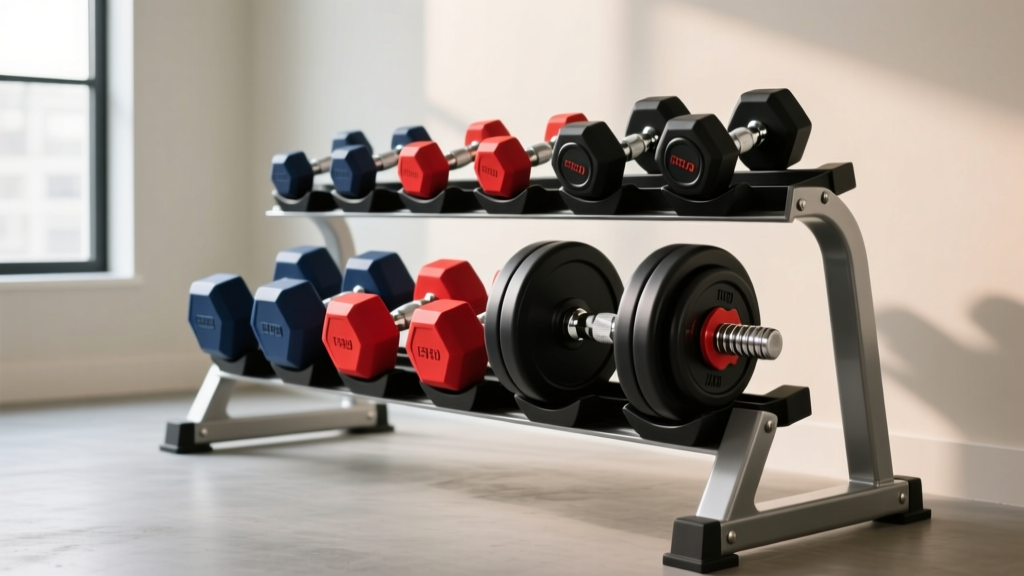
Ergonomic Dumbbells Storage: Rack Solutions & Care Guide

2026 Dumbbell Racks for One Arm Dumbbell Preacher Curl Setups

Olympic Barbell Guide & Biceps Workout Without Dumbbells at Home
Bulgarian Split Squat Dumbbell Weight: Neoprene Guide

Bumper Plate vs Iron Plate: Upgrading From Pilates with Dumbbells
