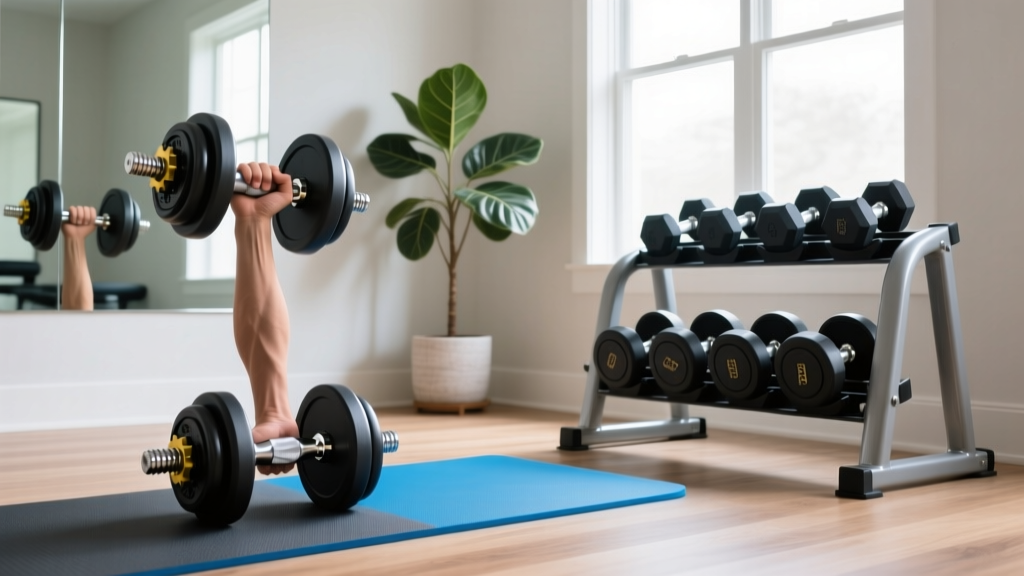
Dumbbell Skull Crusher Alternative: Barbell Weight & Knurl Guide
Seeking a dumbbell skull crusher alternative? This Olympic barbell buying guide covers weight, shaft diameter, and knurling for optimal triceps growth.

Why You Need a Dumbbell Skull Crusher Alternative
When beginners search for a dumbbell skull crusher alternative, they are usually frustrated by three specific biomechanical roadblocks: wrist strain from stabilizing independent weights, uneven triceps development due to asymmetric loading, and the sheer awkwardness of kicking heavy dumbbells into position. While dumbbells are fantastic for addressing muscle imbalances, they fall short when your goal is maximum mechanical tension on the long head of the triceps brachii.
The gold-standard alternative is the straight Olympic barbell (or an Olympic EZ-curl bar). The fixed path of a barbell removes the stabilizer bottleneck, allowing you to overload the triceps safely. However, upgrading to an Olympic barbell introduces a new challenge: navigating the complex world of barbell weight, shaft diameter, tensile strength, and knurling patterns. As of 2026, the home gym equipment market is saturated with options, making it easy to buy a bar that destroys your wrists during isolation movements. This step-by-step beginner's guide will teach you exactly how to choose the right Olympic barbell for skull crushers and full-body lifting.
💡 The Biomechanics of Triceps Extensions
According to biomechanical analyses featured in BarBend's exercise guides, bringing the bar slightly behind your head (rather than directly to your nose) keeps constant tension on the triceps and reduces shear force on the elbow tendon. A barbell with the right 'whip' and shaft diameter is critical to maintaining this specific range of motion safely.
Step 1: Choosing the Right Barbell Weight and Shaft Diameter
The first decision in your Olympic barbell buying guide is selecting the correct weight and shaft thickness. Olympic barbells generally come in two standard sizes: 20kg (44 lbs) and 15kg (33 lbs). While the total weight matters for your starting loads, the shaft diameter is what dictates joint comfort during a skull crusher.
The 20kg Men's Bar (28.5mm to 29mm Shaft)
A standard 20kg bar features a 28.5mm or 29mm shaft diameter. This thickness provides excellent rigidity, meaning the bar won't bounce or oscillate when you are holding 45 pounds over your face. However, beginners with smaller hands or limited wrist mobility may find a 29mm shaft uncomfortable during the deep wrist flexion required at the bottom of a skull crusher.
The 15kg Women's Bar (25mm Shaft)
The 15kg Olympic bar utilizes a 25mm shaft. This thinner diameter is significantly easier to grip, reducing forearm fatigue and allowing for a more natural wrist angle during triceps extensions. If your primary focus is high-rep isolation work and you struggle with wrist pain, a 15kg bar is a phenomenal dumbbell skull crusher alternative base.
The 28mm 'Sweet Spot'
Many premium multi-purpose bars, like the legendary Rogue Ohio Bar, feature a 28mm or 28.5mm shaft. This offers the perfect compromise: thin enough for comfortable isolation grips, but thick enough to handle heavy squats and deadlifts without bending permanently.
Step 2: Decoding Barbell Knurling for Isolation Movements
Knurling is the cross-hatched pattern machined into the steel shaft to provide grip. For heavy deadlifts, you want aggressive knurling. But for a dumbbell skull crusher alternative like the barbell skull crusher or close-grip bench press, aggressive knurling will tear your calluses and cause grip fatigue before your triceps actually fail. Understanding knurling geometry is essential. As detailed in BarBend's comprehensive knurling guide, there are three primary profiles:
| Knurling Type | Shape Profile | Best Use Case | Triceps Extension Rating |
|---|---|---|---|
| Hill | Smooth, rounded peaks with shallow valleys. | High-rep conditioning, beginners, budget bars. | ⭐⭐⭐ (Too slippery for heavy loads) |
| Mountain | Sharp, prominent peaks that dig deeply into the skin. | Heavy powerlifting, deadlifts, hook grip. | ⭐ (Will tear hands during high-rep isolation) |
| Volcano | A rimmed edge with a small crater in the center. | Olympic lifting, multipurpose home gyms, hypertrophy. | ⭐⭐⭐⭐⭐ (Grippy but won't tear skin) |
The Verdict: For a home gym where you will be performing both heavy compounds and isolation movements like skull crushers, Volcano knurling is the undisputed champion. It provides a massive surface area for grip without the sharp, skin-tearing peaks of mountain knurling.
Step 3: Tensile Strength, Bushings, and Whip
Beginners often overlook the internal construction of an Olympic barbell, but it directly impacts the safety of your elbow joints during triceps extensions.
Tensile Strength (PSI)
Tensile strength measures the point at which the steel will permanently deform or snap. You want a bar with a minimum tensile strength of 190,000 PSI. Premium bars sit around 215,000 PSI. A bar with low tensile strength (under 165k PSI, often found in cheap Amazon sets) will permanently bend if dropped, and more importantly, it will have excessive 'whip' (bouncing) which can destabilize your wrists at the bottom of a skull crusher.
Bushings vs. Bearings
Olympic bars use either bushings (bronze or composite rings) or needle bearings to allow the sleeves to spin. Bearings are designed for the rapid, explosive rotations of the Clean and Jerk. For powerlifting, bodybuilding, and triceps isolation, bronze bushings are superior. They provide a smoother, more controlled rotation that prevents the bar from unexpectedly spinning out of your hands when your wrists are in a compromised, flexed position overhead.
⚠️ Warning: The 'Whip' Factor on Light Loads
If you are using a lightweight 15kg technique bar with high whip to perform skull crushers, the bar may oscillate (bounce) when you reverse the momentum at the bottom of the movement. This micro-bouncing transfers directly to the elbow joint, increasing the risk of triceps tendinopathy. Always use a bar with adequate stiffness (28mm+ shaft, 190k+ PSI) for controlled isolation work.
2026 Top Olympic Barbell Picks for the Home Gym
Based on current 2026 pricing, steel quality, and knurling profiles, here are the top three Olympic barbells that serve as the perfect foundation for your dumbbell skull crusher alternative routines and beyond.
- Rogue Ohio Bar (Stainless Steel) - ~$345
The benchmark of home gyms. Features a 28.5mm shaft, 190k PSI tensile strength, and Rogue's proprietary volcano knurling. The stainless steel shaft requires zero maintenance and feels incredible during high-rep triceps work. - Rep Fitness Double Black Diamond - ~$349
A unique dual-knurl bar. The inner knurl is mild (perfect for skull crushers and bench press), while the outer knurl is aggressive for deadlifts. It features composite bushings and a 28mm shaft, making it highly versatile. - Titan Fitness Elite Series Multipurpose Bar - ~$299
An excellent budget-conscious option that doesn't sacrifice safety. It features a 28mm shaft, 215k PSI tensile strength, and moderate volcano knurling. As noted in the Rep Fitness Barbell Guide, finding high tensile strength at this price point is rare, making it a massive value for beginners.
Step-by-Step: Executing the Barbell Skull Crusher
Now that you have selected the correct barbell, here is how to safely execute the ultimate dumbbell skull crusher alternative.
- The Setup: Lie flat on a bench. Unrack the barbell with a shoulder-width, overhand grip. The 28.5mm shaft should sit comfortably in the base of your palm, not choking your fingers.
- The Descent: Keep your upper arms completely vertical and locked. Slowly bend at the elbows, lowering the bar. Crucial Tip: Do not lower the bar to your nose. Lower it to the bench pad about 2-3 inches behind your head. This maintains constant tension on the long head of the triceps and removes stress from the elbow joint.
- The Ascent: Drive the bar back up by extending the elbows, stopping just short of a full lockout to keep the tension on the muscle, not the joint.
- Volume Recommendation: 3 to 4 sets of 8-12 repetitions. Focus on a 3-second eccentric (lowering) phase.
'The transition from dumbbells to a barbell for triceps extensions is a milestone in a lifter's journey. It removes the neurological demand of stabilization, allowing you to push closer to true muscular failure. But this privilege requires the right tool: a bar with adequate stiffness, proper shaft diameter, and skin-friendly knurling.'
Final Thoughts on Your Barbell Upgrade
Finding the right dumbbell skull crusher alternative isn't just about changing the exercise; it's about upgrading your equipment to match your progressive overload needs. By prioritizing a 28mm to 28.5mm shaft diameter, bronze bushings, and volcano knurling, you will protect your wrists, save your calluses, and build massive triceps safely. Invest in a high-quality 20kg or 15kg Olympic barbell, and your home gym will be equipped for decades of heavy, injury-free lifting.
More gear to consider
All reviews
Loadable Dumbbells 2026: Dumbbell Romanian Deadlift Muscles Worked

EZ Curl vs Straight Bar Care: Longevity & Dumbbell Routine Tips
Cast Iron vs Competition Kettlebells: Upper Chest Workout Dumbbell?

Space-Saving Easy Dumbbell Exercises for Arms: Rubber vs Urethane

Safe Lower Back Exercise Dumbbell Home Setup Guide