Power Rack vs Squat Stand: How Dumbbell Shape Dictates Your Choice
Discover how your dumbbell shape impacts home gym layout. A beginner's step-by-step guide to choosing between a power rack, squat rack, or squat stand.

The Hidden Variable in Home Gym Design
When building a home gym in 2026, beginners often fall into a trap: they fixate entirely on the barbell and rack, completely ignoring how their secondary equipment will fit into the space. You have likely spent hours debating the merits of a power rack vs squat rack vs squat stand. But there is a hidden variable that can make or break your gym's layout, safety, and flow: your dumbbell shape.
Whether you are working with a 500-square-foot garage or a compact 100-square-foot spare bedroom, the geometry of your free weights dictates your storage needs. In this step-by-step guide, we will break down the structural differences between the big three rack types, and reveal exactly how the shape of your dumbbells should influence your final purchasing decision.
Step 1: Define the Contenders (2026 Market Overview)
Before we integrate dumbbell storage into the equation, you must understand the baseline footprint and purpose of each rack category. According to comprehensive testing by Garage Gym Reviews, the market has standardized around three primary designs for home lifters.
1. The Power Rack (Full Cage)
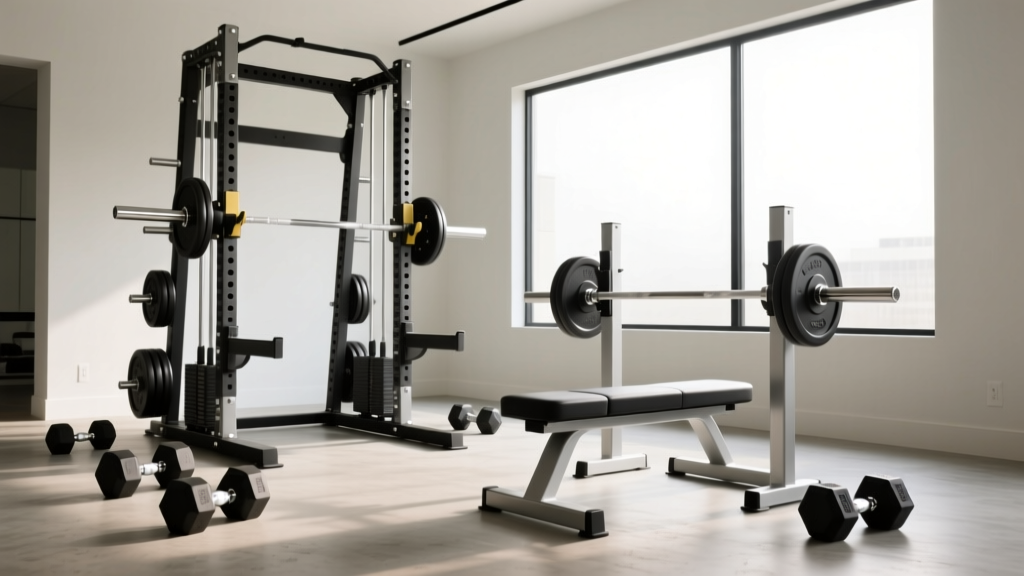
A power rack features four vertical posts connected by crossmembers, creating a "cage."
- Top Model: Rep Fitness PR-4000 Power Rack
- Footprint: 47" x 47" (Standard) or 47" x 53" (Deep)
- Average Cost: $699 - $899
- Best For: Heavy solo lifting, kipping pull-ups, and integrated weight storage.
2. The Squat Rack (Open-Back / Half Rack)
Often featuring two main front posts and two shorter rear stabilizer posts, squat racks offer an open lifting environment while maintaining a rigid, bolted-down base.
- Top Model: Rogue SML-2C Monster Lite Squat Stand
- Footprint: 49" x 49" (including rear stabilizers)
- Average Cost: $550 - $750
- Best For: Olympic lifting variations, overhead pressing, and lifters who feel claustrophobic in a cage.
3. The Squat Stand (Independent Posts)
Squat stands are two independent, freestanding posts. They are not physically connected to one another.
- Top Model: Titan T-2 Series Power Squat Stand
- Footprint: 23" x 24" per stand (Total space used is variable based on barbell width)
- Average Cost: $249 - $349
- Best For: Ultra-small spaces, apartment gyms, and strict budget constraints.
Step 2: The "Dumbbell Shape" Footprint Factor
Here is where most beginner guides fail. They tell you to buy squat stands to "save space." But what happens when you need to store a 5-50 lb set of dumbbells? Your dumbbell shape entirely dictates the type of storage rack you must buy, which in turn destroys or preserves your floor plan.
The Geometry of Storage
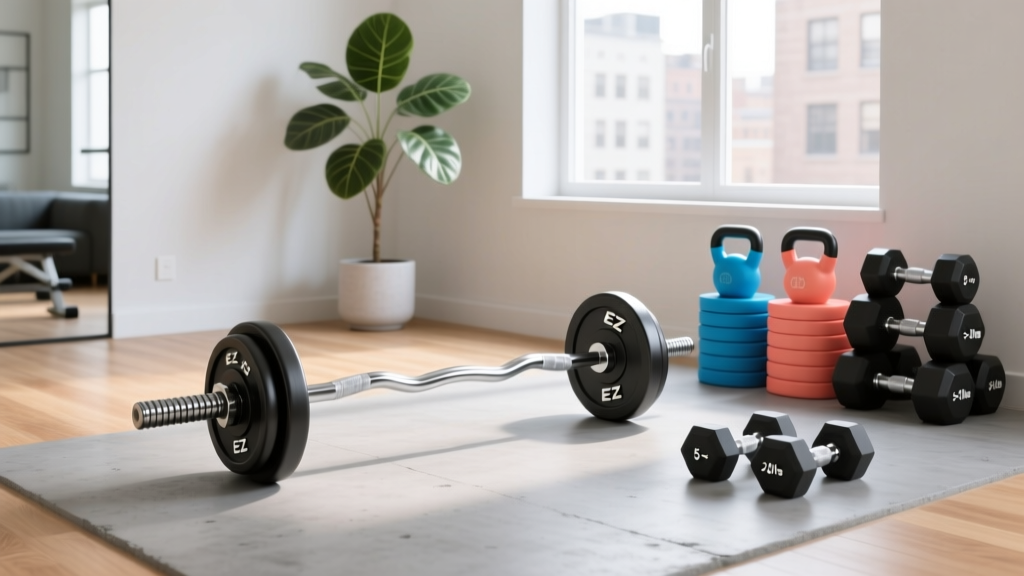
Hex Rubber Dumbbells: The flat edges of hex dumbbells (like the Rogue Rubber Hex line) allow them to sit flush on standard flat-tiered racks. A 3-tier horizontal rack for a 5-50 lb hex set typically measures 43" long x 22" deep.
Round Urethane Dumbbells: Pro-style round dumbbells feature spherical heads designed to protect floors, but they roll. They require "saddle" or "cradle" style trays. Because of the cradle depth required to prevent rolling, a 3-tier saddle rack for the same 5-50 lb set measures 48" long x 30" deep.
How This Impacts Your Rack Choice
If you choose Squat Stands to save space, you are creating a fragmented layout. You must place your dumbbell rack nearby. If you own round urethane dumbbells, that 30-inch deep saddle rack will protrude into your walking path, effectively negating the space-saving benefits of the squat stands. Furthermore, independent squat stands cannot safely support rear-mounted storage pegs for plates or dumbbells.
Conversely, a Power Rack like the PR-4000 allows you to mount rear storage pegs or attach specialized dumbbell cradles directly to the uprights. By consolidating your barbell and dumbbell storage into a single 47" x 53" footprint, a power rack actually saves floor space compared to a squat stand + separate deep saddle rack combination.
Step 3: Safety Mechanisms and Spotter Systems
When lifting without a human spotter, the safety system is non-negotiable. As highlighted in safety analyses by BarBend, the type of rack you choose limits your safety options.
| Rack Type | Primary Safety Style | Failure Mode / Edge Case | Solo Lifting Verdict |
|---|---|---|---|
| Power Rack | Pin-Pipe or Strap Safeties | Straps can stretch over time; pin-pipes can bend if dropped from >3 feet. | Excellent (Full perimeter protection) |
| Squat Rack | Flip-Down Safeties or Pin-Pipe | Flip-down arms can accidentally be bumped upward by the barbell during a failed rep if not locked. | Good (Front/Side protection only) |
| Squat Stand | Spotter Arms (Extended) | Missed reps rolling backward off the j-cups can bypass the spotter arms entirely if the stand shifts. | Poor (Requires strict form & anchoring) |
Expert Tip: If you are buying independent squat stands for bench pressing, you must purchase extended spotter arms (usually 18" to 24" long). Standard 12" spotter arms are insufficient for catching a bouncing barbell off the chest.
Step 4: The Space & Budget Decision Matrix
Use this step-by-step framework to finalize your choice based on your specific room dimensions and dumbbell collection.
- Measure Your Ceiling: Standard pull-up bars on power racks sit at 84" or 90". If your ceiling is 88", you must buy a "Short" power rack (72" uprights) or opt for squat stands.
- Audit Your Dumbbells: Look at your dumbbell shape. If they are round, prioritize a Power Rack with integrated storage attachments to avoid buying a massive, deep saddle rack.
- Calculate the True Footprint: Do not just look at the rack dimensions. Add 24 inches of clearance on all sides for loading plates and maneuvering.
Scenario A: The Garage Gym (150+ sq ft)
Winner: Power Rack. With ample space, the cage design allows for safe kipping, heavy squats, and integrated storage for both bumper plates and hex or round dumbbells. Budget roughly $1,200 for a high-quality 3x3 upright rack with safety straps and rear storage.
Scenario B: The Compact Spare Room (Under 100 sq ft)
Winner: Squat Stands + Wall-Mounted Storage. If you cannot fit a 47"x47" cage, use squat stands. To solve the dumbbell shape storage issue without eating up floor space, mount a vertical dumbbell rack directly to the wall studs, bypassing the need for a floor-standing saddle rack.
Scenario C: The Olympic Lifting Focus
Winner: Open Squat Rack. If you plan on doing snatch and clean & jerk variations, a full power rack will restrict your barbell path. An open squat rack provides the necessary overhead clearance and lateral escape routes for missed lifts.
Step 5: Anchoring and Subfloor Considerations
A squat stand is essentially a heavy metal lever. If a 225 lb barbell rolls backward onto the spotter arms, the leverage can tip the entire stand backward, causing catastrophic injury.
- Concrete Subfloors (Garages/Basements): Use 3/8" x 3" concrete wedge anchors. Drill directly through the base plate holes. This is mandatory for squat stands and highly recommended for squat racks.
- Wood Subfloors (Bedrooms/Living Areas): You cannot use wedge anchors. Instead, locate the floor joists using a stud finder and secure the rack using 3/8" x 4" structural lag screws. If your rack placement does not align with joists, you must build a plywood sub-deck (3/4" thick, screwed into multiple joists) and bolt the rack to the plywood.
Final Thoughts on Gym Synergy
Choosing between a power rack, squat rack, and squat stand is not just about the barbell exercises you plan to do. It is an exercise in spatial geometry. By acknowledging how your specific dumbbell shape influences storage depth and layout, you can avoid the costly mistake of buying equipment that technically fits your room, but functionally destroys your workout flow. Measure twice, account for your free weight geometry, and bolt down safely.
More gear to consider
All reviews
Iron Bull Dumbbell & Bar Care: EZ Curl vs Straight Bar Longevity
Dumbbell Press to Bench Press Conversion: Power Rack vs Squat Stand

B Stance Dumbbell RDL & Kettlebell Guide: Cast Iron vs Competition

Best Neoprene Dumbbells for the Single Arm Tricep Kickback (2026)

Cast Iron vs Competition Kettlebells & MX55 Dumbbells Guide